
News
China’s AG.AL Wins 2026 Esports World Cup, Securing $7M Prize in Presence of Saudi Crown Prince and French President
AG.AL triumphs at the 2026 Esports World Cup, securing $7M and global recognition.

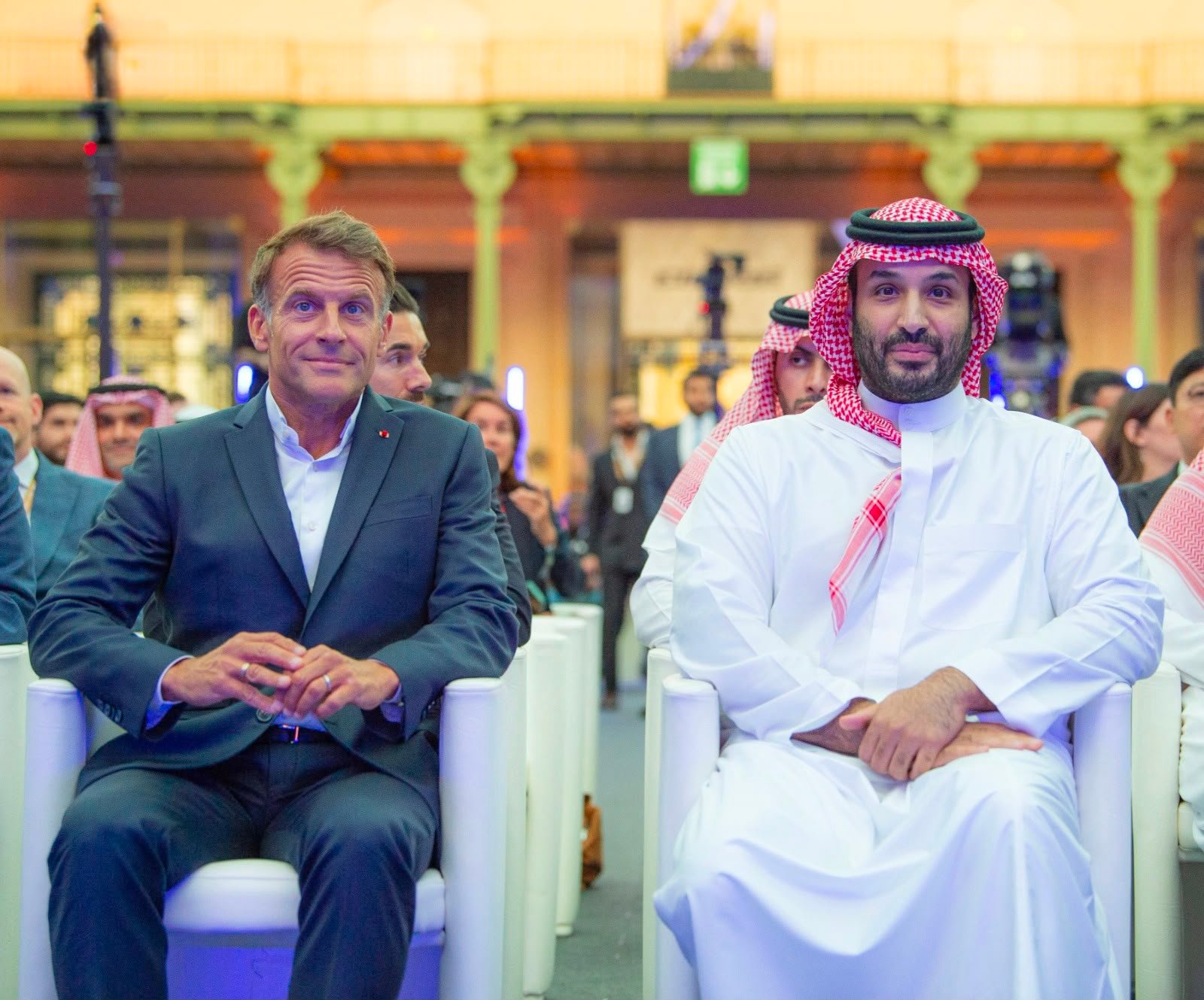
China’s premier esports team, All Gamers Global (AG.AL), has emerged victorious in the 2026 Esports World Cup club championship held in Paris.
This win not only marks a significant achievement for the team but also underscores the growing dominance of Chinese esports on the global stage.
Attended by notable figures such as Saudi Crown Prince Mohammed bin Salman and French President Emmanuel Macron, the event was a landmark as the first-ever tournament staged outside Saudi Arabia.
AG.AL clinched the championship by a comfortable margin, with a total of 5,300 points, finishing 700 points ahead of their closest rivals, Saudi Arabia’s Falcons.
This exceptional performance earned them the grand prize of $7 million from a prize pool exceeding $75 million.
The pivotal moment came during the final days of the competition when French player Gwen secured victory in the TrackMania tournament, solidifying AG.AL’s lead.
Meanwhile, the Falcons, who were the reigning champions with two previous titles, finished as runners-up. Despite not retaining the club championship, they claimed an individual victory in Rocket League, defeating Spacestation Gaming with an impressive 4-0 in the final.
The event, spanning seven weeks, highlighted the expansive reach of esports, drawing more than 2,000 players from approximately 200 clubs worldwide, and welcoming over 500,000 visitors to the tournament.
With 25 tournaments across 24 games, the Paris edition demonstrated the vast appeal and growing popularity of esports competitions.
In addition to the competitive spectacle, the event also saw strategic developments in esports diplomacy. A memorandum of understanding was signed between the sports ministries of Saudi Arabia and France, aimed at enhancing collaboration in areas like esports organization, investment, and sports tourism.
This agreement signifies a deeper investment in the esports sector, promising potential growth and increased cooperation on international events.
AG.AL’s triumph in Paris not only reinforces their status as frontrunners in esports but also positions them well for future endeavors as they look to expand their influence and engage further with the global gaming community.











News
Qatar Airways Becomes World’s First Airline to Bring Starlink to Boeing 787-9, Reaches 150 Connected Widebody Aircraft
Qatar Airways has become the first airline globally to operate Boeing 787-9 aircraft with Starlink, as its high-speed connectivity rollout reaches 150 widebody aircraft and more than 23 million passengers.
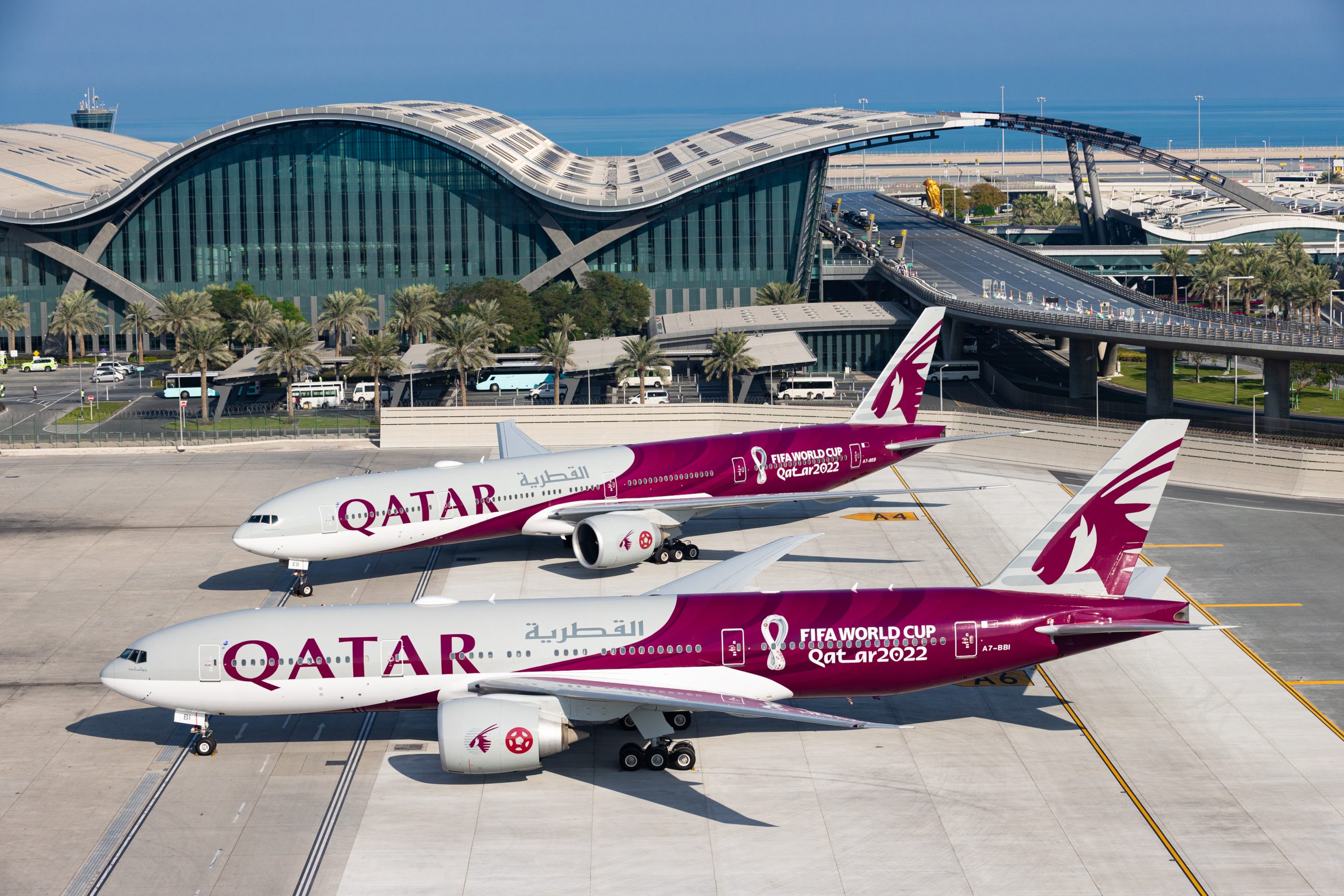
Qatar Airways has become the first airline in the world to operate Boeing 787-9 aircraft equipped with Starlink, marking another milestone in the carrier’s rollout of high-speed satellite internet across its global fleet.
The Doha-based airline has also completed Starlink installation across its entire Boeing 787-8 sub-fleet in seven months, bringing the number of Starlink-equipped Qatar Airways widebody aircraft to 150.
The airline said it remains on track to complete installation across its entire Boeing 787 fleet by the end of 2026.
The latest deployment means Qatar Airways now operates Starlink-equipped aircraft across three major widebody families: the Boeing 777, Airbus A350 and Boeing 787.
23 Million Passengers Have Used Starlink
The scale of Qatar Airways’ deployment has grown significantly since the airline introduced Starlink connectivity in October 2024.
More than 23 million passengers have since used the service across over 86,000 Qatar Airways flights, according to the airline.
Starlink internet is provided to passengers free of charge on equipped aircraft and is available from gate to gate.
Connection speeds can reach up to 500 Mbps, enabling passengers to use high-speed internet during flights for activities ranging from messaging and entertainment to working online.
The service is increasingly available across Qatar Airways’ long-haul and ultra-long-haul network, including routes connecting Doha with destinations across the Americas, Australasia, Africa, Asia, Europe and the Middle East.
Starlink Rollout Surpasses 83%
Qatar Airways said its overall Starlink installation programme has now surpassed 83% completion, with as many as 323 Starlink-equipped flights operating every day.
The Boeing 787 milestone follows similarly rapid deployment across two other major parts of the carrier’s fleet.
Qatar Airways completed Starlink installations across its Boeing 777 fleet in nine months, followed by its Airbus A350 fleet in eight months.
It has now completed the 787-8 sub-fleet in seven months while beginning operations with Starlink-equipped Boeing 787-9 aircraft.
The rollout represents one of the airline’s largest passenger-facing digital infrastructure projects, extending high-speed connectivity across an increasing share of its international network.
Bringing High-Speed Connectivity to Long-Haul Travel
Starlink uses a network of low-Earth-orbit satellites to provide broadband internet connectivity, allowing airlines to offer significantly faster onboard connections than many traditional satellite systems.
For Qatar Airways passengers, the deployment is designed to make internet access during long-haul flights closer to the connectivity experience available on the ground.
The ability to connect from gate to gate also means passengers on equipped aircraft can remain online across more of the travel journey rather than waiting until the aircraft reaches cruising altitude.
With speeds reaching 500 Mbps, passengers can use the connection for work, communications and digital entertainment during flights.
Qatar Airways Targets Full Boeing 787 Deployment by End of 2026
The next major milestone will be completing Starlink deployment across the remaining Boeing 787 aircraft.
Qatar Airways expects the process to be completed by the end of 2026, further expanding the number of routes where passengers can access free high-speed internet.
With 150 connected widebody aircraft already in operation and the overall programme more than 83% complete, the airline is moving closer to making Starlink a standard feature across a substantial portion of its long-haul fleet.
The milestone also extends a rollout that has moved rapidly since its October 2024 launch: from the Boeing 777 and Airbus A350 fleets to the Boeing 787, and from an initial onboard connectivity service to one that has already been used by more than 23 million passengers worldwide.
News
Saudi Aramco’s Venture Arm Co-Leads $20M Round in US AI Startup Twin1 AI, Building Digital Twins That Learn From Employees’ Emails, Meetings and Workplace Systems
Twin1 AI secures funding to enhance AI-powered tools for knowledge workers, emphasizing control and privacy.
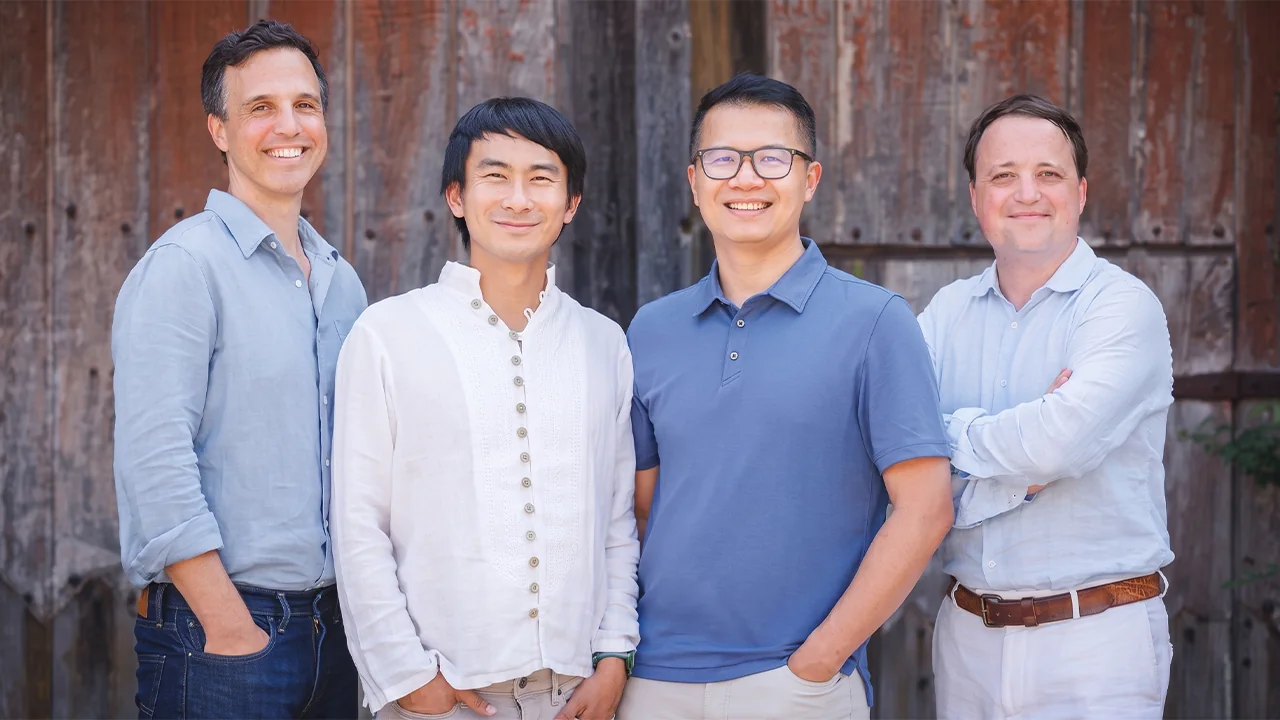
Twin1 AI, a US-based enterprise AI startup, has successfully raised $20 million in a seed funding round. The investment was co-led by Bessemer Venture Partners, Tribeca Venture Partners, and Aramco Ventures.
This funding aims to propel the development of Twin1 AI’s innovative AI-powered digital twin technology, designed for professional knowledge workers.
Founded in 2025 by Dr. Lewis Z. Liu, Tom Cahn, Huiting Liu, and Dr. Jonathan Budd, Twin1 AI is rapidly positioning itself at the forefront of the enterprise AI sector. Its groundbreaking platform creates digital twins for professionals, incorporating a wealth of contextual data from their work environments such as emails, meetings, and workplace systems.
This empowers AI agents to access and process information more effectively across various platforms like Slack, Microsoft Teams, Outlook, Gmail, Google Drive, and SharePoint.
An important differentiator for Twin1 AI is its focus on data privacy and governance. The company’s technology includes robust privacy controls to manage how information is accessed and shared.
This ensures professionals retain control over their data. Furthermore, Twin1 AI’s Twin Network facilitates seamless coordination by connecting individual digital twins, allowing them to collaborate and share knowledge within large organizations without compromising data integrity.
To meet the growing demand for their solutions, Twin1 AI plans to enhance its workforce in San Mateo and London. The newly acquired capital will also support efforts to refine the company’s core technology and drive its go-to-market strategies.
The interest from major investors like Aramco Ventures underscores a significant trend in enterprise AI. Companies are increasingly seeking systems that capitalize on proprietary organizational knowledge rather than relying solely on generalized models.
Twin1 AI’s approach offers a coordinated and trusted layer of AI interaction within an organization, ensuring that the deployment of AI technology complements business objectives while maintaining governance standards.
This funding highlights the pivotal shift toward enterprise AI systems that prioritize context and organizational knowledge. As AI continues to integrate into business operations, platforms like Twin1 AI are positioned to become essential components of enterprise AI infrastructure.
This shift mirrors the growing necessity for governance and efficient deployment solutions, making Twin1 AI an attractive partner for sectors such as legal, financial services, and energy where data confidentiality and access are particularly critical.
Twin1 AI’s ongoing expansion efforts reflect the industry’s broader trend towards adopting sophisticated AI systems.
By focusing on refining digital twin technology, Twin1 AI is poised to facilitate the practical application of these advanced concepts in large-scale enterprise environments, further supporting the evolution of enterprise AI.
News
Saudi AI Giant HUMAIN to Unveil ‘Designed in Saudi Arabia’ AI PC Built With Qualcomm at LEAP 2026, Reimagining Computing Around AI Agents Instead of Apps
Saudi AI company HUMAIN is preparing to unveil a new AI-powered personal computer developed with Qualcomm at LEAP 2026 in Riyadh, combining CPU, GPU and NPU processing with an operating system designed around AI agents and user intent rather than traditional applications.
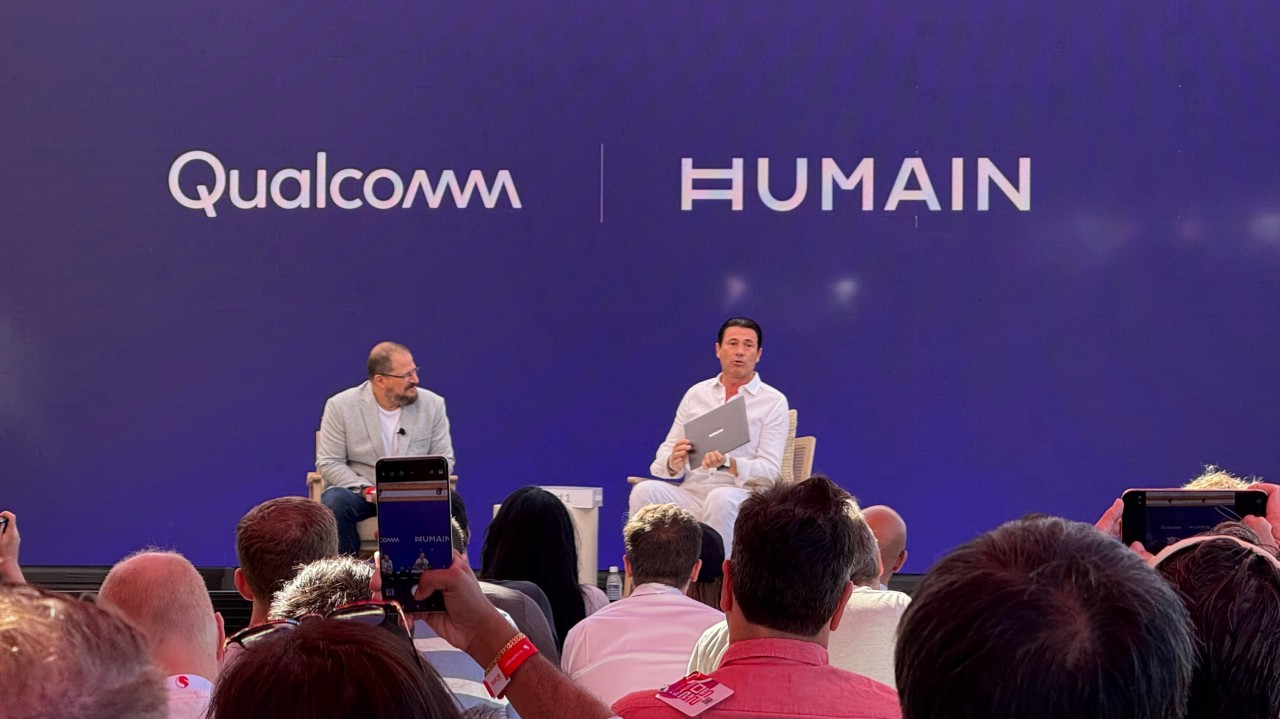
Saudi artificial intelligence company HUMAIN is preparing to unveil a new generation of AI-powered personal computers developed in partnership with Qualcomm, as the company expands from AI infrastructure and models into devices designed for the emerging era of autonomous AI agents.
The new HUMAIN AI PC is expected to be revealed during LEAP 2026, taking place in Riyadh from August 31 to September 3, following approximately 12 months of development between the two companies.
According to Tareq Amin, CEO of HUMAIN, the project goes beyond adding artificial intelligence features to a conventional laptop. HUMAIN is rethinking how users interact with computers in an environment where AI agents can understand goals, access tools and execute tasks on behalf of users.
The device is also being presented with the phrase “Designed in the Kingdom of Saudi Arabia,” positioning the project as part of Saudi Arabia’s wider effort to move from consuming global technology toward participating directly in the design and development of advanced technology products.
HUMAIN and Qualcomm Build AI Computing Directly Into the Device
The HUMAIN AI PC is expected to combine a CPU, GPU and Neural Processing Unit (NPU), giving the device dedicated computing capabilities for artificial intelligence workloads.
The NPU is particularly important because it enables more AI processing to take place locally on the computer rather than requiring every task to be sent to cloud infrastructure.
Running AI workloads directly on the device can potentially improve response times and energy efficiency while giving enterprises greater control over how sensitive information is processed.
This architecture reflects a broader industry shift toward on-device AI, where computers increasingly perform inference and other intelligent tasks using specialized local processors.
For HUMAIN, however, the hardware is only one part of the strategy.
From ‘Which App Do You Want?’ to ‘What Do You Want to Achieve?’
One of the more ambitious elements of the project is HUMAIN’s vision for the computer’s operating system.
Amin has suggested that future operating systems should be designed around agentic AI and user intent, rather than around the traditional model of separate applications.
Today, a user may open an email application, move to a calendar, search for a file and then switch between several other programs to complete a single task.
In an agent-based system, the user could instead simply state the desired outcome — for example, arranging a meeting with a team and sending participants the necessary documents.
The operating system and its AI agents would then determine which tools, information and actions are required to complete the request.
That would represent a fundamental change in personal computing: moving from an interface centered on applications toward one centered on tasks and intentions.
HUMAIN is expected to provide additional details about this operating-system vision during LEAP.
‘Designed in the Kingdom of Saudi Arabia’
The Saudi identity of the project is also central to HUMAIN’s positioning.
The new device is being associated with the phrase “Designed in the Kingdom of Saudi Arabia,” reflecting the company’s effort to develop technology products from within the Kingdom rather than simply distribute products designed elsewhere.
The distinction is important, however. Current information points to the device being designed and developed with Saudi participation, but does not establish that its entire manufacturing process or supply chain will be located in Saudi Arabia.
Even so, the project represents another step in the Kingdom’s attempt to build capabilities across the AI value chain, from infrastructure and models to software and end-user hardware.
Enterprises Could Become the Real Test Market
Although HUMAIN AI PC is a personal computer, its most significant opportunity may come from enterprise adoption.
Large organizations could potentially deploy AI PCs across thousands of employees, allowing more workloads to be processed locally while embedding intelligent agents into everyday workflows.
In that context, the value proposition changes from simply selling faster hardware to increasing the operational capacity of employees.
An AI-native PC could help automate repetitive tasks, coordinate information across applications and allow employees to interact with software through natural-language requests.
For organizations handling sensitive information, local AI processing could also reduce the need to send certain data to external cloud systems.
This could make NPU-equipped devices particularly relevant in sectors where security, latency and data control are important.
HUMAIN Expands From AI Infrastructure to End-User Devices
HUMAIN was established in May 2025 as a Saudi AI company owned by the Public Investment Fund (PIF) and is building across multiple layers of the artificial intelligence ecosystem.
Its activities extend beyond personal computing into AI models, applications, cloud and data center infrastructure.
The company has already introduced HUMAIN Chat, while pursuing broader ambitions around Arabic-language and sovereign AI capabilities.
HUMAIN is also working with major global technology companies including NVIDIA, Amazon Web Services and Qualcomm as it builds out its computing ecosystem.
The AI PC therefore represents the user-facing layer of a much larger strategy.
Billions Going Into Saudi AI Infrastructure
The device project is advancing alongside HUMAIN’s large-scale investments in the infrastructure required to train and operate artificial intelligence systems.
The company has entered strategic partnerships with Blackstone and data center operator AirTrunk around major data center infrastructure in Saudi Arabia, with an initial investment of approximately $3 billion.
These projects are intended to increase domestic computing capacity as global demand for AI infrastructure continues to rise.
Saudi Arabia is seeking to leverage its energy resources, capital and growing digital infrastructure to establish a larger position in the global AI economy.
HUMAIN sits at the center of that strategy, connecting infrastructure investment with models, software and now physical devices.
HUMAIN Is Building for the Agentic AI Era
The significance of HUMAIN AI PC will ultimately depend less on conventional laptop specifications and more on whether the company can deliver a genuinely different computing experience.
If its operating system can effectively coordinate AI agents around user intent, the product could represent more than another AI-enabled laptop.
It would become an attempt to rethink the basic relationship between users and computers.
Instead of forcing users to navigate individual applications, HUMAIN’s vision is for the computer itself to understand the desired outcome and coordinate the necessary tools to achieve it.
With LEAP 2026 approaching, the industry will now be watching for details around the device’s specifications, operating system, commercial availability and exactly how HUMAIN intends to translate its agentic AI vision into an everyday computing experience.
For Saudi Arabia, the launch will carry another significance: an AI computer designed in the Kingdom becoming the latest visible product of its effort to build not only AI infrastructure, but technology products intended to compete in the next generation of global computing.
-

 MENA Startups7 days ago
Egypt-Based Exits MENA and ACE Acquire Avanz Capital Egypt in Seven-Figure Deal to Expand Private Equity and Asset Management
-

 MENA Startups6 days ago
MENA-Born Enterprise Voice AI Startup HeyBreez Raises $2.5M Seed to Accelerate Global Expansion
-

 News3 days ago
Dubai Entrepreneurs Who Raised $400K on Kickstarter Launch 12-Week Accelerator Teaching Teens to Build and Crowdfund Real Startups
-

 Asia Startups1 week ago
Singapore-Based RetailTech Startup Graas Raises $17M Series B, Acquires Trustana to Expand AI-Powered Commerce Platform
-

 MENA Startups6 days ago
Saudi EdTech AILA Raises $3M Pre-Series A to Scale AI-Powered Personalized Learning Across Regional and Global Markets
-

 MENA Startups7 days ago
Iraq-Based E-Commerce Startup Rozenama Raises $150K Pre-Seed to Expand Platform Nationwide
-

 MENA Startups7 days ago
UAE-Based Startup Tax Star Raises $1.75M to Expand AI-Powered Tax Compliance Platform Across GCC
-

 Asia Startups7 days ago
Indian FinTech Startup Rezolv Raises $12.5M to Expand AI-Powered Lending Platform
You must be logged in to post a comment Login