
Australia Startups
Australia-Based Aerospace Startup MAKO Raises $20M to Scale Shark Skin-Inspired Aircraft Efficiency Technology
The funding will accelerate production of MAKO’s Flightfilm technology, expand manufacturing capacity, and support certification for commercial aviation markets.


Australia-based aerospace technology startup MAKO, formerly known as MicroTau, has raised AU$28 million (US$20 million) in a Series A funding round to commercialize its aircraft efficiency technology inspired by shark skin.
The round was led by Virescent Ventures and included participation from International Airlines Group (IAG) through IAGi Ventures, Zero Infinity Partners, Grok Ventures, Skip Capital, IP Group, and TreeArc. The investors are backing technologies aimed at improving aviation efficiency and reducing emissions across existing aircraft fleets.
Founded in 2015 by Henry Bilinsky, MAKO develops Flightfilm, an adhesive surface technology designed to reduce aerodynamic drag, helping aircraft consume less fuel and lower carbon emissions without requiring major structural modifications.
Scaling Production and Global Deployment
The company will use the new funding to expand Flightfilm production, fulfill pre-orders from commercial airline and defense customers, and increase its manufacturing capacity.
The investment will also support product certification, enabling MAKO to accelerate commercial deployment across major aviation markets.
Flightfilm is designed to improve the efficiency of aircraft already in service by applying a shark skin-inspired surface that reduces air resistance. By lowering drag, the technology helps airlines reduce fuel consumption and operating costs while cutting greenhouse gas emissions.
Unlike technologies that require new aircraft designs, Flightfilm is intended to enhance the performance of existing fleets, allowing operators to improve efficiency without significant modifications.
Strong Backing from Aviation and Climate Investors
CEO Henry Bilinsky said the latest funding validates MAKO’s mission to make aviation more efficient using technologies that can be deployed today rather than waiting for future aircraft platforms.
He noted that Virescent Ventures has supported the company since its seed round, while IAGi Ventures brings valuable operational expertise as MAKO completes product certification and prepares for commercial rollout.
Bilinsky added that the investor group combines deep expertise across climate technology, deep tech, and aviation innovation, reinforcing confidence in MAKO’s long-term vision.
Virescent Ventures Partner Blair Pritchard said the firm has backed MAKO through four funding rounds since 2022 and believes the company’s technology has the potential to significantly improve the efficiency of aircraft already in operation. He also highlighted the startup’s growing traction with both commercial airlines and allied military customers worldwide.
Advancing Sustainable Aviation
IAGi Ventures Managing Partner Raza Ali said the investment aligns with International Airlines Group’s broader strategy of testing and scaling technologies capable of transforming aviation.
He confirmed that one of IAG’s airlines plans to trial Flightfilm later this year, with the potential for broader deployment across the group’s airline portfolio if the technology performs as expected.
As airlines continue seeking practical solutions to reduce fuel costs and emissions, MAKO aims to position Flightfilm as a scalable upgrade for existing aircraft, helping accelerate the aviation industry’s transition toward more sustainable operations.













Australia Startups
Australian CleanTech Startup Gridcog Raises $10M to Scale Clean Energy Modelling Platform Globally
The Australian-founded company will use the funding to expand its technology and teams across Australia, the UK and Europe.

Australian clean energy software startup Gridcog has raised US$10 million in a Series A funding round to scale its platform for modelling and optimizing decentralized energy projects across international markets.
The round was backed by a group of strategic energy investors, including ABB Electrification Ventures, AXPO Ventures, DNV Ventures and Verbund Ventures. Gridcog plans to use the capital to deepen its technology platform while expanding its commercial, customer and product teams across Australia, the UK and Europe.
The investment comes as renewable energy developers increasingly need software capable of modelling more complex combinations of generation, storage and energy consumption before committing capital to projects.
Modelling Decentralized Clean Energy Projects
Gridcog develops techno-economic modelling and simulation software that helps companies design, analyze and optimize decentralized clean energy projects.
Its platform allows businesses and project developers to assess different energy configurations and understand their potential technical and financial performance. The technology is designed to replace complex spreadsheet-based modelling with faster analysis that can support investment and development decisions.
As renewable energy systems become more distributed and interconnected, project developers must evaluate increasingly complex combinations of technologies and operating conditions. Gridcog is positioning its software as an infrastructure layer for making those decisions earlier in the development process.
The company has already attracted customers across the energy and infrastructure sectors, including Shell, Greenvolt, Perth Airport, AGL and Ausnet Services.
Strategic Investors Back Gridcog’s Technology
The Series A brings Gridcog together with investors that have direct exposure to the global energy transition, giving the startup strategic industry relationships alongside new growth capital.
Kaare Helle, Head of DNV Ventures, said Gridcog can reduce modelling work that traditionally takes weeks using spreadsheets to hours of faster and more transparent analysis.
That reduction in modelling time can help developers assess project economics earlier, allowing them to identify potentially bankable projects and make investment decisions with greater visibility into expected outcomes.
The platform addresses a growing challenge in the energy sector as the focus moves beyond simply installing renewable generation toward managing increasingly complex energy systems.
Solar, wind, batteries and other distributed energy resources need to operate within systems shaped by changing electricity demand, market conditions and infrastructure constraints. Software capable of modelling those interactions can help businesses evaluate projects before deployment and optimize their design.
Scaling Across Australia, the UK and Europe
Gridcog will use the Series A capital to continue developing its platform, adding more advanced functionality and analytical capabilities as customer requirements become more complex.
The company will also expand its commercial and product operations across its major markets in Australia, the UK and Europe, strengthening its ability to support customers developing decentralized energy projects in different regulatory and market environments.
The participation of ABB Electrification Ventures, AXPO Ventures, DNV Ventures and Verbund Ventures also gives Gridcog connections to established companies operating across different parts of the global energy industry.
With the new funding, Gridcog is entering its next phase of growth with a focus on turning increasingly complex energy project data into faster technical and commercial decisions. Its expansion strategy will center on scaling that modelling infrastructure as investment in decentralized clean energy systems continues across its core international markets.
Australia Startups
Australian AgTech Startup Agscent Raises $3.5M to Advance AI-Powered Cattle Breath Analysis Technology
The funding will support Agscent’s AI development and expansion of its NASA-derived technology for detecting cattle pregnancy, health indicators and methane emissions.
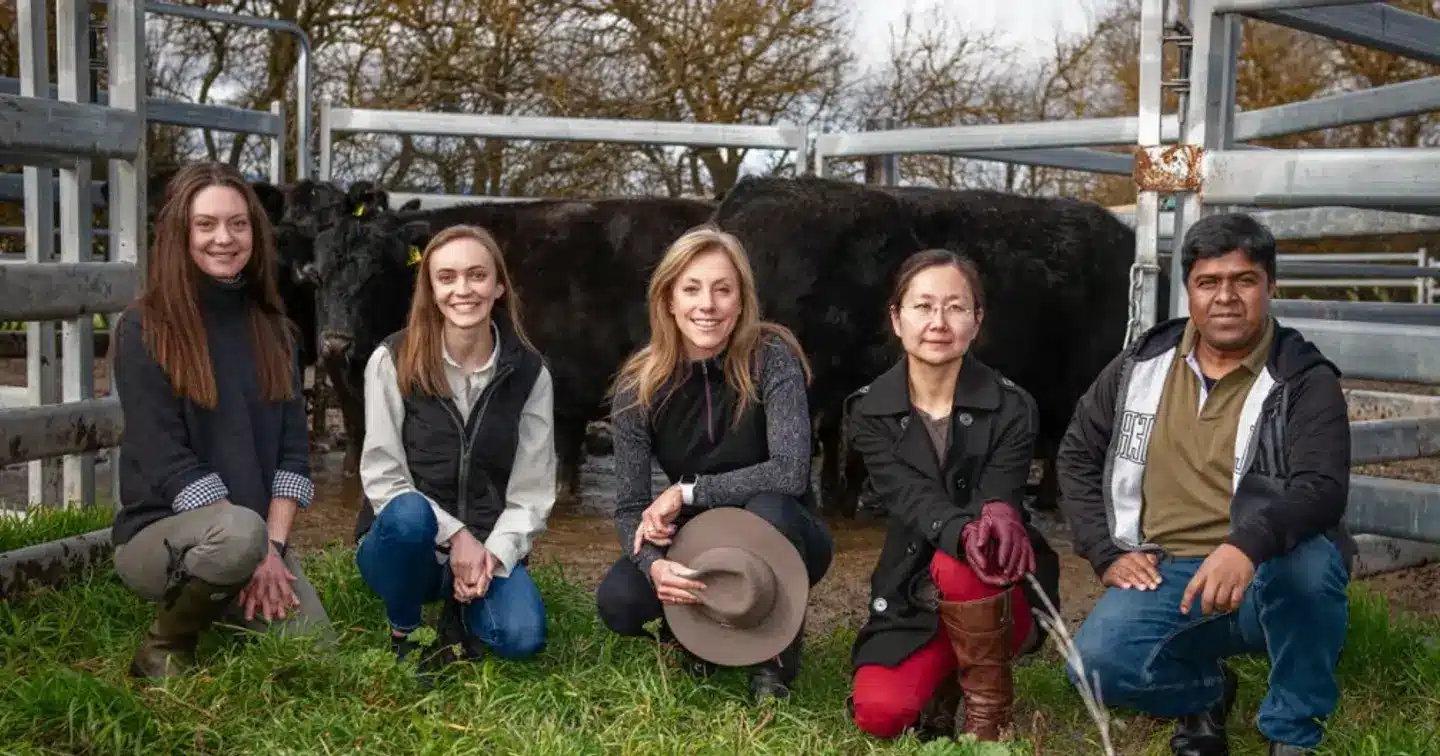
Australian AgTech startup Agscent has raised $3.5M in fresh funding to advance its livestock diagnostic technology, which analyses cattle breath to provide rapid insights into pregnancy, health and methane emissions.
The round attracted investment from Scale Investors and Tundra Capital, alongside family offices and agricultural investors. The financing values Agscent at approximately A$26.9 million, more than doubling the company’s valuation over the past 18 months.
Turning NASA Technology Into Agricultural Diagnostics
Agscent’s technology has its origins in sensing research developed for NASA to monitor astronaut health and detect airborne hazards during space missions.
Founder Bronwyn Darlington licensed a patent covering the sensing technology and adapted it for agricultural applications, creating a platform capable of detecting biological and chemical signals in livestock breath.
The system functions as a type of “digital nose,” combining advanced sensors, biological signal analysis and artificial intelligence to identify specific chemical signatures.
This enables farmers to receive diagnostic information directly on the farm without relying entirely on traditional laboratory testing.
Detecting Cattle Pregnancy Earlier
One of Agscent’s key applications is pregnancy detection in cattle.
The technology can identify pregnancy as early as 18 days after insemination, compared with approximately 40 days using some conventional approaches.
Earlier detection can help farmers make reproductive management decisions sooner, potentially improving herd productivity and reducing the time and costs associated with identifying unsuccessful breeding attempts.
Agscent plans to use part of the new funding to strengthen the artificial intelligence capabilities behind these diagnostic systems.
Measuring Methane and Livestock Productivity
Beyond reproductive management, Agscent’s technology can analyse cattle breath to measure methane emissions and provide insights related to feed efficiency and animal productivity.
The methane-monitoring application has already generated commercial revenue for the company and could help livestock producers better understand both the economic and environmental performance of their herds.
By collecting information directly from animals, Agscent aims to provide farmers with faster data that can support decisions around productivity, sustainability and livestock management.
Testing the Technology in the United States
Agscent is conducting larger-scale validation programmes in the United States, including work with Dairy Farmers of America.
These programmes are designed to evaluate the technology across commercial farming environments and provide additional evidence of its effectiveness at scale.
The company plans to use its new capital to expand operations and further develop its AI-powered detection capabilities as it moves toward wider commercial adoption.
Expanding Beyond Agriculture
Mark Gustowski of Tundra Capital highlighted the potential for Agscent’s technology to move diagnostics that traditionally require laboratory testing directly to farms, allowing results to be obtained much faster.
The underlying sensing technology could eventually have applications beyond livestock management.
Its ability to identify specific chemical signatures in the air could potentially support areas such as industrial and environmental monitoring, creating additional opportunities for the technology outside agriculture.
With A$5 million in new funding, Agscent is now focused on strengthening its AI capabilities, validating its technology at scale and expanding a diagnostic platform designed to make livestock management faster, more data-driven and efficient.
Australia Startups
Australian AI Sales Startup Enrola Raises $2.1M to Expand AI Agent Platform for Consumer Businesses
The funding will support Enrola’s AI sales agents, which engage and qualify potential customers through automated text conversations.

AI-powered sales startup Enrola has raised US$2.1 million in Seed funding to expand its platform that helps consumer-facing businesses engage potential customers and convert leads into sales.
The round was led by Purpose Ventures, with participation from existing investors Antler, AfterWork Ventures, and Skalata.
AI Agents for Consumer Sales
Founded in 2023 by Jo Thomas and Yvette Quinby, Enrola develops AI-powered sales agents designed for businesses selling higher-value products and services where customers typically require more information before making purchasing decisions.
The company’s AI agents communicate with potential customers through SMS, responding to inquiries within seconds and operating around the clock.
The agents can qualify leads, answer customer questions, address objections, schedule calls with sales teams, and, in some cases, complete sales directly through automated conversations.
Pivoting from Education to AI Sales Technology
The investment follows Enrola’s shift from its original education comparison platform toward developing AI-powered sales technology.
The company is targeting what CEO Jo Thomas describes as “high-consideration B2C” purchases, where customers generally spend more time researching, comparing options, and communicating with businesses before completing a transaction.
Enrola aims to help companies respond faster to these potential customers while reducing the amount of repetitive engagement handled manually by sales teams.
Preparing for the Future of AI Commerce
Thomas said consumer purchasing behavior is changing rapidly as AI becomes increasingly involved in how people discover, evaluate, and purchase products and services.
Enrola is developing its platform to support interactions across emerging buying environments, including future agent-to-human and agent-to-agent commerce, where personal AI assistants could interact directly with businesses’ AI sales systems.
Rather than focusing only on adding another communication channel, the company aims to build sales infrastructure that can adapt as consumer purchasing behavior evolves.
With the new Seed funding, Enrola plans to continue developing its AI agent technology and expand its platform for consumer-facing companies looking to automate customer engagement and improve sales conversion.
-

 MENA Startups7 days ago
Egypt-Based Exits MENA and ACE Acquire Avanz Capital Egypt in Seven-Figure Deal to Expand Private Equity and Asset Management
-

 MENA Startups6 days ago
MENA-Born Enterprise Voice AI Startup HeyBreez Raises $2.5M Seed to Accelerate Global Expansion
-

 News4 days ago
Dubai Entrepreneurs Who Raised $400K on Kickstarter Launch 12-Week Accelerator Teaching Teens to Build and Crowdfund Real Startups
-

 Asia Startups1 week ago
Singapore-Based RetailTech Startup Graas Raises $17M Series B, Acquires Trustana to Expand AI-Powered Commerce Platform
-

 MENA Startups6 days ago
Saudi EdTech AILA Raises $3M Pre-Series A to Scale AI-Powered Personalized Learning Across Regional and Global Markets
-

 MENA Startups7 days ago
Iraq-Based E-Commerce Startup Rozenama Raises $150K Pre-Seed to Expand Platform Nationwide
-

 MENA Startups7 days ago
UAE-Based Startup Tax Star Raises $1.75M to Expand AI-Powered Tax Compliance Platform Across GCC
-

 Asia Startups7 days ago
Indian FinTech Startup Rezolv Raises $12.5M to Expand AI-Powered Lending Platform
You must be logged in to post a comment Login