
Africa Startups
Nigeria-Based AI EdTech Startup Bildup AI Raises $400K to Scale Hybrid Learning Platform Across Africa
The Nigerian edtech startup is scaling its platform and preparing to open hybrid AI Learning Centres in Abuja and Lagos as demand for affordable upskilling grows.


Africa Startups
Nigerian Food Processing Company Tomato Jos Secures $2M Debt Facility to Expand Production and Smallholder Farmer Network
The naira-denominated facility from Sabou Capital links investor returns to the company’s social and economic impact.

Tomato Jos Farming and Processing Limited, a Kaduna-based tomato paste manufacturer, has secured a $2 million impact-linked debt facility from Sabou Capital.
The naira-denominated financing will support the expansion of Tomato Jos’ processing capacity, smallholder farmer network and domestic operations as Nigeria moves to reduce its reliance on imported tomato paste.
Linking Financial Returns to Measurable Impact
The facility is structured as impact-linked debt, meaning elements of the investor’s financial return are connected to agreed social and economic outcomes generated by the borrower.
The model is intended to align Tomato Jos’ commercial growth with outcomes including local employment, higher farmer incomes and greater participation by women in the agricultural supply chain.
“Tomato Jos is exactly the kind of business we back, one that turns an import dependency into local jobs, farmer income, and a stronger domestic economy,” said Surayyah Ahmad, Managing Partner at Sabou Capital. “We structured this deal so that our financial return grows with the impact they create.”
Tomato Jos directly employs 204 people and purchases tomatoes from more than 3,000 smallholder farmers, around 60% of whom are women. Sabou Capital said the company meets all four criteria of the 2X Challenge, a global benchmark for gender-lens investing.
Building a Domestic Tomato Processing Business
Founded in 2014 by Mira Mehta, Tomato Jos is a vertically integrated agricultural company producing branded tomato paste in Kaduna State.
The company operates a farm in Kangimi, within the Igabi Local Government Area, alongside a processing facility built to convert locally grown tomatoes into finished consumer products. Its model covers cultivation, sourcing from smallholder farmers, processing and distribution.
Mehta developed the idea after observing a tomato surplus in northern Nigeria while the country continued to depend heavily on imported tomato paste.
Sabou Capital describes Tomato Jos as operating one of Nigeria’s most technologically advanced tomato-processing facilities and working with the country’s largest network of smallholder tomato farmers.
Import Restrictions Create an Opening for Local Producers
Nigeria consumes more than 2.3 million tonnes of fresh tomatoes annually, while imports have historically met as much as 90% of demand for processed tomato products, according to Sabou Capital.
The investment follows the Federal Government’s restrictions on tomato paste imports, creating a larger addressable market for domestic manufacturers with established processing facilities and local supply chains.
Tomato Jos plans to compete for at least 10% of the domestic market. The company will use the financing to increase production and strengthen its ability to source tomatoes locally as demand for Nigerian-made products grows.
“The opportunity in front of us is real, but so is the competition; we’re up against international organisations with deep pockets,” Mehta said. “We are grateful to investors like Sabou who understand why our business matters beyond the cheque they write and the financial return they will get.”
Expanding the Smallholder Supply Chain
Tomato Jos intends to grow its network of smallholder suppliers and eventually source at least half of its raw materials from independent farmers.
Although the company currently purchases directly from more than 3,000 farmers, Mehta said its operations support a wider community of more than 10,000 farmers and family members.
The transaction also aligns with Sabou Capital’s strategy of providing adaptive credit and structured debt to growth-stage companies in underserved African markets. The Abuja-headquartered investment firm focuses on businesses operating in sectors including agriculture, healthcare, financial technology, logistics and essential consumer services.
Africa Startups
Pan-African Fund 3IF Ventures Makes Debut Investment in Kenyan InsurTech Turaco to Expand Insurance Access Globally
The undisclosed investment backs an embedded insurance company that has reached more than eight million people across Africa.

Mauritius-based 3IF Ventures has made its first investment, backing Nairobi-based embedded insurance company Turaco.
The financial terms were not disclosed. The transaction marks the first portfolio investment from 3IF Ventures, a pan-African fund established to support technology-enabled companies addressing the continent’s insurance protection gap.
3IF Ventures Begins Deployment
3IF Ventures invests from pre-Seed through Series B across insurance and adjacent sectors. The fund typically provides between $250,000 and $750,000 at the early stage, with investments exceeding $1 million possible at the Series A and Series B stages.
In June 2026, the Inclusive Insurance Investment Fund reached a $12 million first close, backed by limited partners including FSD Africa Investments and ZEP-RE. The fund is targeting a final close of $30 million.
Its investment strategy focuses on three structural barriers that limit insurance adoption in Africa: access, affordability and awareness, which the firm describes collectively as the “3A Challenge.”
3IF Ventures estimates that more than 90% of African households and micro, small and medium-sized enterprises lack insurance coverage. In addition to providing capital, the fund plans to offer portfolio companies insurance expertise, operational support and connections to insurers, reinsurers and other industry partners.
“Turaco has built a very strong model with clear traction and expansion strategy,” said Anthony Chaillet, General Partner at 3IF Ventures. “We are excited to work alongside Ted and the team on the next phase of growth.”
Turaco Reaches Eight Million People
Founded in 2019 by Ted Pantone and Peter Gross, Turaco provides affordable embedded insurance products to underserved customers through partnerships with consumer-facing companies.
Turaco says it has reached more than eight million people across six African markets. The company recently entered its first Asian market through a launch in Pakistan.
The company distributes insurance through partners including ASA International, M-KOPA and Safaricom. These partnerships allow customers to access coverage through platforms and services they already use.
Turaco combines embedded distribution with proprietary underwriting and claims technology. Its products are primarily designed for low-income customers who may have limited access to conventional insurance services.
Expanding an Africa-Built Insurance Model
Turaco began operating in Kenya and Uganda in 2019. It raised $2 million in Seed funding in 2020 before securing a $10 million Series A in 2022, which supported its entry into Nigeria.
The company expanded into Ghana in 2023 and obtained microinsurance underwriting licences in Kenya and Uganda in 2024. In 2025, Turaco passed five million insured customers and launched operations in Zambia and Pakistan.
Turaco has set a long-term goal of insuring one billion people globally. Its expansion into Pakistan is an early test of whether the embedded insurance model developed across its African operations can be replicated in other emerging markets.
“We are excited to welcome the 3IF Ventures team as partners in Turaco,” said Pantone, co-founder and CEO of Turaco. “As one of Africa’s leading insurance innovators, it will be great to have such seasoned (re)insurance experts in our corner.”
New Capital Supports Turaco’s Growth
Turaco and 3IF Ventures have not disclosed the size, structure or intended use of the investment.
The transaction nevertheless gives Turaco access to a fund specialising in insurance and reinsurance as it expands beyond Africa and builds relationships with additional distribution partners.
For 3IF Ventures, the investment provides an established first portfolio company with operating scale, regulatory experience and a presence across multiple markets. It also begins the deployment of the fund’s strategy to back businesses making insurance more accessible to underserved consumers and enterprises.
Africa Startups
South African FinTech Mission Mobile Secures Up to $30.9M from DNI to Scale Smartphone Financing Across Africa
The growth capital will support product development and customer expansion across Mission Mobile’s device-financing platform.

South African financial technology company Mission Mobile has secured up to R500 million, approximately $30.9 million, in growth capital led by investment group DNI.
The financing will help Mission Mobile accelerate its product roadmap, expand its customer base and grow its team as it develops smartphone-financing infrastructure for mobile network operators and retail partners.
Smartphone Financing Without Partner Credit Risk
Mission Mobile provides financed smartphones and connectivity packages to consumers who may have limited access to conventional credit.
The company manages financing, fulfilment, billing and collections on behalf of mobile network operators and retailers. Mission Mobile retains the credit exposure, allowing its partners to increase smartphone adoption without placing handset costs or customer defaults on their balance sheets.
Its underwriting technology evaluates live cash-flow and alternative data instead of relying exclusively on conventional credit bureau records. Mission Mobile says the platform can return a verified offer in under two minutes and currently records an acceptance rate of approximately 95%.
The platform was developed for prepaid and underserved mobile customers in African markets, with prices disclosed upfront and no hidden fees or unexpected penalties.
Mission Mobile Chooses Permanent Capital
Mission Mobile said it selected DNI instead of following a conventional venture capital route because of the investor’s permanent-capital model and its operational involvement in portfolio companies.
“Their approach to permanent capital and their involvement in the companies they invest in align with how we want to build Mission Mobile,” the company said. “The systems, distribution, and customer relationships we’re building need room to compound.”
The company views the partnership as a long-term arrangement that could combine its financing technology with DNI’s telecommunications distribution capabilities and relationships across South Africa.
Founded in 2023 by brothers Timothy and Adam Strike, Mission Mobile operates at the intersection of financial services, telecommunications and physical retail distribution. Timothy Strike leads the company’s commercial and product strategy, while Adam Strike serves as chief technology officer.
Building the Platform From the Ground Up
Over the past year, Mission Mobile has developed its principal technology and operational systems internally.
These include a consumer assessment engine, billing and payments infrastructure, account-management software and point-of-sale tools for retail onboarding. The platform connects real-time credit decisions with device fulfilment, recurring billing and payment reconciliation across distributed retail networks.
Mission Mobile is also exploring a broader prepaid proposition combining smartphone access, preferential voice and data rates, and customer rewards.
The company believes connecting device financing with SIM usage and loyalty programmes could help mobile network operators increase recurring revenue, customer retention and lifetime value while giving consumers greater flexibility.
DNI Expands Its Connectivity Portfolio
Mission Mobile forms part of DNI’s R2.1 billion investment commitment across connectivity, digital services and FinTech.
The wider strategy includes investments in fibre network operator Frogfoot, internet service provider Vox, prepaid fibre business Hypa and eSIM provider KnowRoaming. Together, the businesses give DNI exposure across network infrastructure, internet access, smartphones, financial services and international connectivity.
DNI operates in more than 40 countries and generates annual revenue exceeding R12 billion. The group focuses on supporting founder-led businesses while connecting them with its distribution infrastructure, industry relationships and operating capabilities.
Mission Mobile complements DNI’s existing telecommunications activities by providing device-financing technology and affordable smartphone packages through mobile operator retail networks.
Funding Supports Product and Team Expansion
Mission Mobile will use the new capital to accelerate development of its platform and extend its reach to more customers.
The company also plans to expand its team across FinTech, product and operational roles as it scales a consumer platform connecting financial services, telecoms and retail distribution.
For mobile operators, Mission Mobile aims to generate additional recurring revenue without transferring credit risk. For consumers, its model seeks to make smartphone ownership faster and more transparent, particularly for prepaid subscribers underserved by traditional financing providers.
-

 MENA Startups7 days ago
US Agentic Coding Platform Replit Acquires Analytics Startup Atta to Add Interactive Data Visualizations to AI Chat
-
 News1 week ago
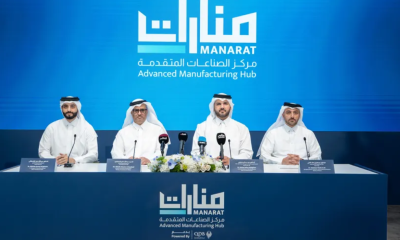
Qatar Development Bank Opens Applications for MANARAT, Offering Ready-Built Facilities to Help Manufacturers Adopt Industry 4.0 Technologies
-

 Asia Startups6 days ago
Indian HRTech Startup Scooter Raises $160K Pre-Seed Funding to Expand Sales Hiring Platform and Streamline Candidate Assessments
-

 Asia Startups6 days ago
Indian Experience-Tech Startup Alive App Raises $1M Seed Funding to Expand Experience Supply and Technology Capabilities
-

 Asia Startups6 days ago
Indian Startup SiMa.ai Raises $150M Series C to Scale Physical AI Platform and Develop Next-Generation Hardware
-

 MENA Startups5 days ago
UAE Launches Ai Everything Abu Dhabi 2026, Connecting 150 AI Startups With Global Investors
-

 MENA Startups5 days ago
TiE Women MENA Names Five Regional Winners to Compete for MENA Title at GITEX Global 2026
-

 Euro Startups6 days ago
Portugal-Based InsurTech Startup FRANK Raises €2.9M to Expand AI-Powered Platform for Automating Administrative Tasks Globally
You must be logged in to post a comment Login