Entrepreneurs
Behind the Launch: How Bahraini Entrepreneur Turned her Pain into Mental Health Platform?
Morshdyapp came from a story of pain!

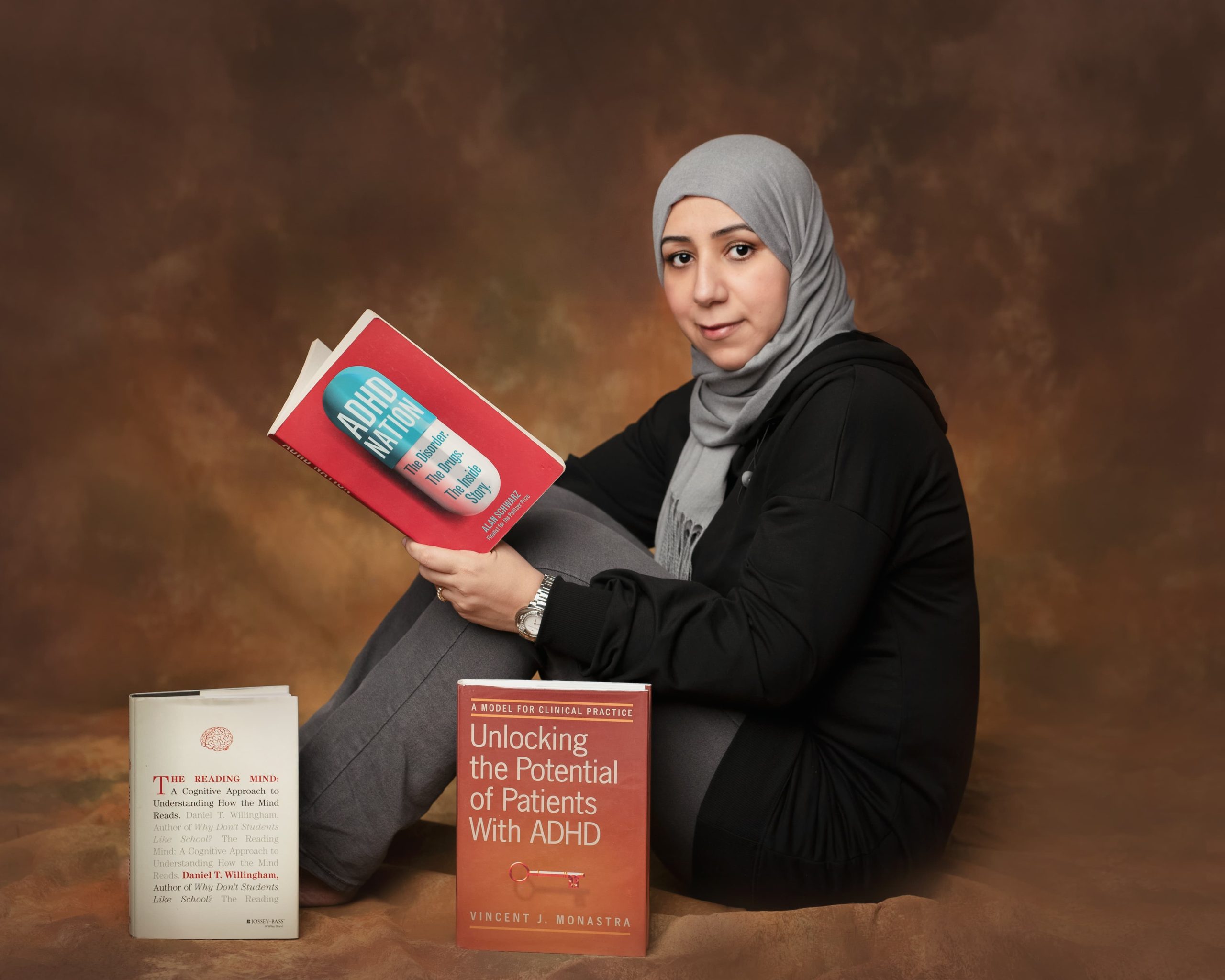
In recent years, “Morshdy” has emerged as one of the most prominent mental health platforms in the region, based out of Bahrain. In an exclusive interview with Arab Founders, Bahraini entrepreneur Intisar Radhi shares her journey into entrepreneurship, how a deeply personal experience led her to launch Morshdy, and her valuable advice for fellow entrepreneurs across the Arab world.
Who is Intisar Radhi?
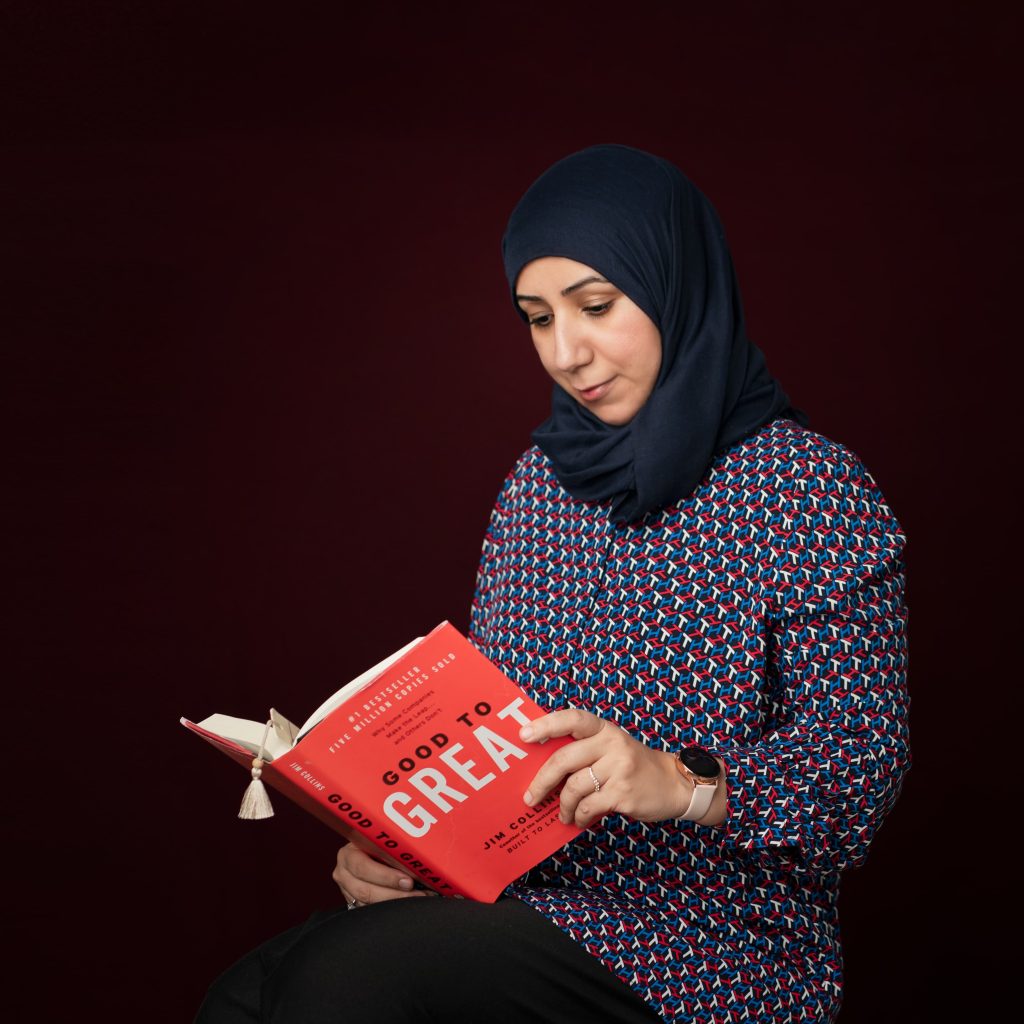
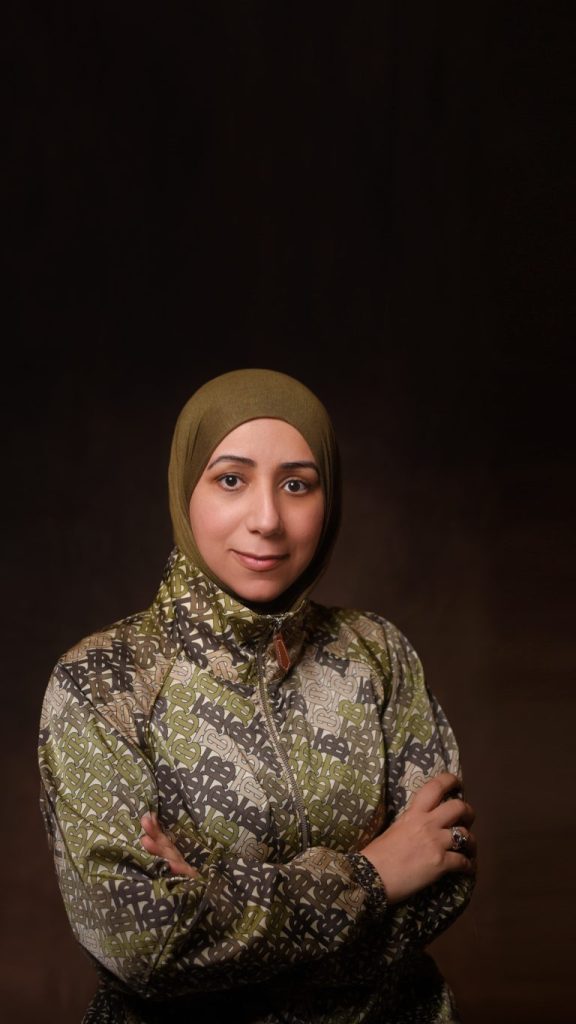
“I am Intisar, a Bahraini entrepreneur, the founder and CEO of Morshdy for Mental Health and Bayader, a company focused on training aspiring entrepreneurs. I’m also a wife and mother of three children. In the past, I was heavily involved in volunteer work and used to write poetry and plays. Many of my works won first-place prizes, but I left the literary world once I entered entrepreneurship, focusing entirely on my projects.”
Was “Morshdy” your first startup? What inspired the idea behind it?
“My first venture was actually an online magazine called ‘Raihana,’ which focused on highlighting creative Gulf women in various fields. I launched it 13 years ago, but the project didn’t last, and I eventually shut it down.
Looking back, I think the failure was largely due to my lack of entrepreneurial mindset at the time. I was passionate about the idea, but I wasn’t prepared to be an entrepreneur. It was ahead of its time—back then, no one was thinking of launching an online magazine. Had it continued, I believe it would have been a major success. But as I was working as an employee, I decided to close it.
Morshdy, however, came from a place of pain.”
A Story of Pain? Tell us more.
“Yes, a story of pain… My son, Ali, was born 16 years ago, and at age three, he was diagnosed with ADHD (Attention Deficit Hyperactivity Disorder). I first noticed it when I sent him to nursery school. On the first day, they called me just hours later to inform me that he was being expelled. It wasn’t the first time he had been rejected—swimming clubs, family gatherings, Quran schools, talent centers, you name it. His hyperactivity and difficulty building relationships led to constant rejection.
That day, walking out of the nursery with my son, I asked myself, ‘Intisar, how long will you live with this problem? When will you find a solution?’
At that time, 13 years ago, there wasn’t much awareness about mental health in the Arab world. I decided to buy every book I could find about ADHD and began educating myself. I had just completed my master’s in psychological counseling, so I threw myself into research.
Over the next decade, I read and translated over 300 books and more than 3,000 scientific studies about ADHD. Eventually, I realized that this vast knowledge needed to be shared.”
How did that lead to Morshdy?
“I knew I had to turn my knowledge into a project. After consulting experts and business mentors, I decided to create a platform. I started an Instagram page called ‘Focus on ADHD,’ which has since become one of the leading Arabic platforms on the disorder.
But I didn’t want to stop there. I asked myself, ‘Why limit this to ADHD? Why not expand into other areas of mental health?’ And that’s how Morshdy was born.”
The biggest challenge for startups is often securing funding. Did you face that difficulty?
“When I launched ‘Focus on ADHD,’ I was still working at my previous job. But after completing the Morshdy platform, I made the bold decision to resign. I left a prestigious position with a high salary and great benefits, only two years away from retirement. It was a massive risk, but I wanted to fully dedicate myself to Morshdy. I even withdrew my savings to fund the project.
It was a bold move that many wouldn’t dare to take. But I believe that when an entrepreneur is truly confident in their project, they can make others—whether investors or customers—believe in it too. That’s what happened to me. Every investor I’ve pitched to shares my faith in Morshdy.
While funding wasn’t the hardest part, building a team was. Finding the right people to carry out your vision is much more difficult than securing financial backing. That’s the real ‘game-changing’ challenge in entrepreneurship.”
Where is Morshdy now? Tell us about your services and expansion.
“Morshdy offers mental health services through three models:
- Self-awareness programs: Online programs by experts that help individuals and their families understand mental health disorders and how to manage them.
- Psychological counseling: One-on-one therapy and support.
- Support groups: We connect individuals dealing with similar challenges, providing a space for mutual support and training on how to manage disorders.
We’re like a support system, not the only part of the mental health journey, but a crucial one. We help people through the long and tough process of mental health treatment, complementing clinics and doctors.”
What’s the best and worst day of your entrepreneurial journey so far?
“My best day was when we partnered with ‘Tamkeen,’ a Bahraini institution that supports entrepreneurs and the private sector. They help startups with everything from technology to recruitment and marketing. Many friends told me it was impossible for Tamkeen to approve our funding because Morshdy was less than a year old. But I believed in my project and stayed confident.
During the meeting, I was overjoyed to learn that not only did they approve, but they were amazed by what we had achieved so far. That was my happiest day—seeing an institution like Tamkeen recognize the vision I had for Morshdy.
My worst day? When our website was attacked by hackers shortly after launch. They completely destroyed it, and we couldn’t figure out who was behind the attack. Even my Instagram page was hacked, though I managed to recover it. We had to rebuild everything from scratch, learning a painful lesson in the process.”
How Do You Balance Entrepreneurship with Personal Life? Is Balance Even Possible for Entrepreneurs?
“I believe that balancing my role as an entrepreneur with my role in family life is not an easy process. Achieving balance requires a high level of self-compassion, allowing myself to forgive any shortcomings in either role during periods of pressure.
As an entrepreneur and a mother, you must find support from your partner. Thankfully, my partner has been incredibly supportive, and that has made a significant difference. Entrepreneurship involves long hours, so having a mutual understanding between spouses is crucial, which is something we’ve agreed upon in our life together.
For me personally, my children love Morshdy. They are aware of every detail of the company, and I make them feel like they are a part of it. My advice to everyone is to make your partner and children part of your journey. It’s important not to separate your family from your project—keep them informed about your successes, failures, numbers, and challenges. This way, they can appreciate your long working hours and understand the time you dedicate to your business.”
Beyond Morshdy, How Do You See the Business Environment in Bahrain, the Gulf, and the Arab World?
“I always share my view with colleagues that Bahrain is the best Gulf country to start a business in. From here, you can expand to the rest of the Gulf. Bahrain is experiencing sustainable economic growth and development across various sectors. The Bahraini government has also made numerous economic and legislative reforms to enhance the business environment and attract more direct investments.
As for the Gulf region, we’ve seen significant improvements in the business environment, particularly in Saudi Arabia and the UAE. In recent years, Gulf countries have worked hard to develop their infrastructure. Saudi Arabia, for example, has introduced legislation that encourages investment and innovation.”
What Sectors Interest You? Tell Us About Your New Projects Aside from Morshdy.
“I’m particularly drawn to the training sector, and Morshdy itself is built around training in the field of mental health, which has been highly successful. We also launched the ‘Morshdy Podcast: 100 Success Stories,’ where we host young people from various Arab countries to share their success stories in their mental health journeys with Morshdy, aiming to break the stigma surrounding mental health disorders in the Arab world.
Through our training initiative, we have managed to break this stigma and convince young people to come forward on YouTube and share their experiences with mental health disorders, how it impacted their lives, how they began treatment, and how they started improving.
Seeing the results and benefits of our training, reflected in the stories of these individuals, gives me great satisfaction. Training is a field I’m passionate about, which is why my second project, Bayader, focuses on training aspiring entrepreneurs. It’s dedicated to building the entrepreneurial mindset and personality, as my research revealed that while everyone focuses on developing skills, very few focus on building the right mindset, which constitutes 80% of an entrepreneur’s success.
We launched Bayader a year ago and have since hosted many Bahraini entrepreneurs who shared their success stories with us. Currently, we are preparing to launch the Bayader app, which will provide professional training services to this specific group of entrepreneurs.”
Best Book?
“The 48 Laws of Power” by Robert Greene.
Best Movie?
The Shawshank Redemption.
Favorite TV Series?
The Last Dance.
Favorite Hobby?
Watching documentaries and medical dramas.
Best and Worst Traits?
Best trait: Empathy toward others.
Worst trait: Workaholism.
How Do You Deal with Your Workaholism?
“I set strict rules for myself, ensuring that I stop working at a set time each day.”
Final Advice for Entrepreneurs, Especially Women?
“Start with your mind. 80% of your success depends on building your entrepreneurial mindset.”


Entrepreneurs
PLAYBOOK Founder Wafa AlObaidat: Raising Capital Takes More Than a Strong Pitch.. It Starts With the Right Investor Relationships

For Wafa AlObaidat, the conversation around women and capital in the Middle East has moved beyond a simple question of whether funding exists. The capital is there. The harder challenge is knowing where to find it, who is actually deploying it, and how founders can build the relationships that put them in the right room long before they need to raise.
As Founder and CEO of PLAYBOOK, AlObaidat has spent years building those rooms, connecting women with founders, experts, investors and opportunities across the region. But her ambition goes further than helping more women secure funding.
Following PLAYBOOK’s acquisition of Women Spark, she is increasingly focused on what comes next: turning women from participants in the financial system into owners, investors and allocators of capital.
In this interview with Arab Founders, AlObaidat discusses the persistent barriers facing female founders, why fundraising is ultimately a relationship exercise, the opportunity emerging across Saudi Arabia and the GCC, and why the next chapter of women’s economic participation must be about ownership and wealth creation.
AF: What are the biggest barriers female founders still face when trying to access capital, particularly in the GCC and wider Middle East?
I don’t think the biggest barrier is that there isn’t capital available. It’s knowing where to find it.
There is so much information that never makes it onto a website, which investors are actually deploying, what stages they care about, who they want to meet, and, sometimes most importantly, who can introduce you to them.
That is where networks become incredibly powerful. A founder can have a strong business and still miss the right investor simply because she wasn’t in the room where that conversation was happening.
At PLAYBOOK, we’ve always tried to make that room bigger. A member might come to us through a masterclass or workshop, meet an expert, find a relevant opportunity through the community, connect through one of our chapters, or have a more focused 1:1 session with one of our experts. The value is in all of those touchpoints coming together over time.
Women Spark has added another important dimension to that. Since PLAYBOOK acquired Women Spark, we’ve seen the strength of its investor community and what happens when women aren’t only asking for access to capital but are actively becoming investors themselves. Seventy-five percent of Women Spark members invest directly, and they’ve collectively funded more than 22 startups.
That’s the kind of shift I want to see happen more broadly
And it’s very much the thinking behind Women Shaping Wealth in Riyadh this September. We want founders, investors, institutions and decision-makers in the same room having conversations that can actually lead somewhere.
AF: Beyond the availability of funding itself, what factors can make it more difficult for women entrepreneurs to connect with the right investors and successfully raise capital?
Timing and relevance matter enormously.
You can meet a hundred investors and still not meet the one person who understands your sector, your stage and what you’re building.
That’s why I don’t believe networking is about collecting contacts. It’s about building relationships over time, before you actually need something from someone.
PLAYBOOK gives women different ways to do that. Our chapters create more local,
relationship-driven connections, our community brings women together around specific interests and industries, and members can learn directly from people who have already built businesses and navigated these challenges themselves.
The new app is another step in making those connections more useful. Layla is there to help members navigate the network based on what they’re actually looking for, rather than expecting them to figure everything out themselves.
But I would still say the technology is only part of it. A good introduction is valuable because there are real people and real relationships behind it.
And then you have to be ready for the conversation. That’s where our masterclasses, workshops and 1:1 sessions with PLAYBOOK experts can make a real difference because access without preparation doesn’t get you very far.
AF: Do you believe there is still a gap in how investors evaluate businesses led by women compared with those led by men? If so, what needs to change?
Yes, I think bias still exists. I don’t think we’ve solved that.
But I also think we sometimes focus too much on what happens in the investment meeting and not enough on who gets invited into that meeting in the first place.
If an investor’s pipeline comes from the same small group of people every year, they’re going to keep seeing the same types of businesses and founders.
So part of the answer is simply to broaden the pipeline.
That means introducing investors to women earlier, when they’re building rather than only when they’re fundraising. It means creating more opportunities for investors to see the businesses behind the pitch deck and understand the founders over time.
That’s something we see across PLAYBOOK. A woman might first meet an expert through a masterclass, then become part of her local chapter, attend an event, have a conversation with
someone in the network, and eventually find herself in front of an investor.
It’s not one magical introduction. It’s usually a series of relationships that build confidence on both sides.
The more consistently we create those opportunities, the harder it becomes for the same narrow group of businesses to dominate the conversation.
AF: From your own experience building and raising investment for PLAYBOOK, what have you learned about navigating the fundraising process as a female founder?
One of the biggest lessons I’ve learned is that fundraising is a relationship exercise, not a presentation exercise.
Of course, you need to know your numbers. You need a strong business, a clear market and a compelling reason for someone to invest.
But investors are also deciding whether they trust you.
Will you tell them when something isn’t working? Can you take difficult feedback? Can you adapt when the market changes?
I’ve also learned that you have to be willing to change the business as you learn.
PLAYBOOK today looks very different from the business I started. We’ve grown from a community into a much broader offering that includes expert-led learning, workshops, chapters, opportunities, a global membership community, Women Spark, and now our new app, which uses AI to help members navigate the network and find the people, knowledge and opportunities most relevant to them.
Some of those decisions came from listening very carefully to what our members actually needed.
As a founder, you have to stay very close to the problem you’re solving. The business can evolve. Your ego can’t be allowed to run the company.
AF: How important are professional networks, mentorship and access to investor communities in helping female founders become investment-ready and secure funding?
They’re extremely important, but I don’t think women need to be told to “network more.” They need better relationships.
You need someone who understands what you’re building. Someone who can give you honest advice. Someone who has been through the situation you’re about to face. And, sometimes, someone who can make one very important introduction.
That’s one of the reasons we have built such a broad expert community within PLAYBOOK. Our members can learn from people who have actually done the work, and when it makes sense, they can book 1:1 advisory time with PLAYBOOK experts rather than trying to get everything they need from a panel or a course.
The membership also creates something that is harder to measure but incredibly valuable: continuity. You keep seeing the same people. You build familiarity. You become part of each other’s professional lives.
That’s often where the strongest opportunities come from, not from meeting someone once, but from knowing them well enough that when an opportunity comes up, they think of you.
AF: What can investors, venture capital firms and financial institutions do differently to ensure promising female-led businesses have greater access to capital?
Start earlier.
If the first time an investor meets a founder is when she has already opened a fundraising round, you’re meeting her very late in the journey.
I would encourage investors and institutions to spend more time around founders when they’re learning, building and experimenting. Host the workshop. Come into the community. Meet the founders before there is a transaction attached to the relationship.
Financial institutions in particular can play a much broader role than simply providing capital. They can help women understand financial products, introduce them to the right people, create opportunities for learning and give them access to networks they may not otherwise have.
We’ve seen the value of that kind of engagement through PLAYBOOK’s partnerships and workshops.
And at Women Shaping Wealth, we’re trying to make that conversation more tangible through the MOU programme, where institutions, investors and founders can make commitments
publicly and then be held accountable for what comes next.
The important word for me is “next.” We don’t need more promises that disappear after the event.
AF: Saudi Arabia and the wider GCC are seeing growing participation by women in entrepreneurship and business. What opportunities are emerging for female founders seeking investment in the region?
The opportunity in the GCC right now is enormous.
But what excites me most is that women aren’t simply entering these markets as participants. They’re becoming founders, investors, executives, board members and decision-makers.
Saudi Arabia in particular is going through a significant economic transformation, and that creates space for new businesses and new ideas.
We’ve seen this through our own community. PLAYBOOK has women building across the Gulf, and our chapters give those relationships a local dimension rather than making everything feel remote or online.
That’s one of the reasons Riyadh was such a natural home for Women Shaping Wealth.
We’re bringing the Summit to The Garage at KACST on September 28–29 because the region doesn’t need an imported conversation about entrepreneurship. It already has one.
What we can do is bring more of the right people into it, founders, investors, institutions, corporates and women who are ready to move from earning wealth to having a role in creating and allocating it.
AF: How can women move beyond financial inclusion toward greater ownership, investment and long-term wealth creation through entrepreneurship?
We have to start talking about ownership much more directly.
Financial inclusion is important, but having access to financial services is only one part of the picture. The bigger question is: what do you own?
Do you own equity in a business? Are you investing? Are you building assets that can grow
beyond your own time and income?
The acquisition of Women Spark by PLAYBOOK has been particularly meaningful in that respect. It’s a community where women are already participating directly in investment.
Seventy-five percent of Women Spark members invest directly, and they’ve funded 22+ startups together.
That’s a very different conversation from telling women that investing is something they should consider someday.
Within PLAYBOOK, we also have experts sharing practical knowledge around business, finance and investing through our learning content and workshops.
Ultimately, I want women to see themselves on both sides of the capital table.
AF: What role can successful female founders and investors play in creating a stronger funding ecosystem for the next generation of women entrepreneurs?
They can make the journey shorter for someone else.
It doesn’t always mean writing a cheque. Sometimes it’s an introduction. Sometimes it’s reviewing a pitch deck. Sometimes it’s being available for one honest conversation when someone is about to make a decision you’ve already made yourself.
That’s one of the things I love about the PLAYBOOK community. A woman can join as a member because she wants to learn something, and over time she can become the person teaching, mentoring, investing or opening a door for someone else.
Our chapters are a great example of that. They’re not simply event groups. They’re communities of women who know each other and create opportunities locally.
And Women Spark creates another route for women who are ready to participate as investors.
If we can create more of those cycles, where today’s founder becomes tomorrow’s investor or mentor, the ecosystem becomes much stronger than if we’re constantly starting from zero.
AF: For a female founder preparing to raise her first institutional round, what should she prioritise to strengthen her position with potential investors?
Know your business cold.
Not just your pitch. Your numbers. Your customers. Your margins. Your market. What isn’t working. What you’ve learned. What you would do differently.
An investor will eventually get past the story and start asking questions about the business, so you want to be comfortable there.
I’d also tell founders not to wait until they’re fundraising to build relationships. Start talking to people early. Go to the events. Join communities where investors and experienced founders are actually present. Ask questions.
PLAYBOOK can be useful in that stage because there are different entry points depending on what you need, whether that’s learning from one of our experts, attending a workshop, speaking to someone through the community, using the network, or having a more focused 1:1 conversation.
And if you’re building a company with real traction and a clear ask, opportunities like the Power Pitch at Women Shaping Wealth can give you another way to get in front of relevant investors.
Fundraising shouldn’t feel like turning a switch on. The groundwork should already be there.
Entrepreneurial Stories
From an Early Arabic Social Network to 300 Million Game Downloads: How Hussam Hammo Built Tamatem Into a MENA Gaming Powerhouse
Long before Arabic gaming became a major investment theme, Hussam Hammo saw a market global publishers were largely overlooking. What began in Amman as a bet on culturally relevant Arabic games would grow into Tamatem—a gaming business spanning publishing, payments, advertising technology and AI.

When Hussam Hammo launched Tamatem in 2013, the opportunity he saw was hidden inside a contradiction.
The Arab world had hundreds of millions of people speaking one of the world’s most widely used languages. Smartphone adoption was accelerating, mobile gaming was expanding globally, and young consumers across the Middle East were increasingly spending their lives online.
Yet Arabic remained dramatically underrepresented in digital content.
For games, the gap was particularly visible.
Search an app store in English and millions of options appeared. Search in Arabic and the selection shrank dramatically. International publishers had built successful games, but many had done little to make those products feel as though they had actually been created for Arab players.
Hammo believed translation alone would not solve that problem.
The characters, locations, music, cultural references and even seasonal events had to make sense to the people playing.
That insight became Tamatem Games.
More than a decade later, the Amman-born company has published over 70 games generating more than 300 million downloads, built its own regional payments infrastructure, expanded across six offices, and grown to around 180 employees. In 2026, Tamatem went another step further by acquiring Turkish adtech company Playable Factory, pushing the business beyond publishing toward a vertically integrated gaming ecosystem spanning content, distribution, payments, advertising technology and AI.
But Tamatem was not Hammo’s first attempt at building for Arabic internet users.
Before Tamatem, There Was Faye3
Hammo studied computer science at Princess Sumaya University for Technology in Jordan, but his interest in building Arabic digital products began before Tamatem existed.
In 2006, he founded Faye3.com, an early Arabic social network launched before Facebook had an Arabic-language version.
The idea attracted hundreds of thousands of Arabic-speaking users, demonstrating something that would become central to Hammo’s later career: Arab consumers were willing to embrace digital products built around their own language.
Commercially, however, Faye3 struggled.
Scaling and monetization proved difficult, and the platform was eventually shut down. But the experience gave Hammo a close view of a structural problem across the early Arabic internet.
The audience existed.
The content often did not.
Faye3 had not become the enduring business Hammo wanted, but the problem it exposed would eventually lead him toward a much larger opportunity.
Finding the Gap in Arabic Mobile Gaming
By 2013, mobile gaming was becoming an increasingly important part of the global entertainment business.
Hammo saw an opportunity to apply what he had learned about localization to games.
Arabic was spoken by hundreds of millions of people, yet Arabic-language applications and games represented only a small fraction of what was available online.
The challenge was not necessarily that the region needed thousands of entirely new games developed from scratch.
Successful games already existed around the world.
What they lacked was a bridge into the Arab market.
Tamatem would become that bridge.
The company developed a publishing model in which it partnered with game developers internationally, brought their titles into MENA, and adapted them for Arabic-speaking players.
Its business model was largely based on revenue sharing: Tamatem handled services including localization, publishing and marketing, while taking a percentage of the resulting revenue.
The company could therefore build a portfolio without having to develop every title internally.
From Amman to Silicon Valley
Tamatem’s beginning also took Hammo outside Jordan.
In 2013, the company joined 500 Startups in Silicon Valley, becoming the first Arab company to enter the accelerator program.
For six months, Tamatem operated from the United States before returning to Amman.
The experience provided access to international investors and startup networks at a time when Jordan’s gaming ecosystem remained relatively small.
But Hammo did not relocate the core company permanently to Silicon Valley.
Tamatem returned to Jordan and built its team from Amman.
That decision would become part of the company’s identity: global partnerships and ambitions, but a business built from the Arab world around a problem specific to the Arab market.
Localization Meant More Than Translation
The core of Tamatem’s model was easy to describe but considerably harder to execute.
Take a successful international game.
Bring it into Arabic.
Make it feel local.
That final step mattered most.
Tamatem did not simply replace English words with Arabic ones. Its localization work could involve changing voices and character names, modifying music and clothing, introducing regional occasions such as Ramadan, changing locations and even adjusting details such as vehicle license plates.
The objective was to remove the feeling that Arab players were consuming a foreign game with an Arabic language pack added afterward.
One example came through Hollywood Story, developed by Nanobit.
For Arabic audiences, the game became Malekat Al Moda, or Queen of Fashion. Instead of moving between New York and Los Angeles, players could travel between cities including Dubai, Beirut and Cairo.
The localized title went on to surpass 15 million downloads.
Another example was the strategy title Clash of Empire. In its Arabic adaptation, Tahadi Al-Molouk, Richard the Lionheart was replaced by Salah al-Din Al-Ayubi to create a historical reference more culturally relevant to the target audience.
Even automotive games were localized around regional preferences.
Shake the Metal, built around drifting and cars familiar to Arab players, accumulated around five million downloads.
The strategy demonstrated that localization could affect much more than language.
It could change the emotional relationship between the player and the game.
Building a Portfolio of Arabic Gaming Hits
As Tamatem expanded, its portfolio grew across racing, strategy, combat, fashion and card games.
Among its biggest successes was VIP Baloot, built around the card game deeply embedded in Gulf culture.
By 2021, Tamatem had published more than 50 mobile games, with its portfolio surpassing 100 million downloads across Apple’s App Store and Google Play.
The company itself had grown from a small Amman operation to roughly 80 employees, with offices in the UAE and Saudi Arabia alongside Jordan.
Its reach was also no longer confined to users physically located in Arab countries.
Arabic speakers around the world could download its games, giving the company a potential audience extending from the Gulf and North Africa to diaspora communities in Europe, Australia and North America.
The business Hammo had started to solve an Arabic-content shortage was becoming a regional gaming publisher with international reach.
Turning a Publishing Model Into a Profitable Business
Tamatem’s growth was not built entirely around venture capital.
The company monetized its games primarily through in-app purchases and advertising, while sharing revenue with the international developers whose titles it published.
As the portfolio expanded, so did the economics of the model.
In an earlier stage of the company, Hammo said Tamatem had reached the point where its daily operations could sustain themselves without continuous external funding.
That did not mean investment was no longer useful.
Instead, capital shifted from being necessary for survival toward being a tool for faster expansion.
It was an important transition for a company operating in a region where early gaming startups had to convince investors not only that their individual business could work, but that Arabic gaming itself represented a meaningful commercial market.
Recognition Beyond the Gaming Industry
By the end of the decade, Tamatem had begun receiving recognition outside gaming circles.
In 2019, the World Economic Forum selected Tamatem among 100 Arab startups it identified as helping shape the Fourth Industrial Revolution.
The recognition came as the wider MENA gaming market was beginning to attract far more attention from investors, governments and global publishers.
For Tamatem, that change represented a validation of a thesis Hammo had pursued years earlier.
Arabic gamers were not a niche audience.
They were a large market that had been underserved.
When the Pandemic Accelerated Gaming
Then came 2020.
COVID-19 pushed people around the world toward digital entertainment as lockdowns restricted traditional social activities.
Gaming usage surged.
Hammo said the number of mobile gamers on Tamatem increased by approximately 150% during the pandemic.
The surge accelerated a business that had already spent years developing distribution and localization capabilities.
By 2021, Tamatem had partnerships with game developers across countries including the United States, China, France, South Korea, Bulgaria and Croatia.
What had started as a localization gap had become an international publishing network centered in Amman.
An $11 Million Series B Led by the Company Behind PUBG
A major funding milestone arrived in late 2021.
Tamatem raised $11 million in Series B funding, led by South Korean gaming company KRAFTON, the company behind the global PUBG franchise.
The investment was significant beyond the capital itself.
Tamatem had spent years positioning itself as the route through which international game developers could reach Arabic-speaking consumers.
Now one of the world’s major gaming companies was investing directly in that model.
The funding gave Tamatem additional resources to grow its portfolio, expand geographically and deepen relationships with developers around the world.
And the company was gradually moving beyond its original identity as simply an Arabic mobile-game publisher.
Building the Infrastructure Around the Games
As Tamatem scaled, Hammo encountered another regional problem: payments.
Publishing a game successfully does not matter much if players cannot easily pay for it.
The Middle East and North Africa does not operate through a single unified payments infrastructure. Different countries have different payment methods, banking systems, wallets and consumer habits.
Tamatem responded by building Tamatem Plus.
The payments network eventually integrated more than 45 local payment methods through a single API, helping developers monetize games across fragmented regional markets.
That represented an important evolution.
Tamatem was no longer solving only the problem of localization.
It was beginning to solve the infrastructure problems that made operating a gaming business in MENA difficult in the first place.
From 40 Million to 300 Million Downloads
The scale of Tamatem’s portfolio illustrates that evolution.
In its earlier years, the company had around 40 games and 40 million downloads.
By 2021, it had surpassed 50 published games and 100 million downloads.
By 2026, the portfolio had grown beyond 70 titles generating more than 300 million downloads, while attracting more than three million monthly active users.
The company itself had expanded with it.
Tamatem now operates across six offices in Amman, Riyadh, Abu Dhabi, Cairo, Istanbul and Baghdad, with a workforce of approximately 180 employees.
And its capital base continued to grow.
By 2026, Tamatem said it had raised more than $25 million, with investors including KRAFTON, Next Ventures and Square Enix.
But Hammo’s next move showed that Tamatem’s ambitions had moved beyond publishing more games.
Acquiring Playable Factory
In April 2026, Tamatem announced the full acquisition of Istanbul-based Playable Factory, a technology company specializing in playable advertising for user acquisition.
Founded in 2018, Playable Factory had built a platform responsible for more than 30 billion impressions and over 90,000 interactive ads.
Its technology allows potential players to interact with a miniature version of a game directly inside an advertisement before deciding whether to install it.
For Tamatem, acquiring that technology meant bringing another critical part of the gaming value chain in-house.
The company already had content.
It had localization.
It had publishing and distribution.
Through Tamatem Plus, it had payments.
Playable Factory added advertising technology and performance marketing.
Hammo described the acquisition as a “defining moment” for Tamatem and tied it to the importance of controlling critical infrastructure across the gaming value chain.
From Arabic Publisher to Integrated Gaming Platform
The Playable Factory acquisition represents perhaps the clearest indication of how far Tamatem has moved from its original 2013 model.
The company began by helping foreign developers translate and culturally adapt their games.
It is now attempting to support developers across a much larger part of their journey—from localization and distribution to monetization, payments and user acquisition.
Artificial intelligence is becoming another part of that transformation.
Tamatem says it is investing in AI across game development, advertising creatives and personalized player experiences as it works toward becoming what it describes as an AI-first gaming platform.
The ambition, therefore, is no longer simply to dominate Arabic-language mobile-game publishing.
It is to build gaming infrastructure from the Middle East that can eventually compete beyond it.
The Bet Hussam Hammo Made in 2013
More than a decade after Tamatem was founded, the problem that inspired it remains central to the company.
Arab users want digital products that speak their language and understand their culture.
In 2013, that idea was far less obvious to global publishers than it is today.
Hammo built Tamatem around the gap.
He started by localizing games.
Then the company built distribution.
Then payments.
Then advertising technology.
Now it is adding AI while pushing toward markets beyond MENA.
The numbers tell part of that story: more than 70 titles, 300 million downloads, three million monthly active users, six offices, around 180 employees and over $25 million raised.
But the more important thread goes back even further—to Faye3 and Hammo’s first realization that the Arabic internet had users long before it had enough products built for them.
Faye3 did not become the lasting company.
The insight did.
And Tamatem became the business that finally scaled it.
Entrepreneurial Stories
From Personal Struggle to Global Recognition: This Tunisian Innovator Turned Her Own Mobility Challenges Into an Award-Winning Electric Car Startup for Wheelchair Users
For Khadija Jellouli, limited mobility was not an abstract problem waiting to be studied—it was part of everyday life. The Tunisian innovator turned that experience into HawKar, developing an electric vehicle designed to give wheelchair users greater independence on the road.

For many people with limited mobility, getting from one place to another can involve a chain of obstacles most drivers rarely have to consider: finding accessible transportation, transferring out of a wheelchair, relying on another person for assistance, or navigating vehicles that were never designed around their needs.
For Tunisian innovator Khadija Jellouli, those challenges were personal.
A wheelchair user herself, Jellouli had experienced the limitations of conventional transportation firsthand. Instead of approaching accessibility as an engineering problem from a distance, she began with a problem she understood through daily life.
Her answer was ambitious: build an electric vehicle specifically around people with disabilities and limited mobility.
That idea eventually developed inside her HawKar workshop, where Jellouli worked alongside two friends who also use wheelchairs. Together, they moved through research, experimentation and product development until they arrived at a working vehicle designed to make independent mobility easier.
Now, with two versions developed and a vehicle capable of reaching around 45 kilometers per hour, Jellouli is confronting the next challenge: moving from prototypes and limited production toward manufacturing at a larger scale.
Building From a Problem She Knew Personally
Some founders discover problems through market research.
Jellouli lived hers.
As a wheelchair user, she understood how the absence of suitable transportation could restrict independence. A journey that might be routine for another person could require planning, assistance and an accessible vehicle that may not always be available.
That experience became the starting point for HawKar.
Rather than modifying a conventional car after it had already been designed, Jellouli approached the vehicle around the needs of wheelchair users from the beginning.
It was an important distinction.
The objective was not simply to build another small electric car. It was to reconsider how someone with limited mobility enters, controls and uses the vehicle.
Turning the Idea Into a Working Vehicle
Developing that idea required more than Jellouli working alone.
Inside the HawKar workshop, she was joined by two friends who also use wheelchairs, bringing direct user experience into the development process itself.
The team went through research, testing and successive development as it worked toward a practical electric vehicle.
That user-centered approach is visible in one of the car’s most important features.
Instead of requiring the driver to leave the wheelchair before entering the vehicle, the car includes a rear door through which the wheelchair can be brought directly inside.
The vehicle can accommodate two people.
For its intended users, that is more than a design feature.
It addresses one of the fundamental points of friction that Jellouli set out to solve: dependence on others simply to get into a vehicle and travel.
Rethinking the Driving Experience
Accessibility also shaped the controls.
The vehicle uses a simplified driving system, including a steering wheel equipped with a handle, designed to make controlling the car easier for people with different mobility requirements.
An integrated screen on the dashboard provides information intended to help drivers identify their routes and destinations.
Together, those elements reflect HawKar’s broader approach: instead of asking people with disabilities to adapt themselves to a conventional vehicle, adapt the vehicle to the people who will actually use it.
And because mobility limitations differ from one person to another, Jellouli did not stop with a single configuration.
Developing Two Versions Around Different Needs
Jellouli has developed two versions of the electric vehicle.
One is a standard model.
The second is a more advanced version that can be customized according to the individual needs of its user.
That customization could prove particularly important for an accessibility-focused vehicle. Disability is not a single set of physical requirements, and a control system suitable for one driver may not work equally well for another.
Building adaptability into the product therefore expands the idea beyond simply producing a wheelchair-accessible car.
It points toward a vehicle platform that could potentially be configured around different users.
An Electric Vehicle Built for Everyday Independence
The vehicle can reach a top speed of approximately 45 kilometers per hour.
That positions the current concept less as a conventional high-speed passenger car and more as a compact mobility solution designed around everyday transportation.
And that distinction matters.
The significance of HawKar does not lie in competing with mainstream electric vehicles on horsepower or maximum speed. Its value proposition is accessibility and independence.
For someone who depends on accessible transportation or assistance from another person, the ability to enter a vehicle with a wheelchair and operate it independently could fundamentally change everyday mobility.
Jellouli’s own experience gives that mission a particularly direct connection between founder and product.
She was not imagining what her target users might need.
She was one of them.
From Prototype to Production
The technical development, however, is only one stage of turning HawKar into a viable mobility solution.
The project remains at the prototype and limited-production stage, and Jellouli is now seeking investors and partners capable of helping it move toward larger-scale manufacturing.
That transition may prove just as important as building the original vehicle.
Producing a prototype demonstrates that an idea can work.
Manufacturing vehicles consistently, safely and affordably at scale requires capital, industrial partnerships, supply chains and production capabilities.
For HawKar, therefore, the next chapter depends on finding partners willing to take an accessibility innovation developed in a Tunisian workshop and help transform it into a product available to a much larger population.
Turning Personal Experience Into a Wider Solution
There is a simple idea at the center of Jellouli’s story.
She encountered a problem.
She understood it intimately.
And instead of accepting that the available transportation infrastructure had not been designed for people like her, she began designing an alternative.
Working alongside two other wheelchair users also meant that HawKar’s development was shaped by people experiencing the problem rather than exclusively by engineers attempting to anticipate their needs.
The result is still early.
HawKar has not yet reached mass manufacturing, and securing the investment and industrial support required to get there remains an important challenge.
But Jellouli has already crossed the first difficult boundary between identifying a problem and physically building an answer to it.
What began with the everyday mobility challenges of a wheelchair user has become two versions of an electric vehicle, built around a rear wheelchair entrance, simplified controls and customizable accessibility.
The next challenge is no longer proving that the idea can become a car.
It is finding the partners who can help put that car on the road.
-

 MENA Startups1 week ago
US Agentic Coding Platform Replit Acquires Analytics Startup Atta to Add Interactive Data Visualizations to AI Chat
-

 Asia Startups1 week ago
Indian HRTech Startup Scooter Raises $160K Pre-Seed Funding to Expand Sales Hiring Platform and Streamline Candidate Assessments
-

 MENA Startups2 days ago
Saudi-based AutoTech Startup Autobia Raises $12M Series A to Expand B2B Auto Parts Platform and Logistics Infrastructure
-

 Asia Startups1 week ago
Indian Experience-Tech Startup Alive App Raises $1M Seed Funding to Expand Experience Supply and Technology Capabilities
-

 Asia Startups1 week ago
Indian Startup SiMa.ai Raises $150M Series C to Scale Physical AI Platform and Develop Next-Generation Hardware
-

 MENA Startups1 week ago
TiE Women MENA Names Five Regional Winners to Compete for MENA Title at GITEX Global 2026
-

 MENA Startups1 week ago
UAE Launches Ai Everything Abu Dhabi 2026, Connecting 150 AI Startups With Global Investors
-

 Euro Startups1 week ago
Portugal-Based InsurTech Startup FRANK Raises €2.9M to Expand AI-Powered Platform for Automating Administrative Tasks Globally
You must be logged in to post a comment Login