
News
Kaplan MENA Hosts Landmark Sustainability and ESG Forums in Riyadh and Dubai, Launching Region’s First Sustainability Certificate
Forums convene regional ESG leaders and mark the launch of Kaplan’s sector-specific, GCC-focused ESG learning pathway


Kaplan Middle East & North Africa (MENA), one of the region’s leading professional learning providers, has successfully hosted two exclusive Sustainability & ESG Forums in Riyadh and Dubai respectively on October 28 and 29, 2025. The two events brought together some of the most influential voices in environmental, social, and governance (ESG) leadership from across the globe.
The Riyadh event, held in collaboration with the Financial Academy, the entity responsible for developing human capital capabilities in the financial sector, and the Dubai event, hosted solely by Kaplan MENA, gathered senior decision-makers from government, industry, and finance to address the urgent challenge of transitioning ESG from a compliance exercise to a core business value driver.
A Platform for Action: From Policy to Practicality
Under the theme “Turning Sustainability into a Competitive Advantage: From Cost Center to Value Driver,” both forums featured panel discussions and keynote addresses from globally recognised sustainability and ESG leaders, including executives from ACWA Power, Emirates Global Aluminium, Al Safi Danone, VFS Global, as well as a UN-awarded sustainability expert. Conversations focused on operationalising ESG strategies, future-proofing businesses, and aligning with national visions such as ‘Saudi Vision 2030’ and ‘UAE Net Zero 2050’.
“These forums are more than just conversations; they are accelerators for meaningful change,” said Stuart Whent, Chief Operating Officer at Kaplan MENA. “We are convening the people who have the influence and vision to reshape how sustainability is embedded in our region’s economic future.”
Launching a First-of-its-Kind Sustainability and ESG Education Pathway
At the heart of the forums was the official launch of Kaplan’s Sustainability & ESG Foundations Certificate, an accredited learning program in the region tailored specifically for GCC professionals. This program integrates:
- Regional context, including a module tailored to GCC policy and regulatory frameworks
- Sector-specific pathways, allowing learners to specialise in industries such as finance, energy, and tourism
- Global academic rigour, co-designed with Melina Taprantzi, Founder of Earth & Co. and a UN-awarded ESG expert
“We designed this program to close the gap between ESG intent and credible implementation,” said Melina Taprantzi. “The curriculum bridges global standards with regional realities, ensuring learners walk away with both strategic insight and practical tools.”
Driving Real Change in the Middle East
As more organisations across the Middle East adopt ESG strategies, the need for robust, localised training becomes increasingly urgent. Kaplan’s initiative directly supports national priorities by:
- Enabling better ESG reporting and data quality
- Helping companies access green capital and lower cost of funding
- Creating a scalable, sustainable talent pipeline equipped with verified ESG skills
- Catalysing cross-sector collaboration through high-level convening power
With over 1.2 million learners annually in 27 countries, Kaplan is leveraging its global education expertise to solve one of the region’s most pressing business challenges, which is building ESG capabilities that are credible, relevant, and impactful.
About Kaplan Middle East & North Africa (MENA):
Kaplan partners with businesses, governments, and institutions across the Middle East to deliver professional training, language programs, and university pathways, while actively supporting national initiatives. Leveraging global expertise and local presence, Kaplan provides tailored learning solutions that upskill professionals in finance, leadership, human resources, digital, and business skills.
We design and deliver end-to-end programs for regulators, banks, sovereign wealth funds, and leading enterprises across the region building workforce capabilities, advancing national upskilling, and developing future leaders for the region’s priority sectors.
Kaplan’s five MENA offices are in Dubai (two locations), Riyadh, Abu Dhabi, and Cairo.
About Kaplan:
Kaplan MENA is part of Kaplan, Inc.,a global educational services company that helps individuals and institutions
advance their goals in an ever-changing world. Our broad portfolio of solutions helps students and professionals further their education and careers, universities and educational institutions attract and support students, and businesses maximize employee recruitment, retainment, and development. Stanley Kaplan founded our company in 1938 with a mission to expand educational opportunities for students of all backgrounds. Today, our thousands of employees working in 27 countries continue Stanley’s mission as they serve about 1.2 million students and professionals, 15,000 corporate clients, and 3,300 schools, school districts, colleges, and universities worldwide. Kaplan is a subsidiary of the Graham Holdings Company (NYSE: GHC).
About the Financial Academy:
The Financial Academy (FA) has long been a leader in training, career development, and professional certification services for the financial sector in Saudi Arabia. Its offerings cover banking, finance, insurance, and capital markets, aimed at professionals and those seeking a career in these fields. Aligned with the goals of the Financial Sector Development Program (FSDP) and the Kingdom’s Vision 2030, FA aims to continuously upgrade the human capital in the financial sector, ensuring a skilled workforce ready to meet industry demands.


News
Dubai Doubles Oraseya Capital’s VC Fund to $272M, Raises Startup Investment Limit to $6M to Back Global Tech Companies
Dubai Integrated Economic Zones Authority (DIEZ) has doubled Oraseya Capital’s venture capital fund to AED 1 billion ($272 million), expanding its investment mandate beyond Series B and increasing the maximum investment per company to $6 million. The expansion follows the growth of Oraseya’s portfolio to 66 active startups that have collectively raised $1.1 billion.

Dubai Integrated Economic Zones Authority (DIEZ) has doubled the size of its venture capital fund managed by Oraseya Capital from AED 500 million to AED 1 billion ($272 million), expanding its capacity to invest in technology companies across different stages of growth.
The expansion includes doubling the maximum investment per company from $3 million to $6 million (approximately AED 22 million), allowing Oraseya Capital to participate in larger funding rounds and support startups beyond the Series B stage.
The fund will also broaden its geographical investment mandate, moving beyond companies directly connected to the UAE to include international technology businesses with strategic relevance to the country.
The move forms part of Dubai’s efforts to attract high-growth technology companies, expand access to venture capital and support the objectives of the Dubai Economic Agenda D33.
Oraseya Capital Expands Beyond Series B and UAE Markets
Under its expanded investment strategy, Oraseya Capital will continue supporting early-stage startups while increasing its exposure to more mature technology businesses with established commercial models and demonstrated growth potential.
The ability to invest beyond Series B marks a shift from its previous focus on earlier funding stages, giving the firm greater flexibility to support portfolio companies as their financing requirements increase.
Oraseya Capital will also pursue investment opportunities in global markets, provided the companies demonstrate strategic relevance to the UAE.
Sheikh Ahmed bin Saeed Al Maktoum, Chairman of DIEZ, said the expansion reflects Dubai’s ambition to strengthen its position as an international center for technology investment.
“Expanding the fund’s capacity strengthens the ecosystem around promising companies, providing them with the capital, expertise and opportunities they need to grow from Dubai into regional and global markets,” he said.
Portfolio Companies Raise $1.1 Billion, Revenue Reaches $387 Million
Since its launch in November 2023, Oraseya Capital has built a portfolio of 66 active companies, averaging approximately 25 investments annually.
According to DIEZ, the combined annual recurring revenue of its portfolio companies has increased from approximately $180 million at the time of investment to $387 million, including $140 million generated within the UAE.
Portfolio companies have also collectively raised $1.1 billion in funding, demonstrating their ability to attract additional investment as they expand.
The firm has completed eight cohorts of its SANDBOX Investment Program, which provides selected startups with $150,000 in funding, alongside its six-month LAUNCHPAD program supporting entrepreneurs.
According to venture capital data platform MAGNiTT, Oraseya Capital ranked as the UAE’s most active investor by deal count in 2024 and 2025.
In the first half of 2026, it maintained its leading position in the UAE across overall deal activity and early-stage investments, while ranking second in the Middle East and North Africa in both categories.
AI, Fintech and Digital Assets Among Investment Priorities
Oraseya Capital’s existing portfolio spans fintech, proptech, artificial intelligence, advertising and marketing technology, sustainability, healthcare, digital commerce and education technology.
Under the expanded mandate, the firm will place greater strategic emphasis on emerging technologies, particularly artificial intelligence, fintech, digital assets, healthcare and longevity.
The broader investment scope will allow Oraseya Capital to pursue companies developing technologies with applications across industries, while maintaining its focus on commercially viable businesses with strong growth potential.
Dr. Mohammed Al Zarooni, Executive Chairman of DIEZ, said the expansion will strengthen Oraseya Capital’s ability to support companies through different stages of development.
“We are taking Oraseya Capital into a new phase of growth and expansion guided by a clear investment approach that brings together capital, expertise, guidance and access to an integrated network of investors and partners,” he said.
Dubai Targets the Next Generation of Global Unicorns
The expanded fund represents a larger pool of institutional venture capital available to technology companies seeking to establish or strengthen their presence in Dubai.
By increasing individual investment limits and extending its mandate to later-stage funding rounds, Oraseya Capital will be able to support companies requiring larger capital commitments as they expand into regional and international markets.
The strategy also supports Dubai’s ambitions under the D33 economic agenda to develop a more diversified economy driven by innovation, investment and high-value industries.
For Oraseya Capital, the next phase will combine its existing early-stage investment activities with larger investments in established technology companies, including businesses operating outside the UAE that could contribute to the country’s innovation ecosystem.
With AED 1 billion in fund capacity, 66 active portfolio companies and a broader international mandate, the firm is positioning itself to play a larger role in financing the next generation of globally competitive technology businesses and potential unicorns.
News
UAE Construction Market to Reach AED 614 Billion by 2031 as PropTech Adoption Grows
UAE construction market projected to reach AED 614 billion by 2031

The UAE’s construction sector is set to continue its upward trajectory over the coming years, with the market projected to reach AED 614.38 billion by 2031, according to market intelligence and advisory firm ‘Mordor Intelligence’.
The continued expansion is supported by sustained public and private investment, major urban development plans, infrastructure projects and growing demand across residential, hospitality, logistics and other sectors. Dubai remains a key contributor to this growth, accounting for 47.2% of the UAE construction market in 2025, according to the report.
As the scale and complexity of construction projects across the UAE continue to increase, technology is also becoming an increasingly important component of the development process. From digital design and Building Information Modelling (BIM) to immersive visualization and virtual experiences, technology is enabling developers, architects and investors to evaluate projects in greater detail before construction begins.
Lifesize Plans Dubai, a leading provider of full-scale architectural plan projection and immersive visualization, has been contributing to the UAE’s evolving real estate and construction landscape since entering the market in 2023. By combining full-scale physical projections with Virtual Reality (VR) and Augmented Reality (AR), the company enables users to explore different floor-plan configurations, finishes and design options during the pre-construction stage.
Georges Calas, CEO of Lifesize Plans Dubai, commented: “The continued expansion of the UAE’s construction market reflects the scale of development taking place across the country and the growing expectations of both developers and buyers. As projects become more sophisticated, we believe that allowing people to experience a property before it is built can provide a valuable additional layer of understanding and reassurance, while helping to identify potential considerations before construction begins.”
With infrastructure forecast to be one of the UAE construction market’s fastest-growing segments through 2031, alongside continued activity across residential, commercial and hospitality developments, the demand for technologies that can improve project visualization and decision-making is expected to continue evolving.
As the UAE’s construction and real estate sectors progress, complementary technologies such as immersive visualization and PropTech are increasingly positioned to play a role in improving design communication, enhancing the customer experience and supporting more informed decisions throughout the development lifecycle.
About Lifesize Plans Dubai:
Lifesize Plans Dubai is the UAE’s premier provider of full-scale architectural plan projection and virtual walkthroughs. By combining physical-scale visualizations with immersive technology, the company bridges the gap between concept and construction—helping clients experience, evaluate, and enhance their projects before building begins.
News
Qatar Development Bank Opens Applications for MANARAT, Offering Ready-Built Facilities to Help Manufacturers Adopt Industry 4.0 Technologies
Qatar Development Bank has launched Manarat, a new advanced manufacturing hub offering 16 ready-built factory units for technology-driven manufacturers, as Qatar seeks to accelerate Industry 4.0 adoption and develop factories capable of joining the World Economic Forum’s Global Lighthouse Network.
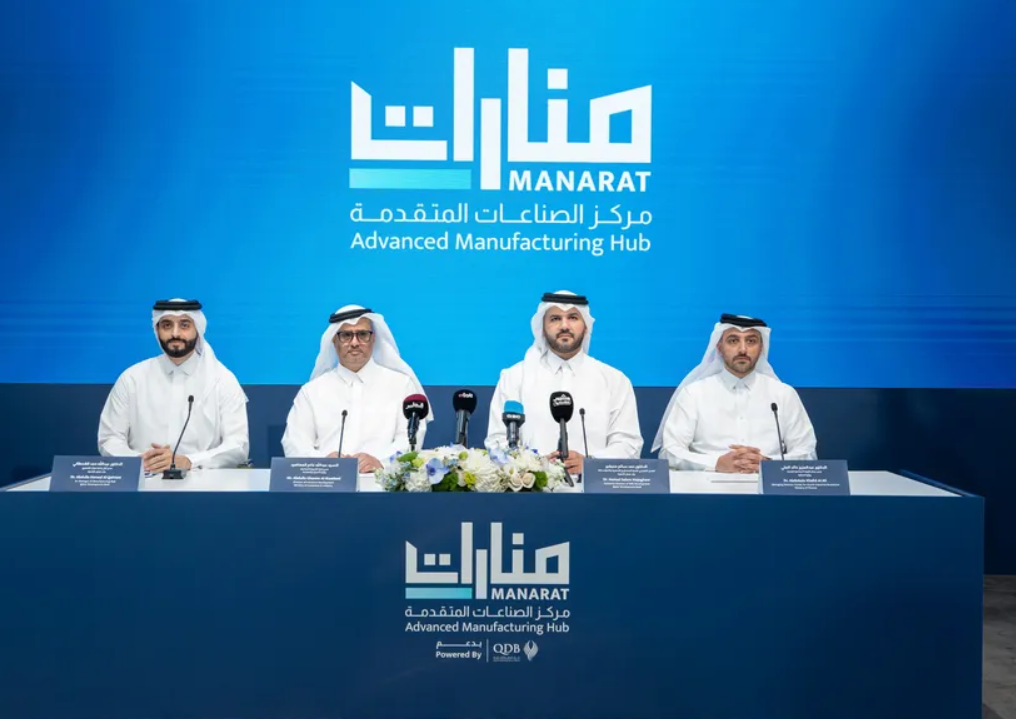
Qatar Development Bank (QDB) has launched the Advanced Manufacturing Hub (Manarat), a new industrial complex designed to accelerate the adoption of advanced manufacturing technologies and build a new generation of high-tech factories in Qatar.
Developed in partnership with the Centre for the Fourth Industrial Revolution (C4IR) at the Ministry of Finance and the Ministry of Commerce and Industry, Manarat is opening applications for 16 ready-built factory units located in Qatar’s New Industrial Area.
The initiative targets both Qatar-based manufacturers and international investors operating in technology-intensive industries, combining physical manufacturing infrastructure with advisory, financing and export support from QDB.
Manarat Targets Industry 4.0 Manufacturing
Manarat is designed around Fourth Industrial Revolution technologies, including automation, artificial intelligence and advanced digital systems that can improve factory productivity, efficiency and competitiveness.
The industrial complex will focus primarily on strategically important manufacturing sectors including medical devices, pharmaceuticals, electronics and telecommunications, robotics and chemicals, alongside other related industries.
Companies applying to Manarat will undergo a two-stage assessment. The first evaluates eligibility and technical readiness, while the second examines the technical and commercial viability of their proposed manufacturing projects.
The model is intended to bring technology-driven manufacturers, investors and expertise into a shared industrial ecosystem where companies can exchange knowledge while developing more sophisticated production capabilities.
Qatar Wants Factories to Join WEF’s Global Lighthouse Network
The name Manarat, meaning “Lighthouses,” reflects one of the initiative’s longer-term ambitions: helping factories operating from the hub develop toward the standards associated with the World Economic Forum’s Global Lighthouse Network.
The network recognizes manufacturing sites that have demonstrated advanced deployment of Fourth Industrial Revolution technologies and significant transformation of their operations.
Manarat is being developed through cooperation with the World Economic Forum’s Centre for the Fourth Industrial Revolution, with smart infrastructure and technology adoption forming central parts of the initiative.
Dr. Hamad Salem Mejegheer, QDB’s Executive Director of SME Development, said the hub is intended to help companies expand production capacity, attract international expertise and develop specialized knowledge locally.
“Investing in advanced manufacturing is a key pillar in strengthening Qatar’s position as a leading regional hub for industrial innovation and enabling our factories to join the WEF’s Global Lighthouse Network,” Mejegheer said.
QDB Combines Factory Space With Financing and Export Support
Manarat goes beyond providing industrial space. QDB plans to offer participating manufacturers an integrated support structure that includes advisory services, financing solutions and export support.
For international companies, the hub provides a potential route into Qatar’s manufacturing sector through ready-built facilities and access to a wider development ecosystem. For local manufacturers, it is intended to reduce barriers to adopting advanced technologies and expanding production.
Dr. Abdulaziz Khalid Al-Ali, Director of C4IR at the Ministry of Finance, said Manarat will provide infrastructure and standards aligned with international efforts to accelerate Industry 4.0 adoption.
The Ministry of Commerce and Industry is also seeking to increase the digital readiness of Qatari factories and encourage greater use of automation, AI and advanced digital solutions.
Qatar’s Industrial Investments Reach QAR 248.44 Billion
The initiative forms part of the Qatar National Manufacturing Strategy 2024–2030, which seeks to increase manufacturing’s contribution to non-hydrocarbon GDP, localize production and create specialized jobs in advanced technology.
Cumulative investment in Qatar’s industrial sector reached QAR 248.44 billion in the second quarter of 2026, according to figures cited by the Ministry of Commerce and Industry.
Manarat adds a dedicated advanced manufacturing component to those efforts, targeting industries where technology, specialized expertise and sophisticated production infrastructure can create higher-value economic activity.
By combining 16 ready-built factories with technology infrastructure and QDB’s financing, advisory and export capabilities, the initiative aims to help manufacturers move toward smarter production models while supporting Qatar’s broader push for economic diversification and a knowledge-based economy.
-

 MENA Startups6 days ago
Saudi-based AutoTech Startup Autobia Raises $12M Series A to Expand B2B Auto Parts Platform and Logistics Infrastructure
-

 News6 days ago
Dubai Doubles Oraseya Capital’s VC Fund to $272M, Raises Startup Investment Limit to $6M to Back Global Tech Companies
-

 Euro Startups6 days ago
Denmark-based TravelTech Startup Tryp.com Raises €1.9M to Expand AI-Powered Travel Booking Platform Globally
-

 MENA Startups4 days ago
UAE-Based VC Firm Phoenix Venture Partners Closes $23M Debut Fund to Back Technology Startups Across MENA
-

 Africa Startups5 days ago
Tanzania-Based AgriTech Startup East Africa Foods Secures $40M to Expand Food Supply Chain Infrastructure and Reduce Waste Across East Africa
-

 Asia Startups6 days ago
Indian Pet Nutrition Startup TailBlaze Longevity Raises $300K Pre-Seed to Launch HeartPour Dog Food Nationwide
-

 MENA Startups4 days ago
UAE-Based Ice Cream Brand Mama Booza Launches Mama Pops Fruit Pop Range, Attracting Interest From Over 30 Countries
-

 Australia Startups5 days ago
Airwallex Awards $1M in Equity-Free Funding to 10 Australian AI Startups Through Latitude 37 Programme to Support Global Expansion
You must be logged in to post a comment Login