
Asia Startups
India-Based Recycling Startup Karo Sambhav Raises $6M to Expand Circular Economy Infrastructure
The Rainmatter-led investment will support the development of advanced recycling facilities and strengthen the recovery of critical materials from end-of-life products.


Karo Sambhav, an India-based recycling and circular economy startup, has raised ₹56 crore (approximately $6 million) in a pre-Series A funding round led by Rainmatter, the climate-focused investment initiative backed by Zerodha.
The fresh capital will be used to build and expand recycling infrastructure capable of recovering valuable materials from waste streams, supporting resource efficiency and reducing environmental impact.
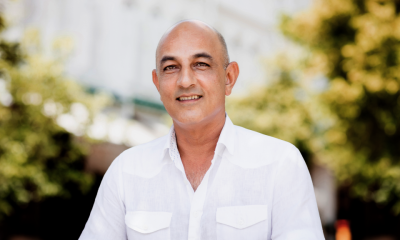
Founded in 2017 by Pranshu Singhal, Karo Sambhav has spent nearly nine years building its operations without external funding. During that period, the company established a nationwide collection and recycling network focused on addressing India’s growing waste management and resource recovery challenges.
The funding marks a significant milestone as the company seeks to scale its role in the country’s emerging circular economy ecosystem.
Expanding Critical Material Recovery
A key focus of the investment will be the expansion of facilities designed to recover high-value materials from discarded products.
Karo Sambhav primarily operates in the e-waste recycling sector, where end-of-life electronics contain valuable resources such as gold, silver, copper, tantalum, and rare earth elements. These materials play a critical role in electronics manufacturing, renewable energy technologies, and advanced industrial applications.
Founder and Chief Executive Officer Pranshu Singhal said India’s manufacturing ambitions will increasingly depend on reliable access to critical and high-value materials. He noted that many of these resources already exist within products that have reached the end of their usable life and can be recovered through efficient recycling systems.
The company believes strengthening domestic material recovery capabilities can help reduce dependence on imported resources while supporting more sustainable industrial growth.
Building a Nationwide Recycling Network
Since its launch, Karo Sambhav has developed a broad collection and recycling ecosystem spanning more than 50 cities across India.
The company currently operates two recycling facilities and has facilitated the recycling of more than 150,000 tonnes of waste through its network.
Its model combines waste collection, logistics, recycling, and resource recovery, enabling manufacturers, businesses, and consumers to participate in responsible disposal and recycling programs.
By creating structured systems for collecting and processing electronic waste, the company aims to improve recycling rates while ensuring valuable materials remain within the economic cycle.
Supporting India’s Circular Economy Goals
The latest funding comes as India places increasing emphasis on resource security, sustainability, and critical mineral recovery.
Karo Sambhav’s upcoming recycling facility has been approved under a government incentive program supporting critical mineral recycling. The initiative forms part of the National Critical Minerals Mission (NCMM), led by India’s Ministry of Mines.
The program is designed to strengthen domestic supply chains for strategic minerals that are essential for sectors including clean energy, electronics, electric vehicles, and advanced manufacturing.
Viraj Joshi, Vice President at Zerodha and Rainmatter, said the investment reflects confidence in Karo Sambhav’s ability to build long-term solutions for sustainability, climate resilience, and resource efficiency. He highlighted the company’s track record of execution and its systems-level impact within a complex sector.
With fresh funding, an established operational footprint, and growing policy support for critical mineral recovery, Karo Sambhav is positioning itself as a key player in India’s circular economy. The investment will help the company expand recycling capacity, strengthen material recovery capabilities, and contribute to a more sustainable and resource-efficient manufacturing ecosystem.













Asia Startups
Nvidia in Talks to Acquire $2.3B South Korean AI Chip Unicorn Rebellions, Backed by Saudi Aramco’s Wa’ed Ventures
Nvidia is reportedly exploring the acquisition of South Korean AI chipmaker Rebellions, a $2.3 billion startup backed by Saudi Aramco’s Wa’ed Ventures, as the company prepares for a potential IPO.

Nvidia is reportedly in talks over a potential acquisition of Rebellions, the South Korean AI semiconductor startup valued at $2.3 billion and backed by Saudi Aramco’s venture capital arm, Wa’ed Ventures.
The potential transaction would bring one of Asia’s rapidly growing AI chip startups into Nvidia’s portfolio at a time when demand for specialized computing infrastructure is expanding beyond AI training into inference and reasoning workloads.
Rebellions develops AI processors designed primarily for data centers and has expanded commercially across South Korea, Saudi Arabia, Japan and the United States.
The discussions come as Rebellions is also preparing for a potential initial public offering, creating two possible paths for the company as it enters its next stage of growth.
From $1.4 Billion to $2.3 Billion Valuation
Rebellions has raised more than $850 million in total funding as investors increase their exposure to companies developing alternatives and complementary technologies within the global AI semiconductor market.
In 2025, the company raised $250 million in Series C funding at a $1.4 billion valuation, with participation from major semiconductor and technology companies including Samsung, SK Hynix and Arm.
Its valuation subsequently climbed to $2.3 billion following a $400 million funding round in March 2026.
The capital has supported Rebellions as it develops chips optimized for AI workloads and expands into international markets.
Saudi Aramco Backed Rebellions’ Expansion Into the Kingdom
Rebellions also has a notable connection to Saudi Arabia through Wa’ed Ventures, the venture capital arm backed by Saudi Aramco.
Wa’ed Ventures invested $15 million in Rebellions in July 2024, with the investment supporting the semiconductor company’s expansion into Saudi Arabia.
The move gave Saudi capital exposure to one of the most strategically important layers of the AI economy: the semiconductor infrastructure required to run increasingly sophisticated artificial intelligence models.
Rebellions has since developed a commercial presence in the Kingdom alongside operations and customers in other major international markets.
For Saudi Arabia, the potential Nvidia transaction could also highlight a broader investment strategy in which Saudi-backed funds are gaining early exposure to international companies building critical AI infrastructure.
Why Rebellions Could Matter to Nvidia
Rebellions specializes in chips targeting AI inference and reasoning, areas becoming increasingly important as artificial intelligence moves from training large models toward deploying them at scale.
Training remains extraordinarily compute-intensive, but the rapid adoption of generative and agentic AI is also increasing demand for processors capable of efficiently running models and executing inference workloads inside data centers.
A potential acquisition could therefore give Nvidia additional specialized capabilities as competition intensifies across the AI semiconductor industry.
For Rebellions, joining Nvidia would represent a dramatically different route from proceeding independently toward the public markets.
IPO Plans Now Face a Potential Alternative
Rebellions has been preparing for an initial public offering, but acquisition discussions with Nvidia could potentially alter that trajectory if negotiations result in a transaction.
No completed acquisition has been announced, and the discussions therefore remain a potential deal rather than a confirmed transaction.
The outcome will be closely watched given Rebellions’ rapid increase in valuation, substantial institutional backing and strategic position in AI semiconductor infrastructure.
Saudi Capital Moves Deeper Into the Global AI Stack
The Rebellions story also illustrates how Saudi investment is increasingly moving beyond applications and software into the underlying infrastructure powering artificial intelligence.
Through its investment in Rebellions, Wa’ed Ventures backed a semiconductor company before its valuation reached its current $2.3 billion level and as it was beginning to establish a stronger presence in the Kingdom.
If Nvidia ultimately acquires Rebellions, the transaction would place an Aramco-backed AI chipmaker at the center of one of the global semiconductor industry’s most closely watched strategic moves.
More broadly, Rebellions’ expansion into Saudi Arabia connects South Korea’s semiconductor ecosystem with the Kingdom’s rapidly growing ambitions around AI infrastructure, data centers and advanced computing.
With Nvidia now reportedly considering an acquisition while Rebellions simultaneously prepares for an IPO, the next step could determine whether the $2.3 billion startup continues its independent expansion or becomes part of the world’s dominant AI computing company.
Asia Startups
Indian FinTech Giant Navi Raises $100M from Prosus at $1.3B Valuation in First External Round Since Launch, Prepares for Potential $314M IPO
Indian FinTech company Navi has raised $100 million from Prosus at a $1.3 billion valuation in its first external institutional funding round, as the company expands its payments, lending and financial services businesses while preparing for a potential IPO.

Indian financial technology company Navi has raised $100 million from global technology investor Prosus, valuing the company at approximately $1.3 billion as it prepares for its next phase of growth and a potential public listing.
The investment represents Navi’s first external institutional funding round since the company was founded nearly eight years ago.
Founded in 2018 by Sachin Bansal, the former Co-Founder and CEO of Flipkart, Navi has developed a broad digital financial services ecosystem spanning payments, lending, insurance and mutual funds in the Indian market.
Bansal launched Navi following his departure from Flipkart after Walmart acquired a controlling stake in the Indian e-commerce company in a $16 billion deal.
The latest transaction brings Prosus onto Navi’s shareholder base and comes as the FinTech company reportedly prepares another attempt to enter the public markets.
Navi Eyes IPO After Previous $440M Listing Plan
Navi is reportedly considering an initial public offering that could raise approximately $314 million, or INR 30 billion.
It would mark the company’s second attempt to pursue a public listing.
Navi filed for an IPO worth approximately $440 million in 2022, but abandoned the plan the following year as conditions in public markets deteriorated.
The $1.3 billion valuation attached to the latest Prosus investment is also below the approximately $2 billion valuation Navi had reportedly sought while exploring institutional investment in 2024.
The new capital therefore arrives at an important stage for the company as it combines renewed IPO ambitions with continued expansion across multiple financial services businesses.
From Lending to Nearly One Billion Monthly UPI Transactions
Lending represents a major part of Navi’s operations through Navi Finserv, which currently manages more than $1.4 billion in assets.
The company has also emerged as a significant player in India’s massive digital payments market through its UPI-based payments app.
Navi has become the fourth-largest UPI payments app by transaction volume, behind Walmart-owned PhonePe, Google Pay and Paytm.
The app processed more than 947 million transactions in July 2026, representing approximately $5.05 billion in transaction value.
Its growing payments footprint gives Navi access to a large consumer base that the company can potentially serve with additional products across lending, insurance and investments.
The strategy reflects Bansal’s broader ambition to build Navi into an integrated digital financial institution rather than a single-product FinTech platform.
Navi Generated $323M Revenue in FY2026
For the financial year ending March 2026, Navi generated approximately $323.3 million in revenue, while its net loss increased to around $48.7 million.
Despite the full-year loss, the company said its consolidated operations reached profitability during the fourth quarter of FY2026.
Bansal has financed much of Navi’s development himself since its establishment, committing hundreds of millions of dollars of personal capital to the business.
Prosus now becomes a major external institutional backer as Navi seeks to translate its growing position across payments and lending into a broader financial services platform.
Bansal said the Prosus investment provides strong backing for the financial institution Navi is building, while highlighting the investor’s global experience scaling technology companies.
For Navi, the $100 million round opens a new chapter after years of founder-funded growth. The company now enters that phase with a $1.3 billion valuation, nearly a billion monthly UPI transactions and renewed ambitions to access public markets.
Asia Startups
India-Based Company CtrlS Datacenters Raises $26M to Expand Hyperscale and AI-Ready Infrastructure
The ₹250 crore investment will support CtrlS Datacenters’ infrastructure expansion as demand for AI, cloud computing and digital services accelerates across India.

Indian hyperscale data center company CtrlS Datacenters has raised ₹250 crore, around US$26 million, from Zerodha co-founder Nikhil Kamath and entrepreneur Sreeram Reddy Vanga to expand its infrastructure and computing capacity.
Kamath invested ₹200 crore in the company, while Vanga contributed ₹50 crore. CtrlS plans to deploy the fresh capital toward increasing its data center capacity as it responds to growing infrastructure requirements from enterprises and large technology companies across India.
The company currently operates 19 data centers across nine Indian markets, representing more than 370 MW of capacity, and has a further 4.4 GW of projects at various stages of development.
Scaling Infrastructure for AI and Cloud Demand
Founded by Sridhar Pinnapureddy, CtrlS develops and operates hyperscale and AI-ready data centers serving large enterprises, cloud providers, financial institutions and government organizations.
The company expects demand for computing infrastructure to continue expanding as businesses increase their use of artificial intelligence, cloud services and other digital technologies.
Founder and CEO Sridhar Pinnapureddy said CtrlS has been built around a long-term view of India’s digital economy and the infrastructure required to support its growth.
He said the alignment with the company’s new investors gives CtrlS greater scope to accelerate its plans and develop data center platforms capable of supporting India’s next phase of digital expansion.
The new investment will help the company add infrastructure and capacity as workloads become increasingly compute-intensive and businesses require larger, more reliable facilities to operate digital services.
Nikhil Kamath Backs India’s Data Center Expansion
Kamath’s ₹200 crore investment accounts for the majority of the new capital and reflects a broader bet on the physical infrastructure underpinning emerging technologies.
Kamath said major technology shifts expected over the next decade, including AI, cloud computing and digital public infrastructure, will all depend on data centers.
He described India as being at an inflection point where supporting infrastructure will need to keep pace with technology adoption to avoid becoming a constraint on future growth.
Sreeram Reddy Vanga invested the remaining ₹50 crore in the round, bringing the combined investment to ₹250 crore.
Building a Larger Hyperscale Footprint
CtrlS focuses its data center operations on reliability, security, operational efficiency and sustainability. Its facilities are designed to support enterprise and hyperscale workloads as well as the growing computing requirements associated with AI.
The company’s existing footprint of 19 facilities spans nine major markets in India, giving it more than 370 MW of operational capacity.
Its development pipeline is considerably larger. CtrlS says approximately 4.4 GW of additional data center projects are currently at different stages of development, indicating the scale of infrastructure the company intends to bring online over time.
The latest capital will support that expansion as India’s digital economy generates greater demand for data storage and computing capacity.
For CtrlS, the investment provides additional resources to build out the physical infrastructure behind that growth, particularly as AI and cloud workloads increase the scale and performance requirements placed on data centers.
-

 MENA Startups7 days ago
Egypt-Based Exits MENA and ACE Acquire Avanz Capital Egypt in Seven-Figure Deal to Expand Private Equity and Asset Management
-

 MENA Startups6 days ago
MENA-Born Enterprise Voice AI Startup HeyBreez Raises $2.5M Seed to Accelerate Global Expansion
-

 News3 days ago
Dubai Entrepreneurs Who Raised $400K on Kickstarter Launch 12-Week Accelerator Teaching Teens to Build and Crowdfund Real Startups
-
 Asia Startups1 week ago
Singapore-Based RetailTech Startup Graas Raises $17M Series B, Acquires Trustana to Expand AI-Powered Commerce Platform
-

 MENA Startups6 days ago
Saudi EdTech AILA Raises $3M Pre-Series A to Scale AI-Powered Personalized Learning Across Regional and Global Markets
-

 MENA Startups7 days ago
Iraq-Based E-Commerce Startup Rozenama Raises $150K Pre-Seed to Expand Platform Nationwide
-

 MENA Startups7 days ago
UAE-Based Startup Tax Star Raises $1.75M to Expand AI-Powered Tax Compliance Platform Across GCC
-

 Asia Startups7 days ago
Indian FinTech Startup Rezolv Raises $12.5M to Expand AI-Powered Lending Platform
You must be logged in to post a comment Login