
North America
US-Based YC-Backed Fintech Startup Parker, Which Raised Over $200M, Collapses Into Bankruptcy
YC-backed fintech startup Parker has filed for Chapter 7 bankruptcy despite raising more than $200 million and reaching $65 million in revenue, marking one of the latest collapses in the fintech sector.


US-based fintech startup Parker, which offered corporate credit cards and banking tools for e-commerce businesses, has filed for Chapter 7 bankruptcy protection after reportedly shutting down operations.
The startup, part of Y Combinator’s Winter 2019 cohort, had raised more than $200 million in total funding, including a $125 million lending facility, making its collapse one of the more notable fintech failures of recent years.
Parker’s Series A round was led by Valar Ventures, while the company positioned itself as a fintech infrastructure platform specifically designed for online-first businesses and e-commerce founders.
Built Around E-Commerce Credit Infrastructure
Parker officially emerged from stealth in 2023, promoting what it described as a specialized underwriting model capable of evaluating e-commerce cash flows more accurately than traditional financial institutions.
At the time, co-founder and CEO Yacine Sibous said the company’s mission was to build better financial products tailored to digital entrepreneurs and independent online businesses.
“We imagined building better financial products for e-commerce founders with the mission of increasing the number of financially independent people,” Sibous previously told TechCrunch.
The startup offered corporate credit cards and banking solutions aimed at helping e-commerce companies manage spending, liquidity, and operational financing more efficiently.
Its model reflected a broader fintech trend over recent years, where startups attempted to build industry-specific financial products targeting underserved verticals such as creators, freelancers, SaaS companies, and online sellers.
Bankruptcy Filing Reveals Financial Struggles
According to the May 7 bankruptcy filing, Parker reported between $50 million and $100 million in assets, alongside liabilities within the same range.
The filing also indicated the company had between 100 and 199 creditors.
Although Parker’s website remained online following the reports, multiple social media posts suggested that its banking partner, Patriot Bank, had already informed customers about the shutdown earlier this week.
Fintech consultant Jason Mikula also claimed the company had been engaged in acquisition talks before negotiations collapsed, potentially triggering the abrupt shutdown.
Mikula argued the situation has left small business customers “in a tough spot,” while also raising questions around oversight tied to Parker’s banking relationships.
Parker itself has not publicly released a formal statement regarding the bankruptcy filing.
A Familiar Story Across Fintech
The collapse comes amid continued pressure across the fintech sector, where many startups that raised aggressively during the low-interest-rate era are now facing mounting operational and funding challenges.
Despite reportedly reaching $65 million in revenue, Parker appears to have struggled with the economics of scaling lending and financial infrastructure products in a tougher capital environment.
In a recent LinkedIn post, CEO Yacine Sibous reflected on the company’s journey without directly addressing the bankruptcy, noting that if he were to start over, he would “avoid over-hiring, reactive decisions, and doomsayers.”
The shutdown highlights the growing gap between rapid startup growth and long-term financial sustainability — particularly within fintech categories heavily dependent on lending partnerships, capital access, and risk management infrastructure.
For the broader startup ecosystem, Parker’s collapse serves as another reminder that even heavily funded fintech companies remain vulnerable when growth, underwriting, and operational discipline fall out of balance.













North America
US-Based AI Insurance Startup Klaimee Raises $5.5 Million to Protect Businesses from Autonomous AI Agent Failures
Y Combinator-backed insurtech startup Klaimee has raised $5.5 million in seed funding to build insurance-backed warranties and liability coverage for autonomous AI agents, addressing one of the biggest unanswered questions in enterprise AI: who pays when AI makes a costly mistake?
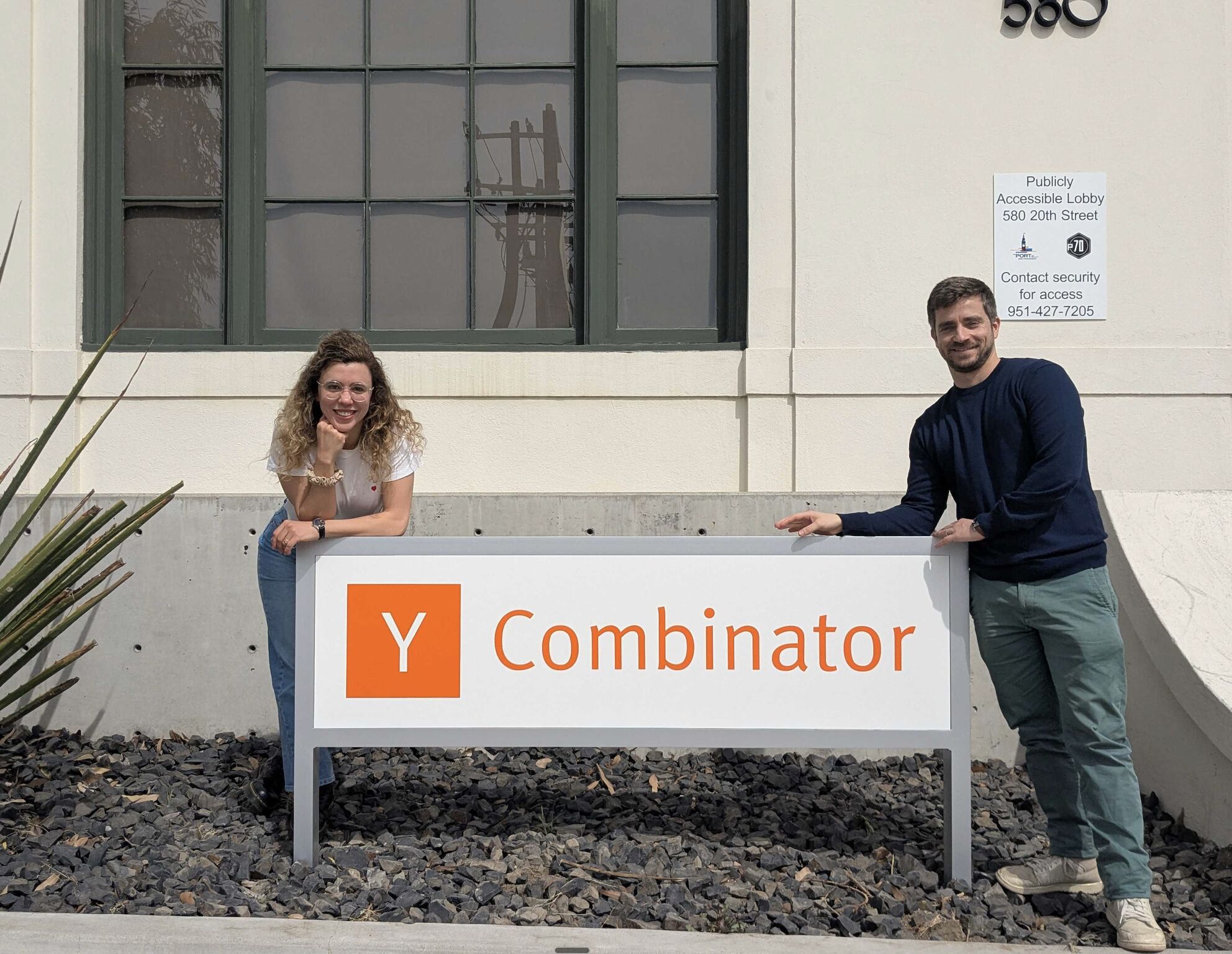
US-based insurtech Klaimee has raised $5.5 million in seed funding to develop insurance products specifically designed for autonomous AI systems, offering businesses protection when AI agents make mistakes that result in financial losses or operational failures.
The round was led by FundersClub’s Alexander Mittal, with participation from ex/ante, Pioneer Fund, Multimodal Ventures, Kima Ventures, Rebel Fund, Robinhood Ventures, Y Combinator, and several angel investors.
Building Insurance for the AI Agent Era
Unlike traditional software, autonomous AI agents can independently execute financial transactions, send emails, modify sensitive data, make business decisions, and interact directly with customers.
According to Klaimee, these new capabilities expose enterprises to risks that conventional Technology Errors & Omissions (E&O) and Cyber Insurance policies were never designed to cover.
Rather than treating AI failures as standard software bugs or cybersecurity incidents, Klaimee has built a platform that evaluates, certifies, and insures AI agents based on the unique risks associated with autonomous decision-making.
Its offering combines technical audits, operational risk assessments, AI-specific liability insurance, and certification into a single framework that enterprises can use during procurement and vendor approval processes.
Solving a Growing Enterprise Problem
The startup argues that one question is increasingly slowing enterprise AI adoption:
Who pays if an autonomous AI agent causes damage?
As AI systems gain greater autonomy, procurement, legal, and risk management teams are beginning to require software vendors to demonstrate that their AI products are backed by dedicated liability coverage before contracts are signed.
Klaimee says several enterprise customers have already encountered procurement requests asking for proof of AI liability insurance worth at least $5 million per occurrence before large commercial agreements could proceed.
The issue is becoming more pressing as regulations evolve. The company points to legislation such as California’s AB 316 and the EU AI Act, alongside insurers increasingly excluding AI-related claims from traditional liability policies.
Backing AI with Financial Guarantees
Founded by Ines Boutemadja and Julien Catonnet, Klaimee aims to bridge the gap between AI deployment and enterprise risk management.
The company’s platform audits AI agents, evaluates their operational reliability, certifies approved systems, and backs them with insurance specifically designed for autonomous AI failures.
According to CEO Ines Boutemadja, enterprises increasingly need more than technical assurances—they also require financial guarantees that AI-related failures will be covered.
The founders compare today’s AI insurance market to the early days of cyber insurance two decades ago, arguing that AI liability is becoming a new category of enterprise risk that will require dedicated insurance products rather than extensions of existing policies.
Riding the Next Wave of AI Infrastructure
The funding will be used to expand Klaimee’s operations and further develop its certification and insurance platform as demand for enterprise AI governance continues to grow.
As organizations move beyond AI copilots toward fully autonomous systems capable of making decisions and executing actions independently, startups like Klaimee are emerging as part of a broader ecosystem building the infrastructure needed for widespread AI adoption.
Instead of focusing solely on improving AI capabilities, the company is addressing the trust, accountability, and financial safeguards enterprises increasingly require before allowing autonomous AI agents to operate inside mission-critical business workflows.
North America
US-Based AI Startup Hang Ten Systems Raises $32M to Scale AI-Driven Enterprise Transformation Globally
The funding will support global expansion, talent acquisition, and the development of AI-powered enterprise transformation solutions.

Hang Ten Systems, the AI startup founded by former Infosys CEO Vishal Sikka, has raised $32 million (approximately ₹302 crore) in a seed funding round led by Mayfield Ventures.
The round also attracted participation from Aramco Ventures, the venture capital arm of Aramco, alongside several angel investors.
The fresh capital will be used to expand the company’s workforce and accelerate the deployment of its AI-powered enterprise solutions for large organizations worldwide.
Founded by Vishal Sikka, Hang Ten Systems helps enterprises adopt artificial intelligence to improve operations, accelerate digital transformation, and modernize software development.
Accelerating Enterprise AI Adoption
Hang Ten Systems plans to use the newly raised funding to expand its engineering and enterprise teams while increasing its presence among large global organizations.
The company has already begun working with major enterprise customers, including Siemens Gamesa Renewable Energy and Fresenius, delivering AI-powered project execution and enterprise transformation solutions.
Its platform combines artificial intelligence with industry expertise to help organizations improve operational efficiency, streamline software development, and accelerate digital initiatives.
According to Vishal Sikka, the company aims to help businesses unlock tangible value from AI as enterprises move beyond experimentation toward large-scale deployment.
AI-Powered Software Development Platform
Hang Ten Systems is developing an AI-native operating model designed to reduce the time and cost required to build, modify, and manage enterprise software.
The platform incorporates AI-powered code generation, a reusable skills library, and a network of Forward Deployed Engineers (FDEs) who work closely with enterprise customers on complex transformation projects.
Its solutions support a wide range of business functions, including enterprise transformation, finance, human resources, and new product development.
By combining automation with human expertise, the company aims to help organizations develop and scale SaaS applications more efficiently while reducing implementation complexity.
Experienced Leadership Team
Hang Ten Systems currently employs a team of 16 professionals with experience across enterprise software, artificial intelligence, and industrial technology.
In addition to founder Vishal Sikka, the leadership team includes former ANSYS executive Navin Budhiraja, alongside Sanjay Rajagopalan, Tao Liu, Frank Yu, Pradeep Panicker, and Yusuf Safdari.
Explaining the company’s name, Sikka compared the rapid rise of artificial intelligence to surfing a powerful wave, saying businesses must not only embrace AI but master it to fully realize its potential.
With fresh funding, early enterprise customers, and an experienced leadership team, Hang Ten Systems is positioning itself as a provider of AI-powered enterprise transformation solutions. The investment will enable the company to expand globally while helping organizations integrate artificial intelligence into core business operations at scale.
North America
U.S.-Based Fintech Startup Mercury Raises $200M at $5.2B Valuation to Expand AI-Powered Banking Platform
The company plans to deepen its banking infrastructure, AI capabilities, and payroll services after securing preliminary approval to launch Mercury Bank.

Mercury, the US-based financial technology company focused on banking services for startups and businesses, has raised $200 million in a Series D funding round that values the company at $5.2 billion.
The round was led by TCV, with participation from existing investors including Andreessen Horowitz, Coatue, CRV, Sapphire Ventures, Sequoia Capital, and Spark Capital.
The latest financing brings Mercury’s total primary and secondary funding to approximately $700 million.
Scaling an AI-Driven Banking Platform for Businesses
Mercury currently serves more than 300,000 business customers through a digital banking platform designed for startups, founders, and growing companies.
The company said it reached an annualised revenue run rate of $650 million during the third quarter of 2025, while applications during the first quarter of 2026 increased 2.5 times compared with the same period a year earlier.
Over the past year, Mercury expanded its product suite with several AI-driven and developer-focused tools aimed at modernising business banking infrastructure.
Expanding AI and Developer Banking Tools
Among the newly launched products is “Mercury Insights,” the company’s first AI-powered financial intelligence feature designed to provide customers with real-time financial analysis and operational insights.
Mercury also expanded its developer infrastructure offerings by introducing secure bank account access APIs and a command-line interface that allows businesses to execute banking operations directly from developer terminals.
Later this year, the company plans to launch “Mercury Command,” an AI-powered interface that enables users to execute financial workflows using natural language prompts.
Moving Into AI-Powered Payroll and Full Banking Services
Following its acquisition of Central, Mercury plans to integrate AI-powered payroll services into its broader banking ecosystem.
The company also expanded “Mercury Personal,” its consumer-focused banking service, to all eligible applicants across the United States.
The funding announcement comes shortly after Mercury received preliminary approval from the US Office of the Comptroller of the Currency (OCC) to establish Mercury Bank, a move that would allow the company to offer integrated banking services directly through its own regulated institution.
Growing Investor Interest in AI-Native Financial Infrastructure
The raise reflects continued investor appetite for AI-native fintech infrastructure providers building integrated platforms across banking, payments, developer tools, payroll, and financial automation.
As financial institutions increasingly adopt AI-driven workflows and embedded financial services, Mercury is positioning itself as a unified operating platform for modern businesses seeking programmable and automated banking infrastructure.
-

 MENA Startups7 days ago
Egypt-Based Exits MENA and ACE Acquire Avanz Capital Egypt in Seven-Figure Deal to Expand Private Equity and Asset Management
-

 MENA Startups6 days ago
MENA-Born Enterprise Voice AI Startup HeyBreez Raises $2.5M Seed to Accelerate Global Expansion
-

 News4 days ago
Dubai Entrepreneurs Who Raised $400K on Kickstarter Launch 12-Week Accelerator Teaching Teens to Build and Crowdfund Real Startups
-

 Asia Startups1 week ago
Singapore-Based RetailTech Startup Graas Raises $17M Series B, Acquires Trustana to Expand AI-Powered Commerce Platform
-

 MENA Startups6 days ago
Saudi EdTech AILA Raises $3M Pre-Series A to Scale AI-Powered Personalized Learning Across Regional and Global Markets
-

 MENA Startups7 days ago
Iraq-Based E-Commerce Startup Rozenama Raises $150K Pre-Seed to Expand Platform Nationwide
-

 MENA Startups7 days ago
UAE-Based Startup Tax Star Raises $1.75M to Expand AI-Powered Tax Compliance Platform Across GCC
-

 Asia Startups7 days ago
Indian FinTech Startup Rezolv Raises $12.5M to Expand AI-Powered Lending Platform
You must be logged in to post a comment Login