
MENA Startups
Qatar-Produced “Stars of Science”, Leading Arab Innovation Show, Launches Season 18 in Partnership With UK Media Group Zinc
Qatar’s long-running innovation competition Stars of Science is getting a major makeover after Zinc Media Group secured the contract to produce and reinvent its 18th season, marking the company’s first major entertainment production in the Middle East.


Qatar’s flagship innovation reality show Stars of Science is preparing for its biggest transformation in years after UK-listed media company Zinc Media Group was selected to produce and creatively reinvent the program’s upcoming 18th season.
The move represents a significant milestone for both the show and Qatar’s growing media industry, while also marking Zinc’s first major entertainment production project in the Middle East.
Created by Qatar Science and Technology Park (QSTP), Stars of Science has spent nearly two decades showcasing inventors, scientists, engineers, and entrepreneurs from across the Arab world. The competition has become one of the region’s most recognizable edutainment formats, helping transform innovative ideas into commercially viable products while inspiring a new generation of Arab innovators.
A New Era for One of the Arab World’s Longest-Running Innovation Shows
Under the new partnership, Season 18 will undergo a comprehensive creative refresh designed to modernize the format and attract a broader audience without losing its core focus on science, innovation, and entrepreneurship.
According to Zinc Media, the overhaul will include updated storytelling techniques, a refreshed visual identity, and a redesigned studio experience aimed at making the competition more engaging and accessible to younger viewers.
Production will be led by The Edge, Zinc’s Middle East production arm operating as a licensed company under Media City Qatar.
The upcoming season will continue to be produced in both Arabic and English, while Zinc Distribution will oversee international sales and content distribution. The company also plans to execute a regional marketing campaign spanning 22 Arab countries to expand the show’s reach and visibility.
Bringing Global Entertainment Expertise to Qatar
To spearhead the transformation, Zinc has appointed renowned television producer Andrea Hamilton as Executive Producer.
Hamilton brings extensive experience from some of the world’s most successful entertainment formats, including The Voice and Strictly Come Dancing, adding a new layer of entertainment expertise to the innovation-focused competition.
“Stars of Science already has an extraordinary legacy and cultural relevance across the region,” Hamilton said. “The opportunity now is to evolve the format for a new generation of viewers, bringing more scale, emotion, jeopardy and entertainment storytelling while keeping innovation at the heart of the show.”
She added that the new approach aims to help audiences connect not only with the inventions themselves, but also with the personal journeys of the innovators behind them.
The revamped format is expected to place greater emphasis on contestant stories, challenges, and the entrepreneurial process that turns ideas into market-ready solutions.
Strengthening Qatar’s Position as a Regional Media Hub
For Zinc Media Group, the project represents a major step in its international expansion strategy and further strengthens its newly established presence in Qatar.
Faye Jackson, Chief Marketing Officer at Zinc Media Group, described the commission as a landmark achievement for the company’s Middle East operations.
“This is a hugely important commission for Zinc and a major milestone for our Middle East business,” Jackson said. “Our new operation under Media City Qatar allows us to bring the full strength of Zinc to the region, combining premium production, entertainment expertise, international distribution, and strategic communications.”
The development also highlights Qatar’s broader ambitions to expand its creative economy and position itself as a regional center for content production, innovation, and technology-driven storytelling.
Casting for Season 18 is currently underway, with inventors, engineers, scientists, and entrepreneurs from across the Arab world invited to participate in the next chapter of one of the region’s most influential innovation platforms.













MENA Startups
Saudi-Based RetailTech Startup Raff Raises $1.7M Pre-Seed to Connect Consumer Brands With Physical Retail Across GCC
Saudi-based retail technology startup Raff has raised $1.7 million in pre-seed funding led by Vision Ventures, after enabling more than 900 brands across nine countries to expand into physical retail.

Saudi-based retail technology startup Raff has closed a $1.7 million pre-seed funding round, led by Vision Ventures, as it looks to simplify how consumer brands move from online commerce into physical retail across the GCC.
The round also saw participation from 500 Global, Palm VC, Oqal Group, and several angel investors, including Salman Butt, Co-founder of Saudi e-commerce platform Salla.
Raff plans to use the fresh capital to accelerate its expansion across the GCC, develop its product and strengthen its AI capabilities as it builds infrastructure connecting consumer brands directly with retailers.
Founded in 2024 by Ali Al Qudah and Abdul Kareem Munla, Raff has already enabled more than 900 brands across nine countries, spanning the GCC and the UK, to grow their presence through physical retail channels.
Bridging the Gap Between Online and Offline Retail
The startup is targeting a problem that has become increasingly visible as e-commerce lowers the barriers for launching consumer brands.
While digital marketplaces and platforms have made it easier for brands across the GCC to launch and sell online, entering physical retail remains significantly more fragmented.
Brands typically need to establish separate commercial relationships, onboarding processes, logistics arrangements and inventory operations with individual retailers.
Raff is building an end-to-end technology platform designed to digitize that process.
The platform handles distribution, commercial operations, inventory management, order fulfillment and payments, giving brands a more centralized way to expand into physical stores.
For retailers, Raff automates key workflows and helps manage growing vendor networks while integrating with leading point-of-sale and accounting software used across the region.
The company is targeting a significant opportunity, with the GCC retail market valued at more than $300 billion annually.
More Than 900 Brands Across Nine Countries
Raff’s early traction has extended beyond its home market.
Less than 18 months after launching, the platform has worked with more than 900 consumer brands across nine countries, including markets across the GCC and the UK.
The model is designed to provide the technology and operational infrastructure brands need to move from predominantly online businesses into omnichannel companies with a physical retail presence.
The name Raff itself — the Arabic word for “shelf” — reflects the company’s focus on helping brands reach physical points of sale.
“Our mission is to simplify that journey and give brands a faster and more efficient way to reach offline customers,” said Ali Al Qudah, Co-Founder and CEO of Raff.
“This investment enables us to accelerate that vision, expand across the GCC, and continue building the infrastructure powering the next generation of retail.”
Founders Bring E-Commerce, Technology and Finance Experience
Raff was founded by Al Qudah and Munla, combining experience across e-commerce, technology, financial management and business operations.
Before launching Raff, Al Qudah built and scaled two e-commerce brands. He later joined Salla as an early employee before serving as Head of Growth at Saudi legal-tech startup Qanoniah.
Munla brings more than 20 years of experience in financial management and business operations, including financial transformation, governance, compliance and operational efficiency across multiple sectors.
The founders’ backgrounds give Raff experience on both sides of the challenge it is trying to address: scaling digital businesses and managing the operational infrastructure required as companies grow.
Vision Ventures Sees the Reverse of the E-Commerce Shift
For lead investor Vision Ventures, Raff represents an opportunity emerging from the next stage of the region’s e-commerce evolution.
The venture capital firm previously invested early in Salla, backing infrastructure that helped businesses move from traditional commerce into online selling.
Now, it sees a complementary opportunity as digitally native brands increasingly seek physical distribution.
“We previously supported the shift from offline to online through our early investment in Salla. Today, we see an equally significant opportunity as brands look to expand from online into physical retail,” said Kais Al-Essa, Founding Partner and CEO of Vision Ventures.
Al-Essa described Raff as creating a new efficiency layer at the intersection of retail technology and logistics.
Raff Targets GCC Expansion and AI Development
With the pre-seed round completed, Raff will focus on expanding its footprint across the GCC while continuing to develop the technology behind its distribution platform.
Part of the investment will go toward AI capabilities, alongside broader product development intended to automate more of the processes connecting brands, retailers, inventory and commercial operations.
The opportunity is particularly relevant as the region produces a growing number of consumer brands that have built their initial customer bases through e-commerce and social platforms but face a more complicated path into offline distribution.
Rather than requiring each brand to recreate those relationships and processes independently, Raff aims to provide a shared infrastructure layer connecting them with physical retailers.
Having already facilitated physical retail expansion for more than 900 brands across nine countries, the startup will now use its $1.7 million round to test whether that infrastructure can scale across the wider GCC and eventually become a key link between the region’s online and offline retail economies.
MENA Startups
Qatar-Based Restaurant Tech Startup DineNORDER Expands into Egypt With All-in-One Digital Platform for Restaurant Operations
DineNORDER enters Egypt, offering integrated digital tools for restaurant management.
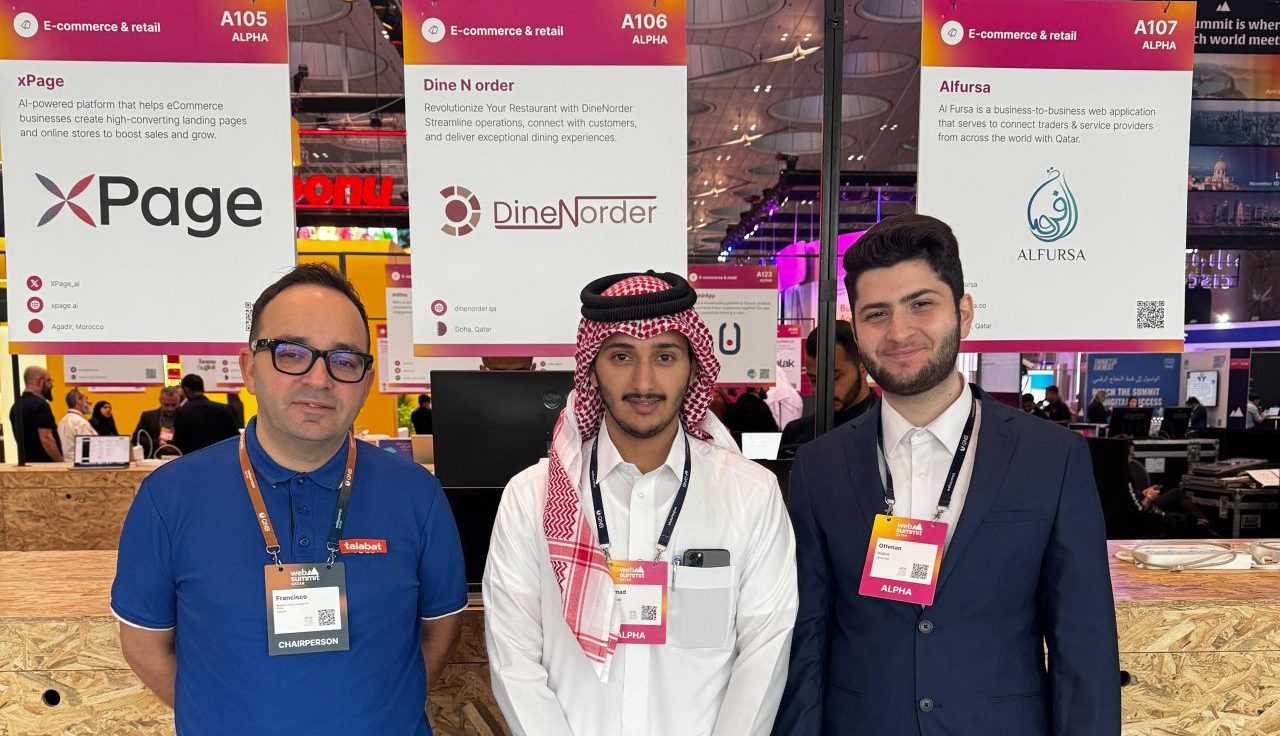
Qatar-based restaurant technology startup DineNORDER has taken a significant step forward in its regional growth strategy by expanding into Egypt.
Founded in 2023 by Ahmad Al-Kubaisi, DineNORDER provides a broad spectrum of digital tools designed for the restaurant industry, facilitating online ordering, point-of-sale technology, reservation systems, marketing, customer insights, and inventory management.
This expansion signifies a major milestone as the company seeks to establish a strong presence beyond its home market.
As DineNORDER enters the Egyptian market, it brings with it a comprehensive digital platform that integrates all facets of restaurant operations.
The company offers solutions that unify order management, payments, and customer interactions, aiming to streamline day-to-day operations for restaurant businesses.
By targeting those looking to digitize and enhance the customer experience, DineNORDER is poised to make a substantial impact on the local food service scene.
Strategic Expansion into Egypt
Entering Egypt is a critical component of DineNORDER’s regional expansion plan. The company is eager to collaborate with local restaurant businesses, technology partners, and regional talent as it establishes itself in this vibrant market.
This move not only reflects the startup’s growth ambitions but also its commitment to partnership and innovation within the region.
“Egypt represents an exciting market for us, and we look forward to bringing our smart digital solutions to restaurants,” said Anja Miscevic, product manager at DineNORDER.
The startup is incubated at the Qatar Science & Technology Park, where it has developed its technology into a cohesive operating toolkit for restaurants, covering everything from ordering and reservations to marketing and inventory management.
With its entry into Egypt, DineNORDER is set to transform how restaurants manage their operations, paving the way for enhanced efficiency and customer satisfaction across the industry.
MENA Startups
UAE-Based FinTech Fasset Raises Massive $68M Series C Round at $1B Valuation to Expand Stablecoin Network Across Global Markets
Fasset secures $68 million to expand its global financial network, highlighting significant growth potential.
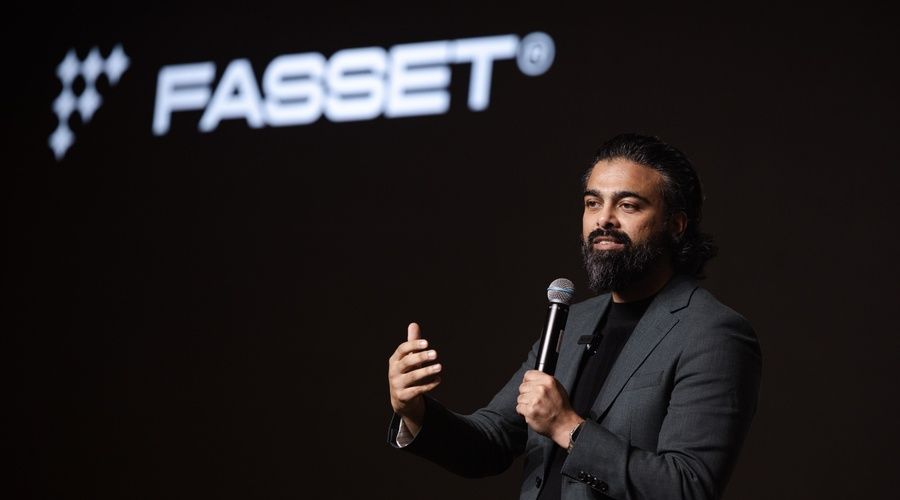
UAE-Based FinTech Fasset, the innovative AI-powered stablecoin neobanking platform, has announced a successful $68 million Series C funding round. Valued now at $1 billion, the company continues its impressive trajectory in the fintech industry.
The funding was led by SBI Group, a significant player in Japan’s financial sector, and marks another major milestone for Fasset, which previously raised $51 million in a Series B round earlier this year.
This latest infusion of capital is poised to enhance the expansion of Fasset’s Own Network. This regulated financial ecosystem connects a wide range of banking, telecom, and payment entities to facilitate seamless settlements across international markets.
The investment will also bolster the company’s development of AI-enabled systems, supporting corridor banking, stablecoin settlement, and tokenized asset infrastructure, key components of Fasset’s value proposition.
Fasset has established itself as a formidable entity in the global fintech landscape, entering the esteemed unicorn category. Since its Series B fundraising in May, the company has amassed a total of $119 million in 2026.
Raafi, Daniel, and their dedicated team are breaking geographical barriers, providing people and businesses in emerging markets with access to stablecoins and global financial assets.
Strategic Partnerships and Global Growth
The involvement of SBI Group, which extends across various banking, securities, and asset management sectors, signifies a deepened strategic collaboration.
SBI Group’s vision aligns with Fasset’s ambition to create a world where financial transactions traverse borders as effortlessly as information flow.
This partnership intends to build a stablecoin-based remittance and settlement infrastructure, stretching from the Asia-Pacific to the Middle East and Africa.
Fasset is not just expanding its partnerships but also its operational reach, now processing over $40 billion in annualized transaction volume through more than 3 million wallets across 125 countries.
The company’s growth is facilitated by the Own Network’s ability to link local banking systems, financial institutions, telcos, liquidity providers, and settlement networks across over 100 banking corridors.
With its strong business foundation and robust regulatory framework established in several high-growth emerging markets, Fasset is set to play a pivotal role in connecting Japan with other emerging economies.
The company’s innovative financial solutions continue to attract investment from key industry players, ensuring Fasset remains at the forefront of the financial technology sector’s development.
-

 MENA Startups7 days ago
Egypt-Based Exits MENA and ACE Acquire Avanz Capital Egypt in Seven-Figure Deal to Expand Private Equity and Asset Management
-

 MENA Startups6 days ago
MENA-Born Enterprise Voice AI Startup HeyBreez Raises $2.5M Seed to Accelerate Global Expansion
-
 News4 days ago
Dubai Entrepreneurs Who Raised $400K on Kickstarter Launch 12-Week Accelerator Teaching Teens to Build and Crowdfund Real Startups
-

 Asia Startups1 week ago
Singapore-Based RetailTech Startup Graas Raises $17M Series B, Acquires Trustana to Expand AI-Powered Commerce Platform
-

 MENA Startups6 days ago
Saudi EdTech AILA Raises $3M Pre-Series A to Scale AI-Powered Personalized Learning Across Regional and Global Markets
-

 MENA Startups7 days ago
Iraq-Based E-Commerce Startup Rozenama Raises $150K Pre-Seed to Expand Platform Nationwide
-

 MENA Startups7 days ago
UAE-Based Startup Tax Star Raises $1.75M to Expand AI-Powered Tax Compliance Platform Across GCC
-

 Asia Startups7 days ago
Indian FinTech Startup Rezolv Raises $12.5M to Expand AI-Powered Lending Platform
You must be logged in to post a comment Login