
Euro Startups
Many of Them Are Replicable in MENA Region: A Look at the Strongest Startups in Ukraine
A data-focused examination of Ukraine’s most funded startups, highlighting export-driven technology models, capital concentration, and sectors with relevance to emerging markets.
















Euro Startups
Sweden-Based MedTech Startup Eyedentity Raises €1.3M to Advance AI-Powered Eye Cancer Detection Platform
The Stockholm-based startup will use the funding to pursue regulatory approval, expand its diagnostic platform and prepare for commercial deployment across Europe and the US.
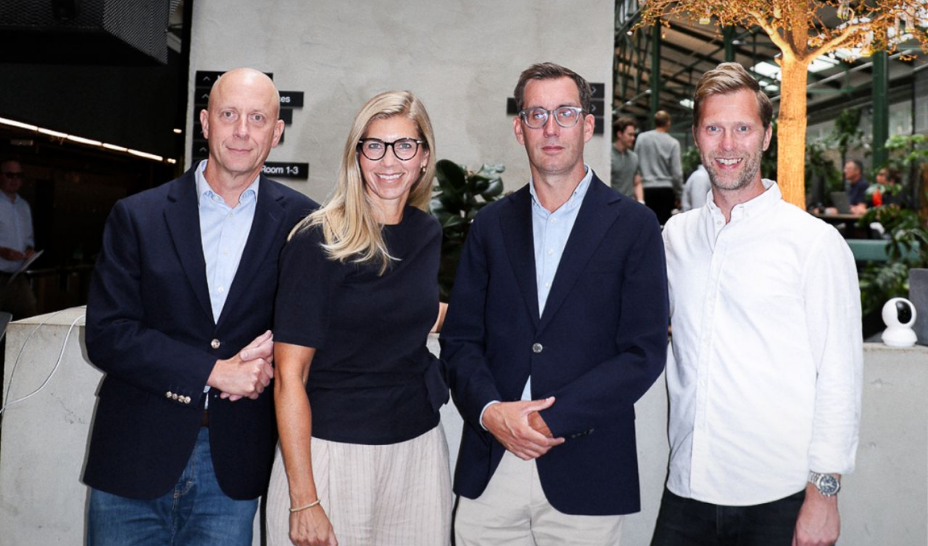
Stockholm-based MedTech startup Eyedentity has raised €1.3 million (SEK 15 million) in an oversubscribed first investment round to advance its AI-powered platform for detecting serious eye diseases from images captured during routine examinations.
The round was led by Norrsken Launcher, with participation from Karolinska Institutet Innovation and a group of angel investors. Eyedentity will use the capital to work toward full regulatory approval for its first product, develop additional diagnostic capabilities and expand its team.
Founded in 2025, the company is initially targeting uveal melanoma, a rare but potentially deadly eye cancer that can be difficult to distinguish from benign conditions during its early stages.
Using Existing Eye Images for Earlier Detection
Eyedentity’s technology analyses fundus images that opticians already capture during routine eye examinations, allowing the startup to add AI-assisted diagnostic support without requiring new imaging equipment or a separate screening infrastructure.
An optician can upload an existing image to the platform, which analyses it and provides decision support on whether the patient should be referred to an eye specialist.
Co-founder and CSO Gustav Stålhammar said opticians already generate large volumes of eye images and are increasingly seeing patients seeking help for vision problems, dry eyes and other conditions. That existing infrastructure creates an opportunity to identify potentially serious diseases earlier.
The company says its system can reduce false-positive referrals by 90%, potentially allowing specialist eye-care services to prioritize patients requiring further investigation while limiting unnecessary referrals.
Eyedentity is currently testing the technology through a live pilot with Synologen, a network of independent opticians in Sweden.
Combining Ophthalmology and Machine Learning
Eyedentity was founded by a team combining clinical ophthalmology, machine learning and company-building experience.
Stålhammar is an ocular oncologist at St. Erik Eye Hospital and a professor at Karolinska Institutet. Co-founder and CEO Mats Holmström is a machine learning engineer who previously worked at RaySearch Laboratories on applications of machine learning in cancer care.
The startup is also part of the Karolinska Institutet Innovation Incubator, where it receives support covering business development, financing, strategy and investor readiness.
Holmström said Eyedentity first connected with Norrsken after presenting at Karolinska Institutet Innovation InvestorDay, with that introduction ultimately developing into an investment.
Norrsken Launcher Partner Anna Fredrixon said the technology could support earlier detection without directing additional unnecessary patients into an already stretched healthcare system. She also highlighted its ability to work with existing infrastructure as an advantage for deployment.
From Nordic Pilot to International Expansion
The new funding will help Eyedentity move from its current pilot toward commercialization in the Nordic region before pursuing broader expansion across Europe and the US.
The company plans to build products for opticians, eye clinics and hospitals while establishing clinical partnerships and integrations with medical record systems. Holmström said the goal is to make the technology fit into existing clinical workflows with as little additional work as possible for opticians.
Beyond uveal melanoma, Eyedentity intends to extend its technology to other eye diseases, including diabetic retinopathy and glaucoma.
Its longer-term strategy is to develop a broader AI diagnostics platform capable of supporting healthcare providers across multiple eye conditions rather than remaining focused on a single disease.
With its first institutional capital secured, Eyedentity’s immediate priorities are regulatory approval, product development and commercial validation as it prepares to take its diagnostic technology beyond Sweden.
Euro Startups
Denmark-Based Startup Velatir Raises €5M to Expand Enterprise AI Governance Platform Across Europe
The Copenhagen startup will use the funding to accelerate European expansion as businesses seek greater oversight, security and control over workplace AI tools.

Danish AI infrastructure startup Velatir has raised €5 million in Seed funding to expand its platform for monitoring and controlling how artificial intelligence tools are used across enterprise operations.
The round was co-led by Spintop Ventures and Ugly Duckling Ventures, with participation from Norrsken Evolve and a group of angel investors. The fresh capital comes after a period of rapid commercial growth, with Velatir adding 80 customers across six European countries in seven months.
The company plans to use the funding to accelerate its European expansion, grow its team and establish a presence in additional markets as businesses face increasing complexity around AI adoption, data security and regulatory compliance.
Building a Control Layer for Enterprise AI
Velatir is developing infrastructure that sits alongside the AI applications already used within companies, giving organizations centralized visibility into how those tools interact with employees and corporate data.
The platform monitors data flows, user activity and potential risks in real time, allowing businesses to establish controls around AI usage while maintaining oversight across different applications.
CEO Michael Blicher Sørensen said AI was initially expected to simplify business operations, but the rapid adoption of different tools has instead created a fragmented environment that can be difficult for companies to manage.
Velatir aims to address that problem by providing a common control layer rather than requiring companies to replace the AI applications they already use. The approach is designed to help organizations adopt AI while maintaining security, compliance and operational oversight.
Rapid Growth Across European Markets
Velatir has expanded from zero customers in January to 80 by August, with clients spanning finance, legal services and government across six European countries.
The startup is also approaching $1 million in annual recurring revenue and has grown its workforce to 30 employees. It plans to nearly double its headcount by the end of the year as it expands its commercial and product operations.
Its platform primarily targets mid-market businesses but can support organizations ranging from five employees to workforces of up to 20,000 people.
The company plans to open an office in Stockholm in October, followed by additional locations across Europe over the next year. France, the Netherlands and the wider Nordic region are among the markets targeted for expansion.
European Infrastructure at the Core of Velatir’s Strategy
Velatir has built its platform exclusively on European-owned and hosted infrastructure, making data sovereignty a central part of its positioning.
Co-founder Christian Møller said the decision was deliberate, allowing the company to avoid dependence on US hyperscalers while addressing concerns among European businesses around data residency and cross-border transfers.
The approach is also intended to help customers navigate regulatory requirements, including those emerging under Europe’s AI regulatory framework. For companies with strict procurement and data-governance requirements, Velatir says its infrastructure model can remove some of the obstacles involved in adopting enterprise AI technology.
The €5 million Seed round will now give Velatir additional resources to extend that model across Europe. With its customer base growing and new offices planned, the company is focusing its next phase on becoming a broader infrastructure layer for businesses seeking to manage AI adoption without losing control over their data and operations.
Euro Startups
Lithuania-Based AI Startup Guideless Raises €1M to Expand AI-Powered Corporate Training Platform Globally
The Superhero Capital-led round will help Guideless develop its AI-powered workflow documentation platform and expand across Europe, the UK and the US.

Lithuanian AI training startup Guideless has raised €1 million in Pre-Seed funding to develop its platform for automatically creating and maintaining software training materials and operational documentation.
The round was led by Superhero Capital, with participation from FIRSTPICK VC and executives from Vinted, including CEO Thomas Plantenga. Guideless will use the capital to accelerate product development, expand its team and support international growth across the UK, Europe and the US.
The startup is targeting a persistent problem for companies: documenting how employees use increasingly complex software systems while keeping training materials current as tools and internal processes change.
Turning Software Workflows Into Training Guides
Guideless uses AI to capture business workflows while employees perform them and automatically convert those processes into structured training materials.
Rather than manually recording videos or writing step-by-step instructions, users complete a task within their regular business software while Guideless captures the process. Its AI then generates a guide combining visual sequences, written instructions and narration.
The company says its technology can make the creation and maintenance of training documentation up to ten times faster than conventional approaches.
Individual steps remain editable, allowing businesses to modify existing guides as workflows change rather than recreating the entire training resource. Content can also be translated or adapted for different teams, while text-to-speech narration is available in more than 40 languages.
Building an Operational Memory Layer
Guideless sees a broader application for the information collected through its platform beyond employee training.
CEO and co-founder Evaldas Bieliūnas said the company is turning captured workflows into structured operational context, creating what it describes as an evolving memory layer for organizations.
That approach could help companies preserve institutional knowledge as employees, software and internal processes change. Instead of leaving operational knowledge distributed across individual employees and outdated documentation, Guideless aims to create a continuously maintained record of how work is actually performed.
The company eventually plans to use that structured workflow information as an operational intelligence layer for AI agents. Providing AI systems with company-specific process data could allow them to automate tasks based on existing business practices rather than generic instructions.
Early Adoption Across 15 Markets
Guideless says its platform has attracted more than 3,000 users and paying customers across 15 markets. Organizations using its technology include Vinted, Masan Consumer Holdings and the Nevada Hospital Association.
Thomas Plantenga, CEO of Vinted and an investor in the round, pointed to his company’s experience using Guideless to maintain its knowledge base with less manual work as a factor behind his decision to back the startup.
Superhero Capital’s Audrius Milukas said the opportunity extends beyond reducing the work involved in producing training videos. He sees Guideless’s ability to capture operational knowledge as a foundation for addressing broader workplace automation challenges.
Targeting International Expansion
With the Pre-Seed capital secured, Guideless plans to expand its workforce and continue developing its AI capabilities while increasing its presence outside its existing markets.
The UK, wider European market and the US are among its primary expansion targets.
As businesses adopt more software and AI tools, Guideless is betting that the underlying record of how employees actually complete tasks will become increasingly valuable. Its longer-term strategy is to turn that operational knowledge into infrastructure that can support both human training and AI-driven workplace automation.
-

 MENA Startups7 days ago
Egypt-Based Exits MENA and ACE Acquire Avanz Capital Egypt in Seven-Figure Deal to Expand Private Equity and Asset Management
-

 MENA Startups6 days ago
MENA-Born Enterprise Voice AI Startup HeyBreez Raises $2.5M Seed to Accelerate Global Expansion
-

 News3 days ago
Dubai Entrepreneurs Who Raised $400K on Kickstarter Launch 12-Week Accelerator Teaching Teens to Build and Crowdfund Real Startups
-

 Asia Startups1 week ago
Singapore-Based RetailTech Startup Graas Raises $17M Series B, Acquires Trustana to Expand AI-Powered Commerce Platform
-

 MENA Startups6 days ago
Saudi EdTech AILA Raises $3M Pre-Series A to Scale AI-Powered Personalized Learning Across Regional and Global Markets
-

 MENA Startups7 days ago
Iraq-Based E-Commerce Startup Rozenama Raises $150K Pre-Seed to Expand Platform Nationwide
-

 MENA Startups7 days ago
UAE-Based Startup Tax Star Raises $1.75M to Expand AI-Powered Tax Compliance Platform Across GCC
-

 Asia Startups7 days ago
Indian FinTech Startup Rezolv Raises $12.5M to Expand AI-Powered Lending Platform
You must be logged in to post a comment Login