

Entrepreneurial Stories
WakeCap: How a Saudi Entrepreneur and an Indian Innovator Are Making Construction Safer and Smarter Across the Region
In 2017, two visionaries from Saudi Arabia and India joined forces to disrupt the construction industry. With a focus on real-time safety, productivity, and innovation, WakeCap is leading a revolution in construction site intelligence.

In construction, some of the most expensive problems are often the hardest to see.
Project delays. Underutilized workers. Safety risks. Equipment sitting idle. Productivity losses hidden across thousands of workers moving through massive job sites every day.
For decades, construction leaders relied largely on reports, manual inspections, and fragmented data to understand what was happening on the ground.
Dr. Hasan Albalawi believed there had to be a better way.
Years before construction technology became one of the fastest-growing sectors in global venture capital, the Saudi engineer was already exploring how wearable technology and machine learning could make dangerous workplaces safer and complex operations more measurable.
That vision would eventually become WakeCap, a Saudi-born construction technology company now helping digitize some of the largest construction projects in the world.
The Idea That Started on Television
The origins of WakeCap can be traced back to 2015.
At the time, Albalawi was participating in Season 7 of the popular innovation competition program Stars of Science, organized by the Qatar Foundation.
Inspired by personal experiences and concerns surrounding workplace safety, he developed an early wearable technology designed to detect fatigue and drowsiness among workers and drivers.
The concept used brain-signal analysis to identify dangerous levels of exhaustion before accidents could occur.
The innovation earned Albalawi third place in the competition, but more importantly, it exposed him to the broader potential of applying advanced technology to industrial environments.
The experience opened doors, generated industry attention, and planted the seeds for something much larger than a competition project.
From Academic Research to Startup Reality
Albalawi’s technical foundation was unusually strong for a startup founder.
Raised in Tabuk, Saudi Arabia, he earned his academic credentials through some of the world’s most respected institutions, completing degrees at Carnegie Mellon University and Duke University.
During his PhD studies, he focused on machine learning algorithms designed for ultra-low-power devices.
That research eventually inspired a practical question.
What if wearable technology could continuously capture operational data from workers in the field?
What if construction managers could see, in real time, what was actually happening across massive project sites?
The more he explored the idea, the more obvious the opportunity became.
Construction remained one of the least digitized major industries despite managing projects worth billions of dollars.
Building WakeCap
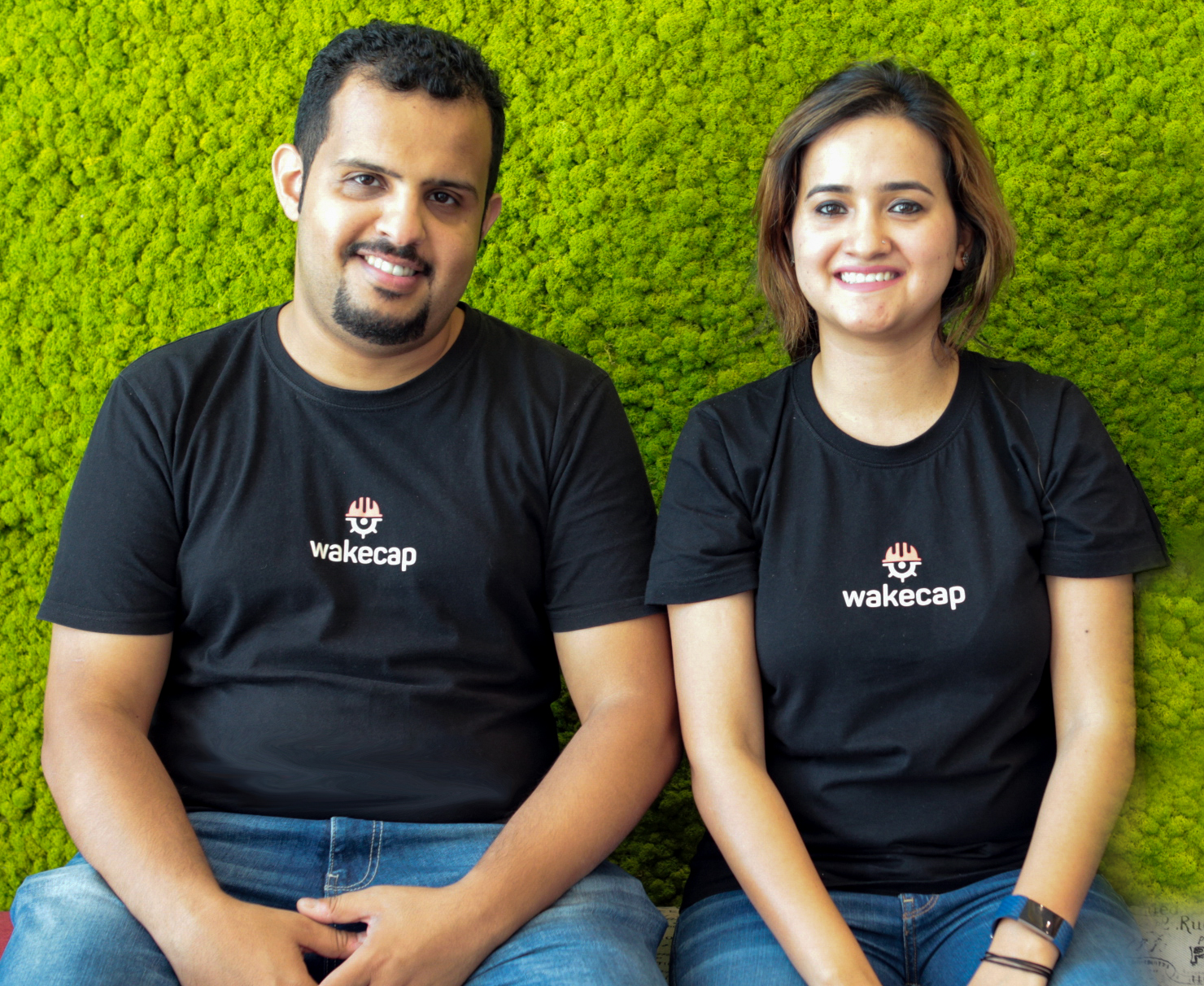
In 2017, Albalawi partnered with Indian entrepreneur Ishita Kochhar to officially launch WakeCap.
The founding vision was straightforward.
Bring real-time visibility, safety intelligence, and operational data into construction sites that traditionally operated with very limited live information.
The company started in Saudi Arabia, but the problem it was addressing was global.
Construction projects everywhere faced similar challenges.
Limited workforce visibility.
Poor productivity measurement.
Reactive safety management.
Little real-time data for decision-making.
WakeCap set out to change that.
Turning Every Hard Hat Into a Data Point
Rather than asking construction companies to install expensive new systems or completely redesign workflows, WakeCap focused on something simpler.
The company embedded small IoT sensors directly into existing safety helmets.
These smart devices track worker movement, location, time utilization, and operational activity throughout a project site.
The data is transmitted through WakeCap’s proprietary mesh network infrastructure without relying on traditional GPS or Wi-Fi systems.
That information is then converted into actionable insights through centralized dashboards used by project owners, contractors, and operations teams.
The result is something construction leaders rarely had before:
Real-time visibility.
Instead of waiting for reports, managers can identify bottlenecks, optimize workforce allocation, improve safety performance, and monitor project execution as it happens.
Winning the Trust of the Construction Industry
Construction is not known for quickly adopting new technology.
Winning trust required proving that WakeCap could generate measurable results.
The company focused relentlessly on demonstrating value.
Improved productivity.
Better workforce utilization.
Reduced operational waste.
Enhanced safety monitoring.
The strategy worked.
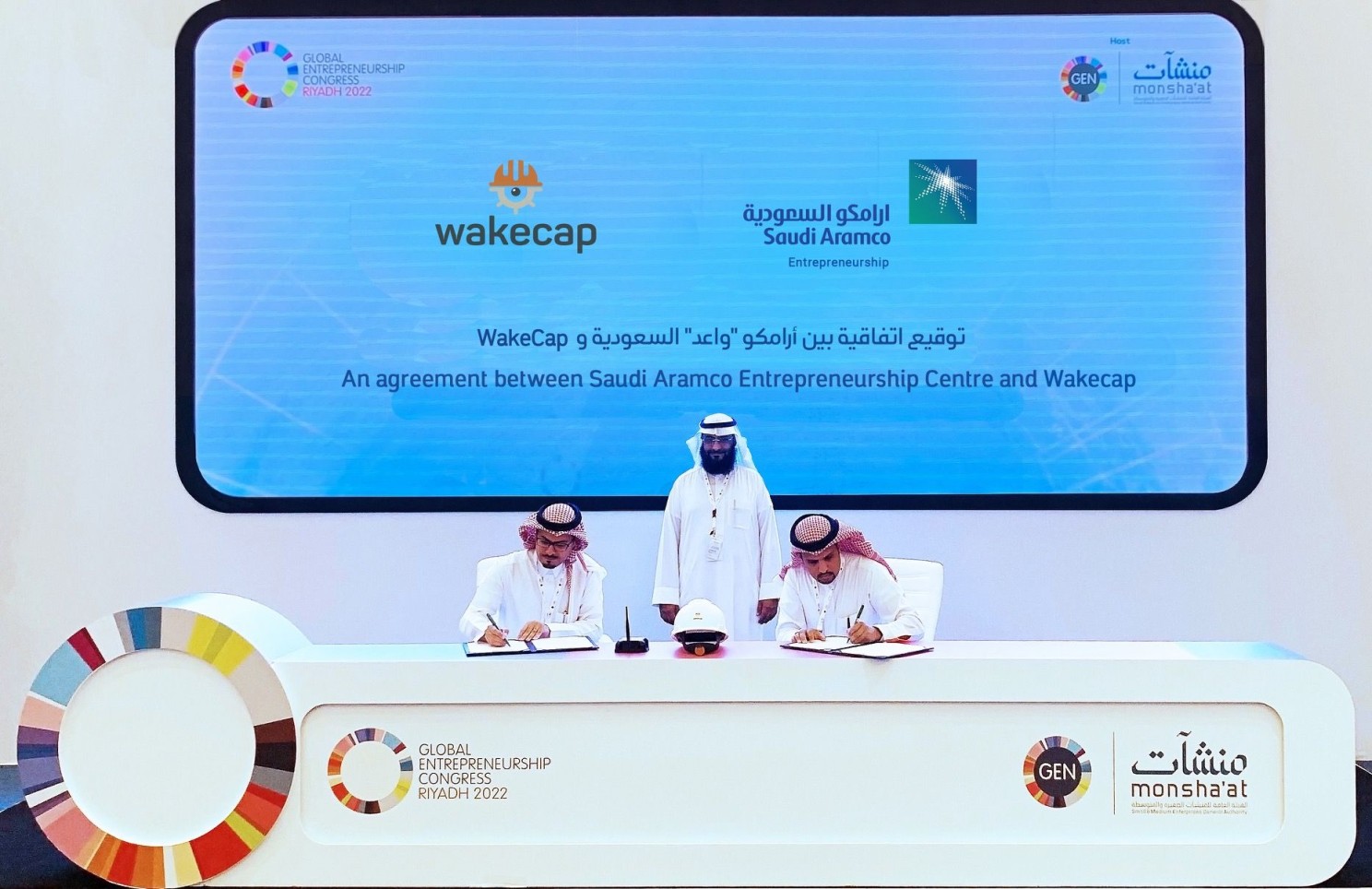
Over time, WakeCap began securing contracts with some of the region’s largest construction and infrastructure organizations.
Its technology was deployed across projects involving Saudi Aramco, major government infrastructure programs, and eventually some of the most ambitious megaprojects being developed in the Kingdom.
The company also signed long-term agreements with organizations such as ENPPI Saudi Arabia while expanding partnerships across the engineering and project management ecosystem.
Growing Alongside Saudi Arabia’s Megaproject Boom
WakeCap’s rise coincided with one of the largest construction booms in modern history.
Saudi Arabia’s Vision 2030 created unprecedented demand for technologies capable of improving execution across massive developments.
Projects like NEOM, giga-projects, industrial cities, energy infrastructure, and transportation networks all required better visibility into field operations.
WakeCap found itself operating at the center of that transformation.
Its platform has now been deployed across projects collectively valued at more than $120 billion, giving the company a unique position within the construction technology ecosystem.
As project complexity increased, so did demand for data-driven decision making.
WakeCap was no longer simply providing sensors.
It was becoming part of the digital infrastructure behind some of the world’s largest construction programs.
From Saudi Arabia to Silicon Valley
As adoption accelerated, the company expanded internationally.
WakeCap established offices in Riyadh, Dubai, and San Francisco while growing its workforce to more than 80 employees across multiple countries.
The company also expanded its technology capabilities through acquisitions and strategic growth initiatives.
In 2024, WakeCap strengthened its global presence by opening an R&D headquarters in Silicon Valley following the acquisition of Crews by Core.
The move gave the company deeper access to engineering talent, product development capabilities, and international markets.
What began as a Saudi startup was increasingly becoming a global construction technology company.
A $28 Million Vote of Confidence
The company’s biggest milestone arrived in 2025.
WakeCap announced a $28 million Series A funding round, one of the largest construction technology investments in the region.
The funding provided resources to accelerate product development, strengthen AI capabilities, expand internationally, and deepen the company’s position as a leader in jobsite intelligence.
The round also reflected growing investor confidence in construction technology as a category.
For years, fintech and e-commerce dominated startup funding conversations.
Now investors were increasingly looking toward industrial technology and digital infrastructure.
WakeCap sat squarely at that intersection.
Expanding Into Latin America
WakeCap’s global ambitions became even clearer in late 2025 when the company acquired Brazilian workforce intelligence startup Trackfy, marking its official entry into the Latin American market.
The deal established Brazil as a new regional hub for WakeCap while strengthening its capabilities in workforce safety, operational analytics, and industrial intelligence.
For WakeCap, the acquisition was less about geographic expansion and more about broadening its vision.
By combining its construction-site visibility platform with Trackfy’s expertise in operational performance and workforce analytics, the company moved closer to becoming a global provider of AI-powered industrial intelligence solutions spanning both construction and ongoing operations
Building the Operating System for Construction Sites
Today, WakeCap’s mission extends far beyond safety monitoring.
The company increasingly positions itself as a platform for site intelligence.
Its technology helps organizations understand how labor, equipment, logistics, and operational workflows interact across complex projects.
That visibility allows project teams to make faster decisions, reduce delays, improve resource allocation, and increase efficiency.
In an industry where even small productivity improvements can translate into millions of dollars in savings, those insights have become increasingly valuable.
WakeCap’s long-term ambition is not simply to collect data.
It is to help construction companies operate with the same level of visibility that modern enterprises expect across every other part of their business.
From an Innovation Competition to Global Construction Tech
Few startup journeys begin on a television stage.
Even fewer evolve into globally deployed technology platforms.
Yet that is exactly what happened with WakeCap.
What started as an experiment in wearable technology during a science competition evolved into a company helping reshape how construction sites operate across the Middle East and beyond.
For Hasan Albalawi and Ishita Kochhar, the mission remains remarkably similar to the one that inspired the company’s earliest prototype.
Use technology to make complex environments safer, smarter, and more efficient.
The difference today is scale.
Instead of protecting a single worker or site, WakeCap is helping transform an entire industry


Entrepreneurial Stories
From a Loaf of Bread to a $400M Valuation: How Breadfast Became Egypt’s Grocery Powerhouse
Mostafa Amin had four failed startups behind him and a currency crisis in front of him. He stayed in Egypt anyway, and started with the most basic food on every Egyptian table.

In late 2016, the Egyptian pound lost about half its value overnight.
Many young professionals started planning their exit.
Mostafa Amin was one of them. He had already launched four companies in Egypt. All four had failed.
He weighed moving to the United States.
Then he looked at the numbers again: a market of more than 100 million people, at the crossroads of Africa and the Middle East.
He decided to stay.
A Year of Testing, Then a Dinner Table
Amin did not jump at the first idea.
For close to a year, he tested concepts in virtual reality, artificial intelligence, and augmented reality. Each idea went through 100 to 150 user interviews. The weak ones were dropped.
The idea that survived came at a late dinner in Cairo, with fresh bread on the table.
It was simple: “freshly baked bread delivered to your doorstep every morning, using a mobile app.”
Bread was not a random choice. It was, in Amin’s words, the “most basic food unit in an Egyptian household.”
He pitched the idea to Muhammad Habib. Then he called Abdallah Nofal at around 1:00 AM.
The three co-founded Breadfast in Cairo in 2017.
The name came even faster. Amin’s wife suggested it within seconds of hearing the pitch.
“We Are Going to Bake the Bread Ourselves”
The obvious model was a marketplace: an “Uber for bread” that connected customers to neighborhood bakeries.
Investors kept asking why Breadfast didn’t do exactly that.
Amin said no.
“Rule number one in emerging markets,” he said later, “reliability does not exist.”
If Breadfast promised fresh bread at the door every morning, it could not depend on someone else’s oven.
So the founders spent about six months learning how to bake from scratch.
Each of them took a frontline job. Amin was the first driver. Habib was the first customer service agent. Nofal wrote the first lines of code.
The decision made fundraising harder. Investors preferred asset-light businesses, and Breadfast was building bakeries.
Amin later described that constraint as partly lucky. With little money, the team had to learn every part of the operation themselves.
From Bread to Groceries
The first product, Breadfast Tomorrow, delivered bread and pastries the next morning.
Customers soon asked for more. Milk, eggs, cheese, and vegetables followed, and the bakery became a grocery store.
Early backers included 500 Startups and Egyptian businessman Mohamed El Sewedy. Breadfast raised a $2 million pre-Series A.
In the summer of 2019, it joined Y Combinator.
After the program, Breadfast built micro-fulfillment points across Cairo and moved from next-morning delivery to 60-minute delivery.
Revenue grew fourfold between 2019 and 2020.
A $26 Million Series A
In November 2021, Breadfast raised a $26 million Series A led by Vostok New Ventures and Endure Capital.
JAM Fund, YC Continuity, Shorooq Partners, 4DX Ventures, Flexport, and a large Saudi fund joined the round. Total funding passed $30 million.
By then, Breadfast served 170,000 households, carried more than 2,500 products, and employed over 1,500 people, including its riders.
Amin summed up the ambition in one line:
“We’re trying to build Gopuff for Africa and the Middle East in a nutshell.”
The plan was aggressive: 6 million orders in a year, 40 to 50 dark stores in Egypt within months, and expansion to eight cities.
When the Plan Met Reality
Then the market turned.
Venture funding dried up worldwide. Egypt went through repeated currency devaluations, and food prices surged.
Breadfast reached its 6-million-order target about a year later than planned. It trimmed its network of dark stores and pulled back from some cities.
Instead of chasing growth at any cost, it focused on making each store pay for itself.
The vertical model that investors once questioned became the company’s advantage. Breadfast controlled its bakeries, its production, and its delivery. It could protect margins in a market where many delivery startups could not.
Owning the Whole Chain
Breadfast kept building in-house.
Today it runs 47 fulfilment centres across Egypt and seven production facilities for bakery and fresh goods. It carries about 7,000 products, more than 1,000 of them under its own labels.
Those private-label products now make up about 40% of its grocery sales.
The company also operates 35 branded coffee shops. It added pharmacy and beauty products, and launched Breadfast Pay, a fintech arm built with Visa and Abu Dhabi Islamic Bank that covers bill payments, savings, and branded cards.
By 2024, Breadfast was handling nearly 1 million orders a month for more than 300,000 active users. Revenue passed $150 million that year.
Most of its fulfilment centres, the company says, are now profitable.
Gulf Capital Arrives
In August 2025, the European Bank for Reconstruction and Development invested $10 million in Breadfast’s Series B2, alongside Novastar Ventures.
The round valued the company at close to $400 million.
Six months later came the biggest round in its history.
In February 2026, Breadfast raised $50 million in a pre-Series C led by Novastar Ventures. Abu Dhabi’s Mubadala Investment Company joined, along with Saudi Arabia’s Olayan Financing Company, a prominent Saudi family office, Japan’s SBI Investment, Asia Africa Investment & Consulting, the IFC, the EBRD, Y Combinator, and 4DX Ventures.
It was one of the rare late-stage rounds in North African tech that year.
For Breadfast, it also marked a shift in who was backing the story. Sovereign and family capital from the Gulf was now betting on an Egyptian grocery company.
The money is going into warehouses, fulfilment centres, and production capacity in Egypt, and into exploring new markets in North and West Africa.
From Grocery App to Super App
In September 2026, Breadfast officially launched Breadfast Food, bringing restaurant delivery into the same app as groceries, bakery, coffee, and pharmacy.
Co-founder and COO Muhammad Habib explained the logic: “Our customers don’t think about groceries, meals, coffee, or personal care as separate services.”
The company expects the service to create hundreds of new rider jobs, and plans to take it to more governorates.
The bakery that once delivered bread the next morning now wants to be the app Egyptians open for almost everything they need at home.
The Road to Series C and an IPO
The pre-Series C was designed as a bridge.
“We’ve closed this round and are starting early conversations with growth investors for a series C,” Amin said in February.
The longer-term goal is a global IPO.
Breadfast’s target for the next three years is to capture up to 3% of Egypt’s grocery market, a market estimated at $100 billion.
Reliability Was the Business
Breadfast is often described as a quick-commerce company.
That misses where it really started.
It started with a founder who had failed four times and chose to stay in Egypt during a crisis. With a refusal to depend on anyone else’s oven. And with a rule Amin learned the hard way: in emerging markets, reliability does not exist unless you build it yourself.
Breadfast built it.
One loaf at a time.
Entrepreneurial Stories
From a Chalet Booking App to a SAR 1 Billion Valuation: How Saudi Entrepreneur Latifah Altamimi Built Gathern
Long before Saudi tourism became one of the region’s biggest investment stories, Latifah Altamimi bet that Saudis would book their weekend escapes online. Nearly a decade later, Gathern holds 44% of the Kingdom’s alternative accommodation market and is preparing for a public listing.

When Latifah Altamimi started Gathern in 2016, the idea she was chasing did not yet exist in Saudi Arabia.
Peer-to-peer rentals were already reshaping travel in the United States.
At home, renting a chalet or a camp for the weekend still ran on phone calls, word of mouth, and trust between strangers.
The demand was there.
The platform was not.
A Neighbor, a Sublet Room, and 100 Business Books
The idea started far from Riyadh.
Altamimi was studying at Wright State University in Ohio when a neighbor introduced her to a model she had never seen at home: subletting rooms to travelers through Airbnb.
Halfway through her degree, she read more than 100 business books in a single year. She came close to dropping out to start a company.
She was drawn to Silicon Valley’s startup culture, and to one uncomfortable comparison.
“We don’t have this in Saudi Arabia,” she later recalled.
The planning began over the phone. Altamimi described one early call with her co-founder, Eman Alsuwailem, as “the longest call of my life.”
Coming Home to Build It
Gathern was founded in 2016. Alongside Altamimi and Alsuwailem, Faisal Alanazi also co-founded the company.
In 2017, after five years abroad, Altamimi returned to Saudi Arabia. The Kingdom she came back to was changing. An entrepreneurial scene was taking shape, and she joined an incubator where she found mentors, a network, and her first investors.
The product was deliberately local.
Gathern did not start as a copy of Airbnb. It started as a booking platform for chalets and camps, the private weekend spaces where Saudi families and friends gather.
Owners got professional photos and 360-degree views of their properties at no cost. Only verified guests could leave reviews. Addresses were shared after booking, and guests could pay by credit card, Mada card, or bank transfer.
Each detail answered the same question: why would a Saudi family trust a stranger’s property booked through an app?
The First Customer Was Easy. The Second Was Not.
Gathern’s first customer was Alsuwailem’s mother.
“She was easy to acquire,” Altamimi recalled. “But the second was very difficult.”
That gap, between one friendly customer and a real market, is where most marketplaces die.
Gathern had to win hosts and guests at the same time, in a market that had never booked this way before.
It did it city by city.
A Seed Round That Made History
By December 2018, Gathern had handled more than 30,000 booked nights across eight Saudi cities.
That month it announced a seed round from Vision Ventures, Inspire Ventures, 500 Startups, Aquilaria Capital Management Fund, and Deyarat Trading Company. Angel investors included Abdulla Al Rumaih, co-founder of Flyin. The amount was not disclosed.
The size mattered less than the milestone.
Gathern became the first Saudi startup with a female co-founder to raise venture capital outside an accelerator.
The License That Changed the Model
In Saudi Arabia, a property owner who wanted to rent out a home for short stays normally needed an individual permit.
For a peer-to-peer marketplace, that was a ceiling. Every new host meant new paperwork.
In July 2020, Gathern became the first company licensed by the Ministry of Tourism as a private vacation rentals marketplace.
Hosts listing through Gathern no longer needed their own permit.
The license removed the hardest step in growing supply. It also gave guests something just as valuable: a regulated platform.
Growing Through the Pandemic
The license arrived in the middle of COVID-19.
International travel stopped. Saudis who could not fly abroad started exploring their own country.
Gathern was already built for that traveler.
Its listings grew beyond chalets and camps to rooms, apartments, villas, resorts, farms, and yachts. By May 2021, the platform operated in more than 100 cities, from Riyadh and Jeddah to Abha, Al-Baha, AlUla, and Umluj, with capacity to host 1.2 million guests per month.
Its top hosts were earning more than SAR 60,000 a month.
A $6 Million Series A Led by STV
In May 2021, Gathern raised a $6 million Series A led by STV, with existing investors Vision Ventures, 500 Startups, Naef Sultan AlAthel, and ARG Limited participating.
It was STV’s first investment in travel.
It was also, in the words of STV partner Ahmad Alshammari, “the largest ever investment in a female-led Saudi startup.”
“They have proven themselves to be incredibly nimble and resilient during COVID-19,” Alshammari said.
Altamimi framed the round around the country, not the company.
“Saudi Arabia has a renewed vision for its tourism sector,” she said. Gathern, she added, “allows anyone to explore the real culture and cities in Saudi Arabia.”
Real Estate Developers Join the Table
Less than a year later, in April 2022, Gathern closed a pre-Series B strategic round.
This time the lead was not a venture fund. It was Shurafa Real Estate Development, joined by Al Majdia Residence, Al Ajlan Riviera, and Al Safa Real Estate Development. STV invested again.
The investor list signaled a shift.
Property developers were no longer just suppliers listing units on the platform. They were becoming shareholders in it.
Gathern was also moving into long-term stays, a segment that quickly grew to account for a significant share of all bookings.
By 2022, Gathern listed more than 26,500 properties across over 175 Saudi cities and provinces.
Supply Where the Country Needed It
As Saudi Arabia opened new destinations, Gathern became part of the infrastructure behind them.
In AlUla, the UNESCO heritage site at the center of the Kingdom’s tourism push, Gathern grew available rooms from fewer than 100 to more than 800 within 12 months.
It was a concrete answer to a national problem. Hotels take years to build. Private homes can be listed in weeks.
Endeavor’s Carlos Romero Jantacomma put it simply: “Gathern became a local hero, made for people on the ground.”
Profitability, Then a $72 Million Series B
In 2023, Gathern recorded its first profitable year. In 2024, revenue doubled.
Then came the round that changed its scale.
In August 2025, Gathern raised SAR 270 million ($72 million) in a Series B led by Sanabil Investments, a wholly owned company of the Public Investment Fund. STV, Pinnacle Capital, Nuwa Capital, and Endeavor Catalyst joined.
The round valued Gathern at more than SAR 1 billion, about $267 million.
That made it the highest-valued venture-backed startup in the Middle East founded and led by a woman.
The numbers behind the valuation:
- More than 72,000 units listed by over 33,000 local hosts
- More than 5 million registered users from over 150 nationalities
- About 44% of Saudi Arabia’s alternative accommodation market, and 53% in Riyadh
- More than SAR 2 billion paid to hosts since launch
- Listings in more than 200 Saudi cities
The chalet booking app had become a national marketplace.
Pinnacle Doubles Down
In September 2026, Pinnacle Capital increased its stake in Gathern through its Pinnacle Growth & Secondary Fund. The size of the transaction was not disclosed.
Pinnacle had already invested in the Series B. Buying more a year later was a vote of confidence from an investor that had seen the company’s numbers from the inside.
It pointed to Gathern’s operating performance, its growing market presence, and its path toward a public listing.
The Road to Tadawul
That listing now has a date on it.
In September 2025, Altamimi said Gathern was targeting an IPO on the Saudi Exchange in 2028.
The plan goes beyond accommodation. Gathern intends to add car rentals, flights, and curated experiences, and to expand into Kuwait and Bahrain before the rest of the GCC.
The Endeavor network, which selected Altamimi as an Endeavor Entrepreneur, is helping with that regional push.
“Joining Endeavor will broaden my network and give me access to a richer community domestically and internationally,” she said.
Built for the People on the Ground
Gathern’s story is often described as the Saudi answer to Airbnb.
That misses what made it work.
It started with chalets and camps because that is how Saudis actually gather. It solved licensing before scale. It grew supply in the places the country was trying to open.
Asked about being a woman building a company in Saudi Arabia, Altamimi once gave an answer that could sum up the whole journey:
“In the end, nature – and business – doesn’t care.”
The market rewarded the founder who understood it best.
And that founder built it at home.
Entrepreneurial Stories
From an Early Arabic Social Network to 300 Million Game Downloads: How Hussam Hammo Built Tamatem Into a MENA Gaming Powerhouse
Long before Arabic gaming became a major investment theme, Hussam Hammo saw a market global publishers were largely overlooking. What began in Amman as a bet on culturally relevant Arabic games would grow into Tamatem—a gaming business spanning publishing, payments, advertising technology and AI.

When Hussam Hammo launched Tamatem in 2013, the opportunity he saw was hidden inside a contradiction.
The Arab world had hundreds of millions of people speaking one of the world’s most widely used languages. Smartphone adoption was accelerating, mobile gaming was expanding globally, and young consumers across the Middle East were increasingly spending their lives online.
Yet Arabic remained dramatically underrepresented in digital content.
For games, the gap was particularly visible.
Search an app store in English and millions of options appeared. Search in Arabic and the selection shrank dramatically. International publishers had built successful games, but many had done little to make those products feel as though they had actually been created for Arab players.
Hammo believed translation alone would not solve that problem.
The characters, locations, music, cultural references and even seasonal events had to make sense to the people playing.
That insight became Tamatem Games.
More than a decade later, the Amman-born company has published over 70 games generating more than 300 million downloads, built its own regional payments infrastructure, expanded across six offices, and grown to around 180 employees. In 2026, Tamatem went another step further by acquiring Turkish adtech company Playable Factory, pushing the business beyond publishing toward a vertically integrated gaming ecosystem spanning content, distribution, payments, advertising technology and AI.
But Tamatem was not Hammo’s first attempt at building for Arabic internet users.
Before Tamatem, There Was Faye3
Hammo studied computer science at Princess Sumaya University for Technology in Jordan, but his interest in building Arabic digital products began before Tamatem existed.
In 2006, he founded Faye3.com, an early Arabic social network launched before Facebook had an Arabic-language version.
The idea attracted hundreds of thousands of Arabic-speaking users, demonstrating something that would become central to Hammo’s later career: Arab consumers were willing to embrace digital products built around their own language.
Commercially, however, Faye3 struggled.
Scaling and monetization proved difficult, and the platform was eventually shut down. But the experience gave Hammo a close view of a structural problem across the early Arabic internet.
The audience existed.
The content often did not.
Faye3 had not become the enduring business Hammo wanted, but the problem it exposed would eventually lead him toward a much larger opportunity.
Finding the Gap in Arabic Mobile Gaming
By 2013, mobile gaming was becoming an increasingly important part of the global entertainment business.
Hammo saw an opportunity to apply what he had learned about localization to games.
Arabic was spoken by hundreds of millions of people, yet Arabic-language applications and games represented only a small fraction of what was available online.
The challenge was not necessarily that the region needed thousands of entirely new games developed from scratch.
Successful games already existed around the world.
What they lacked was a bridge into the Arab market.
Tamatem would become that bridge.
The company developed a publishing model in which it partnered with game developers internationally, brought their titles into MENA, and adapted them for Arabic-speaking players.
Its business model was largely based on revenue sharing: Tamatem handled services including localization, publishing and marketing, while taking a percentage of the resulting revenue.
The company could therefore build a portfolio without having to develop every title internally.
From Amman to Silicon Valley
Tamatem’s beginning also took Hammo outside Jordan.
In 2013, the company joined 500 Startups in Silicon Valley, becoming the first Arab company to enter the accelerator program.
For six months, Tamatem operated from the United States before returning to Amman.
The experience provided access to international investors and startup networks at a time when Jordan’s gaming ecosystem remained relatively small.
But Hammo did not relocate the core company permanently to Silicon Valley.
Tamatem returned to Jordan and built its team from Amman.
That decision would become part of the company’s identity: global partnerships and ambitions, but a business built from the Arab world around a problem specific to the Arab market.
Localization Meant More Than Translation
The core of Tamatem’s model was easy to describe but considerably harder to execute.
Take a successful international game.
Bring it into Arabic.
Make it feel local.
That final step mattered most.
Tamatem did not simply replace English words with Arabic ones. Its localization work could involve changing voices and character names, modifying music and clothing, introducing regional occasions such as Ramadan, changing locations and even adjusting details such as vehicle license plates.
The objective was to remove the feeling that Arab players were consuming a foreign game with an Arabic language pack added afterward.
One example came through Hollywood Story, developed by Nanobit.
For Arabic audiences, the game became Malekat Al Moda, or Queen of Fashion. Instead of moving between New York and Los Angeles, players could travel between cities including Dubai, Beirut and Cairo.
The localized title went on to surpass 15 million downloads.
Another example was the strategy title Clash of Empire. In its Arabic adaptation, Tahadi Al-Molouk, Richard the Lionheart was replaced by Salah al-Din Al-Ayubi to create a historical reference more culturally relevant to the target audience.
Even automotive games were localized around regional preferences.
Shake the Metal, built around drifting and cars familiar to Arab players, accumulated around five million downloads.
The strategy demonstrated that localization could affect much more than language.
It could change the emotional relationship between the player and the game.
Building a Portfolio of Arabic Gaming Hits
As Tamatem expanded, its portfolio grew across racing, strategy, combat, fashion and card games.
Among its biggest successes was VIP Baloot, built around the card game deeply embedded in Gulf culture.
By 2021, Tamatem had published more than 50 mobile games, with its portfolio surpassing 100 million downloads across Apple’s App Store and Google Play.
The company itself had grown from a small Amman operation to roughly 80 employees, with offices in the UAE and Saudi Arabia alongside Jordan.
Its reach was also no longer confined to users physically located in Arab countries.
Arabic speakers around the world could download its games, giving the company a potential audience extending from the Gulf and North Africa to diaspora communities in Europe, Australia and North America.
The business Hammo had started to solve an Arabic-content shortage was becoming a regional gaming publisher with international reach.
Turning a Publishing Model Into a Profitable Business
Tamatem’s growth was not built entirely around venture capital.
The company monetized its games primarily through in-app purchases and advertising, while sharing revenue with the international developers whose titles it published.
As the portfolio expanded, so did the economics of the model.
In an earlier stage of the company, Hammo said Tamatem had reached the point where its daily operations could sustain themselves without continuous external funding.
That did not mean investment was no longer useful.
Instead, capital shifted from being necessary for survival toward being a tool for faster expansion.
It was an important transition for a company operating in a region where early gaming startups had to convince investors not only that their individual business could work, but that Arabic gaming itself represented a meaningful commercial market.
Recognition Beyond the Gaming Industry
By the end of the decade, Tamatem had begun receiving recognition outside gaming circles.
In 2019, the World Economic Forum selected Tamatem among 100 Arab startups it identified as helping shape the Fourth Industrial Revolution.
The recognition came as the wider MENA gaming market was beginning to attract far more attention from investors, governments and global publishers.
For Tamatem, that change represented a validation of a thesis Hammo had pursued years earlier.
Arabic gamers were not a niche audience.
They were a large market that had been underserved.
When the Pandemic Accelerated Gaming
Then came 2020.
COVID-19 pushed people around the world toward digital entertainment as lockdowns restricted traditional social activities.
Gaming usage surged.
Hammo said the number of mobile gamers on Tamatem increased by approximately 150% during the pandemic.
The surge accelerated a business that had already spent years developing distribution and localization capabilities.
By 2021, Tamatem had partnerships with game developers across countries including the United States, China, France, South Korea, Bulgaria and Croatia.
What had started as a localization gap had become an international publishing network centered in Amman.
An $11 Million Series B Led by the Company Behind PUBG
A major funding milestone arrived in late 2021.
Tamatem raised $11 million in Series B funding, led by South Korean gaming company KRAFTON, the company behind the global PUBG franchise.
The investment was significant beyond the capital itself.
Tamatem had spent years positioning itself as the route through which international game developers could reach Arabic-speaking consumers.
Now one of the world’s major gaming companies was investing directly in that model.
The funding gave Tamatem additional resources to grow its portfolio, expand geographically and deepen relationships with developers around the world.
And the company was gradually moving beyond its original identity as simply an Arabic mobile-game publisher.
Building the Infrastructure Around the Games
As Tamatem scaled, Hammo encountered another regional problem: payments.
Publishing a game successfully does not matter much if players cannot easily pay for it.
The Middle East and North Africa does not operate through a single unified payments infrastructure. Different countries have different payment methods, banking systems, wallets and consumer habits.
Tamatem responded by building Tamatem Plus.
The payments network eventually integrated more than 45 local payment methods through a single API, helping developers monetize games across fragmented regional markets.
That represented an important evolution.
Tamatem was no longer solving only the problem of localization.
It was beginning to solve the infrastructure problems that made operating a gaming business in MENA difficult in the first place.
From 40 Million to 300 Million Downloads
The scale of Tamatem’s portfolio illustrates that evolution.
In its earlier years, the company had around 40 games and 40 million downloads.
By 2021, it had surpassed 50 published games and 100 million downloads.
By 2026, the portfolio had grown beyond 70 titles generating more than 300 million downloads, while attracting more than three million monthly active users.
The company itself had expanded with it.
Tamatem now operates across six offices in Amman, Riyadh, Abu Dhabi, Cairo, Istanbul and Baghdad, with a workforce of approximately 180 employees.
And its capital base continued to grow.
By 2026, Tamatem said it had raised more than $25 million, with investors including KRAFTON, Next Ventures and Square Enix.
But Hammo’s next move showed that Tamatem’s ambitions had moved beyond publishing more games.
Acquiring Playable Factory
In April 2026, Tamatem announced the full acquisition of Istanbul-based Playable Factory, a technology company specializing in playable advertising for user acquisition.
Founded in 2018, Playable Factory had built a platform responsible for more than 30 billion impressions and over 90,000 interactive ads.
Its technology allows potential players to interact with a miniature version of a game directly inside an advertisement before deciding whether to install it.
For Tamatem, acquiring that technology meant bringing another critical part of the gaming value chain in-house.
The company already had content.
It had localization.
It had publishing and distribution.
Through Tamatem Plus, it had payments.
Playable Factory added advertising technology and performance marketing.
Hammo described the acquisition as a “defining moment” for Tamatem and tied it to the importance of controlling critical infrastructure across the gaming value chain.
From Arabic Publisher to Integrated Gaming Platform
The Playable Factory acquisition represents perhaps the clearest indication of how far Tamatem has moved from its original 2013 model.
The company began by helping foreign developers translate and culturally adapt their games.
It is now attempting to support developers across a much larger part of their journey—from localization and distribution to monetization, payments and user acquisition.
Artificial intelligence is becoming another part of that transformation.
Tamatem says it is investing in AI across game development, advertising creatives and personalized player experiences as it works toward becoming what it describes as an AI-first gaming platform.
The ambition, therefore, is no longer simply to dominate Arabic-language mobile-game publishing.
It is to build gaming infrastructure from the Middle East that can eventually compete beyond it.
The Bet Hussam Hammo Made in 2013
More than a decade after Tamatem was founded, the problem that inspired it remains central to the company.
Arab users want digital products that speak their language and understand their culture.
In 2013, that idea was far less obvious to global publishers than it is today.
Hammo built Tamatem around the gap.
He started by localizing games.
Then the company built distribution.
Then payments.
Then advertising technology.
Now it is adding AI while pushing toward markets beyond MENA.
The numbers tell part of that story: more than 70 titles, 300 million downloads, three million monthly active users, six offices, around 180 employees and over $25 million raised.
But the more important thread goes back even further—to Faye3 and Hammo’s first realization that the Arabic internet had users long before it had enough products built for them.
Faye3 did not become the lasting company.
The insight did.
And Tamatem became the business that finally scaled it.
-

 MENA Startups1 week ago
Saudi AI-Powered SalesTech Startup Mawsool Secures Pre-Seed Funding From Angel Investors to Expand Lead Generation Platform Across MENA
-

 MENA Startups1 week ago
Oman-Based ClimateTech Startup 44.01 Secures Strategic Investment From Global Building Materials Company Holcim to Scale Carbon Mineralization Technology
-

 MENA Startups1 week ago
UAE-Based FinTech Startup Wafr Raises Pre-Seed Funding and Launches WafrChain, a Blockchain Platform to Expand Shariah-Compliant Financial Services Globally
-

 MENA Startups1 week ago
Egypt-Based Technology Company X-GEN Targets $92M in Investments Over Three Years to Localize Drone and Robotics Manufacturing and Expand Regionally
-

 MENA Startups1 week ago
UAE-Based InsurTech Startup Soter Insure Secures Additional Series B Funding From SC Ventures and SBI Group to Expand Digital Asset Insurance Globally
-

 MENA Startups1 week ago
Saudi PropTech and FinTech Startup Ejari Expands Shariah-Compliant Financing Facility With Partners for Growth to $50M, Supporting Rental Expansion
-

 MENA Startups1 week ago
Dubai-Founded AI PropTech Startup estaie Named UAE’s Future 100 Businesses Following Global Expansion to 1.7 Million Properties Across 195 Countries
-

 Asia Startups1 week ago
India-Based Customer Service Startup Karta AI Raises $3M Seed Round Co-Led by PeerCapital and Cedar Hill Capital to Expand BFSI Automation Platform
You must be logged in to post a comment Login