
News
Web Summit Qatar Says Startup Programme Has Sold Out as 1,600 Founders Confirm for 2026 Edition
Organisers say the event floor is already at full capacity ahead of the February 1–4 gathering in Doha, with tickets expected to sell out soon.


- 1,600 startups from around the world to join event
- Web Summit Qatar event floor also at full capacity
- Event tickets expected to sell out soon
Web Summit Qatar has announced that its startup programme is officially sold out, with more than 1,600 startups from around the world set to attend the 2026 edition in Doha.
The event floor is also at full capacity, with leading global companies including IBM, TikTok, Microsoft, Huawei, Qatar Airways, Snapchat and many more confirmed to partner.
With demand continuing to rise, Web Summit expects the event to reach full capacity in the coming weeks.
Returning to Doha for its third edition, Web Summit Qatar showcases Qatar’s leading role in the region’s growth as a global tech hub, driven by smart-city innovation, digital transformation, and diversification beyond oil.
Thousands of entrepreneurs, investors, and leaders will gather at the Doha Exhibition and Convention Center (DECC) for Web Summit Qatar 2026 between February 1 and February 4 2026.
Discussions will explore how technology can tackle financial inequality, healthcare gaps, and climate challenges, reinforcing Web Summit’s mission to unite people and ideas that can deliver real-world impact.
From Lisbon to Doha, Vancouver, and Rio de Janeiro, Web Summit has evolved into the world’s largest technology and innovation event series and the biggest gathering of entrepreneurs, policymakers, researchers, cultural figures, and global decision-makers.
This year Web Summit Qatar also expects:
- 30,000+ attendees
- 120+ countries
- 700+ investors
- 600+ media
to gather in Doha
A Web Summit spokesperson said: “We’re delighted to see an unprecedented level of interest in Web Summit Qatar 2026, especially from the startups which represent the future of technology.
Web Summit has always been the place where you meet the next decade’s most influential people: and with our unique combination of founders, investors and leaders across every sector, it is uniquely placed to help drive technological and economic progress.”
What to expect at Web Summit Qatar 2026?
Artificial intelligence is fuelling some of the biggest conversations shaping our world, influencing software, healthcare, sports, energy, creativity, and even space. At Web Summit Qatar 2026, AI will continue to take centre stage, with discussions about who is steering its development, who is funding it, and how executives, innovators, and investors can get real value from the technology.
With a strong mix of content creators, media executives, and creative leaders attending, the event will also look at how technology is changing the way content is made, shared, and consumed. As AI transforms how we create content, new strategies are required for how to breakthrough the noise.
Beyond this, Web Summit Qatar will dive into the rise of quantum computing and its growing influence on the tech world, along with breakthroughs in fintech, energy, government, health, and manufacturing that are pushing global innovation forward.
Learn more about Web Summit’s Qatar 14 tracks here, including:
■ AI Summit: How do we push the boundaries of innovation while safeguarding against security risks?
■ Fintech Summit: Will AI-driven fraud prevention shape the next wave of regulation?
■ New Energy Summit: Will AI drive clean power or drain resources?
■ Government Summit: Is tech driving democracy, or dividing it?
■ Sport Summit: Is the athlete of tomorrow human, digital, or both?
■ Machine Summit: How are manufacturers of robots, auto and spacetech adapting to the rates of innovation?
■ Health Summit: Is AI the cure for healthcare, or a new complication? Look out for Web Summit Qatar meetups
Web Summit Qatar Meetups connect attendees with the people that matter to them. After introducing meetups in 2023, in Rio de Janeiro, Web Summit continues its mission to help building meaningful connections through meetups, powered by its proprietary software, Summit Engine. Aiming to create a more intimate and community-driven experience, the objective is to invite attendees to at least one personalised meetup. More information about meetups in Qatar here.
Top speakers include:
Discover Web Summit Qatar’s confirmed speakers here, including:
Cliff Obrecht (Canva Co-founder and COO)
Cliff Obrecht is the COO and Co-Founder of Canva, the online design and collaboration platform used around the world. Launched in Sydney in 2013, Canva initially faced investor skepticism simply because it was being built far from Silicon Valley. Today, it has grown to more than 260 million users and is used by 95% of Fortune 500 companies.
John Wren (Omnicom CEO)
John is the Chairman and CEO of Omnicom Group, a Fortune 500 company and premier global provider of marketing and sales solutions. After a landmark merger with Interpublic Group, Omnicom has created the world’s largest marketing and sales company. At Web Summit Qatar, John Wren will discuss the strategic impact of this historic move and what it means for the future of the industry.
Sheikh Ali Alwaleed Al-Thani (Invest Qatar CEO)
Sheikh Ali Alwaleed Al-Thani is the CEO of the Investment Promotion Agency Qatar (Invest Qatar) and a board member of Katara Hospitality, Media City Qatar, Qatari Diar, and the Qatar Free Zones Authority. A leading voice in Qatar’s economic diplomacy, he previously worked at the Prime Minister’s Office on the country’s economic and investment agenda.
Natasha Jen (Pentagram Partner)
Natasha Jen is an award-winning designer, educator, and partner at Pentagram. Born in Taipei and based in New York since joining the firm in 2012, she is a six-time National Design Award nominee whose work is known for its bold fusion of graphic, verbal, digital, and spatial experimentation. Her signature approach challenges conventional ideas about media and culture.
Abir El Saghir Creator, Internet Personality & Chef
Abir is an award-winning chef with a social media following of more than 60 million across the Middle East, North Africa, and Türkiye, making her one of the region’s most influential digital personalities. Spacetoon, the leading children’s channel in the Middle East, has partnered with Abir to produce an original animated series for kids that draws on the chef’s storytelling talent.
Amal El Fallah Seghrouchni (Morocco Minister of Digital Transition)
A prominent AI authority, Amal El Fallah Seghrouchni serves as Morocco’s Minister of Digital Transition and Administration Reform while leading Ai Movement, the country’s UNESCO-recognized AI center at Mohammed VI Polytechnic University.
Sheikha Al Mayassa bint Hamad bin Khalifa Al Thani (Qatar Museums Chairperson)
H.E. Sheikha Al Mayassa bint Hamad bin Khalifa Al Thani brings deep sporting, cultural, financial, and organizational expertise to Al Shaqab, where her lifelong commitment to culture, education, and outreach has shaped numerous local and international initiatives.
Juan Pablo Ortega (Yuno Co-Founder and CEO)
Juan is Co-Founder and CEO of Yuno, a payment business solving online payments and fraud, starting in Latin America. Before this, he co-founded Rappi, Latin America’s largest and fastest-growing on-demand platform and one of the region’s unicorns.
Yassine Saidi (Under Armour Chief Product Officer)
Yassine is the dynamic Chief Product Officer at Under Armour, renowned for revolutionizing the intersection of style, streetwear, and sport. He drives innovative collaborations and global strategies that redefine the fashion industry.
From Lisbon to Doha, Vancouver and Rio de Janeiro, Web Summit has expanded into what it describes as the world’s largest technology and innovation event series—an ecosystem now increasingly anchored in the Gulf as regional ecosystems compete for founders, capital, and global relevance.


News
Dubai Doubles Oraseya Capital’s VC Fund to $272M, Raises Startup Investment Limit to $6M to Back Global Tech Companies
Dubai Integrated Economic Zones Authority (DIEZ) has doubled Oraseya Capital’s venture capital fund to AED 1 billion ($272 million), expanding its investment mandate beyond Series B and increasing the maximum investment per company to $6 million. The expansion follows the growth of Oraseya’s portfolio to 66 active startups that have collectively raised $1.1 billion.

Dubai Integrated Economic Zones Authority (DIEZ) has doubled the size of its venture capital fund managed by Oraseya Capital from AED 500 million to AED 1 billion ($272 million), expanding its capacity to invest in technology companies across different stages of growth.
The expansion includes doubling the maximum investment per company from $3 million to $6 million (approximately AED 22 million), allowing Oraseya Capital to participate in larger funding rounds and support startups beyond the Series B stage.
The fund will also broaden its geographical investment mandate, moving beyond companies directly connected to the UAE to include international technology businesses with strategic relevance to the country.
The move forms part of Dubai’s efforts to attract high-growth technology companies, expand access to venture capital and support the objectives of the Dubai Economic Agenda D33.
Oraseya Capital Expands Beyond Series B and UAE Markets
Under its expanded investment strategy, Oraseya Capital will continue supporting early-stage startups while increasing its exposure to more mature technology businesses with established commercial models and demonstrated growth potential.
The ability to invest beyond Series B marks a shift from its previous focus on earlier funding stages, giving the firm greater flexibility to support portfolio companies as their financing requirements increase.
Oraseya Capital will also pursue investment opportunities in global markets, provided the companies demonstrate strategic relevance to the UAE.
Sheikh Ahmed bin Saeed Al Maktoum, Chairman of DIEZ, said the expansion reflects Dubai’s ambition to strengthen its position as an international center for technology investment.
“Expanding the fund’s capacity strengthens the ecosystem around promising companies, providing them with the capital, expertise and opportunities they need to grow from Dubai into regional and global markets,” he said.
Portfolio Companies Raise $1.1 Billion, Revenue Reaches $387 Million
Since its launch in November 2023, Oraseya Capital has built a portfolio of 66 active companies, averaging approximately 25 investments annually.
According to DIEZ, the combined annual recurring revenue of its portfolio companies has increased from approximately $180 million at the time of investment to $387 million, including $140 million generated within the UAE.
Portfolio companies have also collectively raised $1.1 billion in funding, demonstrating their ability to attract additional investment as they expand.
The firm has completed eight cohorts of its SANDBOX Investment Program, which provides selected startups with $150,000 in funding, alongside its six-month LAUNCHPAD program supporting entrepreneurs.
According to venture capital data platform MAGNiTT, Oraseya Capital ranked as the UAE’s most active investor by deal count in 2024 and 2025.
In the first half of 2026, it maintained its leading position in the UAE across overall deal activity and early-stage investments, while ranking second in the Middle East and North Africa in both categories.
AI, Fintech and Digital Assets Among Investment Priorities
Oraseya Capital’s existing portfolio spans fintech, proptech, artificial intelligence, advertising and marketing technology, sustainability, healthcare, digital commerce and education technology.
Under the expanded mandate, the firm will place greater strategic emphasis on emerging technologies, particularly artificial intelligence, fintech, digital assets, healthcare and longevity.
The broader investment scope will allow Oraseya Capital to pursue companies developing technologies with applications across industries, while maintaining its focus on commercially viable businesses with strong growth potential.
Dr. Mohammed Al Zarooni, Executive Chairman of DIEZ, said the expansion will strengthen Oraseya Capital’s ability to support companies through different stages of development.
“We are taking Oraseya Capital into a new phase of growth and expansion guided by a clear investment approach that brings together capital, expertise, guidance and access to an integrated network of investors and partners,” he said.
Dubai Targets the Next Generation of Global Unicorns
The expanded fund represents a larger pool of institutional venture capital available to technology companies seeking to establish or strengthen their presence in Dubai.
By increasing individual investment limits and extending its mandate to later-stage funding rounds, Oraseya Capital will be able to support companies requiring larger capital commitments as they expand into regional and international markets.
The strategy also supports Dubai’s ambitions under the D33 economic agenda to develop a more diversified economy driven by innovation, investment and high-value industries.
For Oraseya Capital, the next phase will combine its existing early-stage investment activities with larger investments in established technology companies, including businesses operating outside the UAE that could contribute to the country’s innovation ecosystem.
With AED 1 billion in fund capacity, 66 active portfolio companies and a broader international mandate, the firm is positioning itself to play a larger role in financing the next generation of globally competitive technology businesses and potential unicorns.
News
UAE Construction Market to Reach AED 614 Billion by 2031 as PropTech Adoption Grows
UAE construction market projected to reach AED 614 billion by 2031

The UAE’s construction sector is set to continue its upward trajectory over the coming years, with the market projected to reach AED 614.38 billion by 2031, according to market intelligence and advisory firm ‘Mordor Intelligence’.
The continued expansion is supported by sustained public and private investment, major urban development plans, infrastructure projects and growing demand across residential, hospitality, logistics and other sectors. Dubai remains a key contributor to this growth, accounting for 47.2% of the UAE construction market in 2025, according to the report.
As the scale and complexity of construction projects across the UAE continue to increase, technology is also becoming an increasingly important component of the development process. From digital design and Building Information Modelling (BIM) to immersive visualization and virtual experiences, technology is enabling developers, architects and investors to evaluate projects in greater detail before construction begins.
Lifesize Plans Dubai, a leading provider of full-scale architectural plan projection and immersive visualization, has been contributing to the UAE’s evolving real estate and construction landscape since entering the market in 2023. By combining full-scale physical projections with Virtual Reality (VR) and Augmented Reality (AR), the company enables users to explore different floor-plan configurations, finishes and design options during the pre-construction stage.
Georges Calas, CEO of Lifesize Plans Dubai, commented: “The continued expansion of the UAE’s construction market reflects the scale of development taking place across the country and the growing expectations of both developers and buyers. As projects become more sophisticated, we believe that allowing people to experience a property before it is built can provide a valuable additional layer of understanding and reassurance, while helping to identify potential considerations before construction begins.”
With infrastructure forecast to be one of the UAE construction market’s fastest-growing segments through 2031, alongside continued activity across residential, commercial and hospitality developments, the demand for technologies that can improve project visualization and decision-making is expected to continue evolving.
As the UAE’s construction and real estate sectors progress, complementary technologies such as immersive visualization and PropTech are increasingly positioned to play a role in improving design communication, enhancing the customer experience and supporting more informed decisions throughout the development lifecycle.
About Lifesize Plans Dubai:
Lifesize Plans Dubai is the UAE’s premier provider of full-scale architectural plan projection and virtual walkthroughs. By combining physical-scale visualizations with immersive technology, the company bridges the gap between concept and construction—helping clients experience, evaluate, and enhance their projects before building begins.
News
Qatar Development Bank Opens Applications for MANARAT, Offering Ready-Built Facilities to Help Manufacturers Adopt Industry 4.0 Technologies
Qatar Development Bank has launched Manarat, a new advanced manufacturing hub offering 16 ready-built factory units for technology-driven manufacturers, as Qatar seeks to accelerate Industry 4.0 adoption and develop factories capable of joining the World Economic Forum’s Global Lighthouse Network.
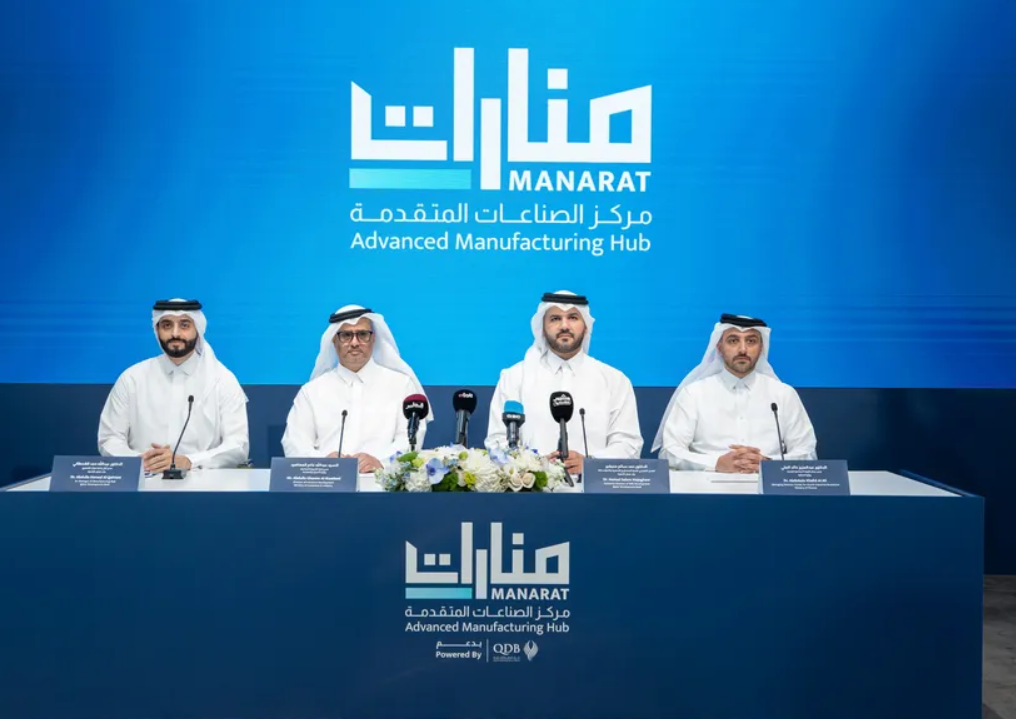
Qatar Development Bank (QDB) has launched the Advanced Manufacturing Hub (Manarat), a new industrial complex designed to accelerate the adoption of advanced manufacturing technologies and build a new generation of high-tech factories in Qatar.
Developed in partnership with the Centre for the Fourth Industrial Revolution (C4IR) at the Ministry of Finance and the Ministry of Commerce and Industry, Manarat is opening applications for 16 ready-built factory units located in Qatar’s New Industrial Area.
The initiative targets both Qatar-based manufacturers and international investors operating in technology-intensive industries, combining physical manufacturing infrastructure with advisory, financing and export support from QDB.
Manarat Targets Industry 4.0 Manufacturing
Manarat is designed around Fourth Industrial Revolution technologies, including automation, artificial intelligence and advanced digital systems that can improve factory productivity, efficiency and competitiveness.
The industrial complex will focus primarily on strategically important manufacturing sectors including medical devices, pharmaceuticals, electronics and telecommunications, robotics and chemicals, alongside other related industries.
Companies applying to Manarat will undergo a two-stage assessment. The first evaluates eligibility and technical readiness, while the second examines the technical and commercial viability of their proposed manufacturing projects.
The model is intended to bring technology-driven manufacturers, investors and expertise into a shared industrial ecosystem where companies can exchange knowledge while developing more sophisticated production capabilities.
Qatar Wants Factories to Join WEF’s Global Lighthouse Network
The name Manarat, meaning “Lighthouses,” reflects one of the initiative’s longer-term ambitions: helping factories operating from the hub develop toward the standards associated with the World Economic Forum’s Global Lighthouse Network.
The network recognizes manufacturing sites that have demonstrated advanced deployment of Fourth Industrial Revolution technologies and significant transformation of their operations.
Manarat is being developed through cooperation with the World Economic Forum’s Centre for the Fourth Industrial Revolution, with smart infrastructure and technology adoption forming central parts of the initiative.
Dr. Hamad Salem Mejegheer, QDB’s Executive Director of SME Development, said the hub is intended to help companies expand production capacity, attract international expertise and develop specialized knowledge locally.
“Investing in advanced manufacturing is a key pillar in strengthening Qatar’s position as a leading regional hub for industrial innovation and enabling our factories to join the WEF’s Global Lighthouse Network,” Mejegheer said.
QDB Combines Factory Space With Financing and Export Support
Manarat goes beyond providing industrial space. QDB plans to offer participating manufacturers an integrated support structure that includes advisory services, financing solutions and export support.
For international companies, the hub provides a potential route into Qatar’s manufacturing sector through ready-built facilities and access to a wider development ecosystem. For local manufacturers, it is intended to reduce barriers to adopting advanced technologies and expanding production.
Dr. Abdulaziz Khalid Al-Ali, Director of C4IR at the Ministry of Finance, said Manarat will provide infrastructure and standards aligned with international efforts to accelerate Industry 4.0 adoption.
The Ministry of Commerce and Industry is also seeking to increase the digital readiness of Qatari factories and encourage greater use of automation, AI and advanced digital solutions.
Qatar’s Industrial Investments Reach QAR 248.44 Billion
The initiative forms part of the Qatar National Manufacturing Strategy 2024–2030, which seeks to increase manufacturing’s contribution to non-hydrocarbon GDP, localize production and create specialized jobs in advanced technology.
Cumulative investment in Qatar’s industrial sector reached QAR 248.44 billion in the second quarter of 2026, according to figures cited by the Ministry of Commerce and Industry.
Manarat adds a dedicated advanced manufacturing component to those efforts, targeting industries where technology, specialized expertise and sophisticated production infrastructure can create higher-value economic activity.
By combining 16 ready-built factories with technology infrastructure and QDB’s financing, advisory and export capabilities, the initiative aims to help manufacturers move toward smarter production models while supporting Qatar’s broader push for economic diversification and a knowledge-based economy.
-

 MENA Startups1 week ago
US Agentic Coding Platform Replit Acquires Analytics Startup Atta to Add Interactive Data Visualizations to AI Chat
-

 Asia Startups1 week ago
Indian HRTech Startup Scooter Raises $160K Pre-Seed Funding to Expand Sales Hiring Platform and Streamline Candidate Assessments
-

 MENA Startups1 day ago
Saudi-based AutoTech Startup Autobia Raises $12M Series A to Expand B2B Auto Parts Platform and Logistics Infrastructure
-

 Asia Startups1 week ago
Indian Startup SiMa.ai Raises $150M Series C to Scale Physical AI Platform and Develop Next-Generation Hardware
-

 Asia Startups1 week ago
Indian Experience-Tech Startup Alive App Raises $1M Seed Funding to Expand Experience Supply and Technology Capabilities
-

 MENA Startups6 days ago
TiE Women MENA Names Five Regional Winners to Compete for MENA Title at GITEX Global 2026
-

 MENA Startups6 days ago
UAE Launches Ai Everything Abu Dhabi 2026, Connecting 150 AI Startups With Global Investors
-

 Euro Startups1 week ago
Portugal-Based InsurTech Startup FRANK Raises €2.9M to Expand AI-Powered Platform for Automating Administrative Tasks Globally
You must be logged in to post a comment Login