
Euro Startups
Chilean B2B Marketplace Lokal Raises $700K to Expand Retail Supply Platform Nationwide
The investment from Invexor Venture Partners will support national expansion and an AI tool to help small merchants plan their inventory purchases.

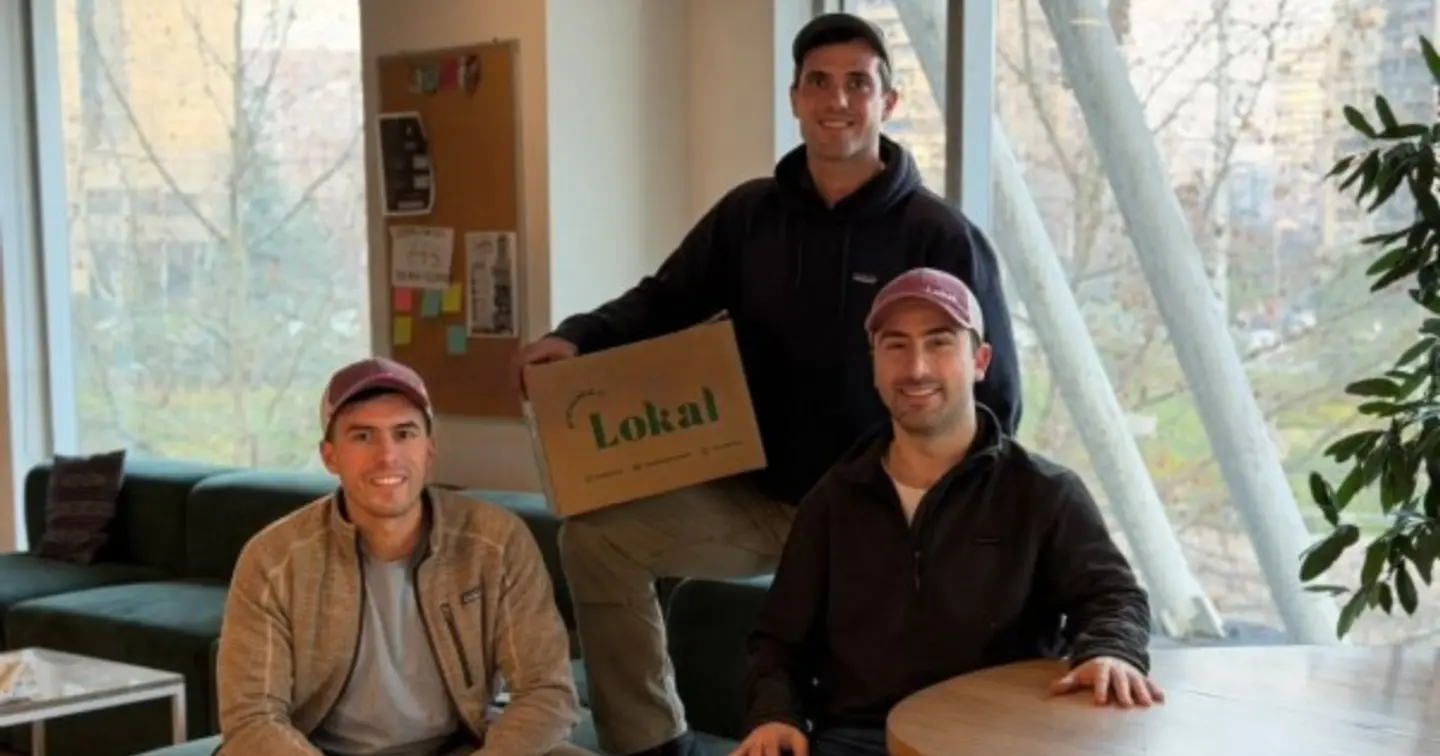
Chilean startup Lokal has raised $700,000 from Invexor Venture Partners’ Discovery II fund to expand its wholesale marketplace for small retailers. The company plans to grow its team, reach more merchants across Chile and develop an AI tool that recommends what stock to buy and when to reorder it. Invexor confirmed the investment and product plans.
Founded in 2022 by Nicolás Sarquis, Alberto Morelli and Gabriel Lyon, Lokal lets convenience stores, minimarkets, pharmacies and other small businesses purchase products from multiple suppliers through one platform. It also offers payment options that can help merchants finance inventory orders.
A Single Platform for Retail Purchasing
Lokal connects more than 500 suppliers with over 3,500 small businesses across approximately 260 municipalities in Chile, according to Invexor. Bringing suppliers together in one place is intended to reduce the time store owners spend sourcing products and managing orders.
The startup reported $4 million in revenue in 2025 and said it was operating at an annualised rate of about $5 million when the round was announced. Its founders retained more than 75% ownership following the investment.
Building an AI Purchasing Tool
Lokal plans to use the funding to develop a tool that analyses sales information and suggests which products merchants should buy, how much to order and when to restock. The feature is planned as a digital purchasing assistant for small businesses; the company has not said it is already available.
The investment will also support hiring and expansion beyond Lokal’s current reach. The company’s goal is to serve more than 100,000 small businesses across Chile, a substantial increase from its present network.
Lokal participated in Discovery-A, an accelerator run by Invexor and the UC Innovation Center. Its new funding gives the nine-person company capital to test whether its purchasing platform and planned AI recommendations can serve a much larger network of independent retailers.




Euro Startups
Dutch Venture Studio OWOW Raises $3.1M to Build B2B Software and AI Startups for Traditional Industries
The Eindhoven studio will invest up to €250,000 per venture, targeting technology companies serving manufacturing and other traditional industries.

Eindhoven-based OWOW Venture Studio has raised €2.65 million from eight family offices and angel investors to create and support early-stage B2B technology companies.
The capital will be deployed over three years, primarily across startups developing software and artificial intelligence solutions for manufacturing, original equipment manufacturers, machine builders and construction companies.
OWOW initially targeted €2 million for its first investment round but increased the amount following stronger investor interest. The studio plans to invest between €100,000 and €250,000 in each venture and add at least three companies to its portfolio annually for the next three years.
Combining Capital With Product Development
OWOW operates a venture-studio model under which it can develop businesses internally or invest in existing startups founded by external entrepreneurs.
Portfolio companies receive access to the studio’s product developers, software engineers, designers and AI specialists. OWOW also assists founders with market validation and introductions to potential launch customers through relationships established during nearly 15 years of work with industrial businesses.
The studio said its ability to identify early customers is central to its investment process. It generally backs ventures only when it believes companies within its network could become initial users of the proposed product.
“For every venture we build or invest in, we want to be able to find launch customers ourselves,” founder and co-CEO Robin Dohmen said. “We only invest in the industries we have worked in ourselves for almost fifteen years. We know the customers there, and they know us.”
Targeting Industrial Software and Physical AI
OWOW is looking for startups applying software-as-a-service, AI and physical AI to operational problems in established industries.
Its investment thesis focuses on sectors where companies continue to depend on fragmented software, legacy systems or manual processes. The studio believes its sector experience can help founders identify commercially relevant problems before committing substantial resources to product development.
OWOW is open to working with entrepreneurs who already operate startups, as well as experienced industry professionals who understand a market problem but have not yet developed a specific company or technology product.
The studio’s approach combines three resources: investment capital, an internal product-development team and access to prospective customers. OWOW said it can provide as much as €250,000 to an individual venture, depending on its stage and requirements.
First Portfolio Companies
Formally launched in late 2025, OWOW Venture Studio has already completed two investments.
Its portfolio includes Eindhoven-based Synthgen, which produces synthetic data for training AI models used in robots and industrial machines. The studio has also backed Caddy Clubhouse, a UK platform connecting golfers with professional caddies.
Although Caddy Clubhouse sits outside OWOW’s primary industrial focus, the company illustrates the studio’s hands-on development model, which combines specialist industry knowledge with its internal software and product capabilities.
OWOW Venture Studio is led by Dohmen alongside Head of Ventures Kees van Nunen, Head of Product Vincent van Deursen and OWOW founder Pieter-Jan Pieters. It can add other specialists to individual projects and is supported by an advisory board that includes venture-capital experience.
Building Around Validated Demand
The new capital gives OWOW a dedicated pool for developing and financing B2B startups rather than representing a conventional equity round for a single operating company.
Over the next three years, the studio intends to create a pipeline of ventures addressing practical problems within established industries. Its model is designed to bring customer validation earlier into the startup-building process, reducing the risk of developing products without demonstrated commercial demand.
With investment capital, technical talent and an existing industrial network brought together under one platform, OWOW is positioning itself as an operational partner for founders building software and AI products for traditionally underserved B2B markets.
Euro Startups
Swedish SalesTech Startup Spiich Raises $3.4M Seed Round to Scale AI Sales Agents Across Europe
Ugly Duckling Ventures led the round as Spiich prepares to expand its engineering and commercial teams across Europe.

Stockholm-based sales technology startup Spiich has raised €3 million in a Seed funding round to expand its AI agents, recruit employees and grow across Europe.
Copenhagen-based Ugly Duckling Ventures led the round, with Alliance VC and Cherry Ventures joining as new investors. Existing investor Ampli Ventures, which led Spiich’s previous round, also participated.
The financing follows a €600,000 Pre-Seed round completed in November 2025 and brings Spiich’s total disclosed funding to €3.6 million.
Automating the Work Around Selling
Founded in Stockholm in June 2025 by CEO Johan Torssell and CTO Dennis Hadzialic, Spiich develops AI agents that automate administrative and operational work surrounding sales.
The platform can research prospective customers, prepare representatives for meetings, draft follow-up messages, update customer relationship management systems and organise the next steps in a sales process.
Spiich does not position its agents as autonomous salespeople. Customer-facing messages remain subject to human involvement, and representatives retain responsibility for building relationships, earning trust and closing transactions.
This approach differentiates the company from sales technology startups developing AI agents intended to replace human sales development representatives or account executives.
Addressing Sales Teams’ Administrative Burden
Sales representatives frequently divide their time between speaking with customers and completing prospecting, planning, reporting and data-entry tasks.
Spiich aims to reduce the second category so representatives can spend more of their working week in customer conversations.
The company integrates with existing CRM platforms, including HubSpot, Attio, Pipedrive and Salesforce. Its agents can automatically add notes, update deal stages, create tasks and record next steps after meetings or calls.
Rather than replacing a company’s CRM, Spiich operates as an intelligence and execution layer above it. The startup says this allows its platform to use information from meetings, emails, internal notes and external signals while keeping the CRM updated.
Fifty Customers Across Fifteen Countries
Fifteen months after its founding, Spiich says it serves more than 50 customers across 15 countries in Europe, the United States and South America.
Its customers include NORNORM, ProfitMetrics, Zaver, Airmee, Rebaba and Epiminds.
Spiich reports that teams using the platform have doubled the number of customer meetings they conduct, reduced prospecting time by 90% and tripled the number of markets they can cover.
The company also says it recorded 100% month-over-month growth in annual recurring revenue during the first half of 2026, reached net revenue retention of 160% and supported sales processes associated with more than 50,000 completed deals.
These performance figures were reported by Spiich and have not been independently verified. They should not be interpreted as meaning that the AI agents autonomously closed the transactions.
Investor Backing for a Human-Led Model
Ugly Duckling Ventures focuses on early-stage Nordic business-to-business software and technology companies, typically making initial investments of approximately €1 million.
Louise Lachmann, general partner at Ugly Duckling Ventures, said the firm was attracted to Spiich because its technology performs operational work instead of creating another system sales representatives must maintain manually.
She said the investor’s conviction grew after customers expanded their use of the product within weeks of deployment.
The round also includes backing from angel investors connected to technology companies including Lovable, Neo4j, Tandem Health and OpenAI. Earlier supporters include the Index Ventures Scout Fund and Wave Ventures.
Keeping People at the Centre of Sales
Torssell argues that trust remains central to business-to-business sales and is difficult to reproduce through fully automated interactions.
“Have you ever bought anything from an AI agent? Almost nobody has,” he said. “You buy from someone you trust to deliver.”
Torssell added that Spiich was not created to replace salespeople but to remove the work that prevents them from spending time with customers.
That thesis places Spiich on one side of a wider debate about the role of AI in commercial teams. While some platforms are attempting to automate outreach and selling from beginning to end, Spiich is focusing on increasing the productivity of human representatives.
Developing a Sales Intelligence Layer
Because Spiich processes information from multiple stages of a customer relationship, the startup believes it can build a more current view of sales activity than traditional CRM records alone provide.
A CRM generally reflects the information employees enter into it. Spiich’s agents are designed to gather signals from conversations and workflows, interpret them and update the relevant records automatically.
The company wants to use this information to identify where deals are slowing, which relationships need attention and where sales teams can improve their performance.
Building this broader intelligence layer will require Spiich to manage commercially sensitive customer information while maintaining appropriate security, access controls and data governance.
Funding European Expansion
Spiich will use the new capital to expand its engineering and go-to-market teams as it targets further growth across Europe.
The company also plans to develop its AI agents and deepen the intelligence layer built around customer conversations, sales activity and CRM data.
Its next stage will test whether the early adoption and retention figures reported by the company can continue as Spiich serves larger organisations and more complex sales operations.
With €3 million in new Seed funding, Spiich is betting that the most valuable use of AI in sales is not replacing human relationships but removing the administrative work that competes with them.
Euro Startups
UK-Based TravelTech Company Stasher Secures $4M to Expand Luggage Storage Marketplace and Smart-Locker Network Across Europe
The financing from Gilion and Hive Box will support marketplace growth and the deployment of 100 lockers by mid-2027.

London-based travel technology company Stasher has secured £3 million, approximately $4 million, in combined debt and equity financing to expand its luggage-storage marketplace and smart-locker network across the United Kingdom and Europe.
The financing consists of approximately £2 million in growth debt from Gilion and a separate £1 million strategic equity investment from smart-locker operator Hive Box. It should therefore not be described as a conventional £3 million equity funding round.
Stasher will use the capital to add marketplace locations, increase marketing activity and accelerate the deployment of dedicated luggage lockers in hotels and other high-traffic travel destinations.
Combining Growth Debt With Strategic Investment
Gilion’s financing will give Stasher additional working capital to expand its established marketplace and invest in customer acquisition without issuing the entire £3 million as equity.
Hive Box’s investment forms part of a broader strategic partnership under which the smart-locker company will provide hardware, connected-device infrastructure and remote-management technology.
The companies plan to deploy an initial 100 lockers across the UK and Europe by mid-2027. Stasher will integrate the hardware with its booking platform and manage functions including customer acquisition, payments, location selection and relationships with hotel partners.
The companies have indicated that the initial rollout could eventually grow to at least 1,000 lockers, depending on demand and the performance of early locations.
Extending the Luggage-Storage Marketplace
Founded in 2015 by Jacob Wedderburn-Day and Anthony Collias, Stasher initially built a marketplace connecting travellers with hotels and local businesses that have available space for short-term luggage storage.
Its network has expanded to more than 10,000 storage locations across over 1,200 cities worldwide. Travellers book and pay through Stasher before leaving their bags with an approved partner business.
The smart-locker strategy adds a second operating model to that marketplace. Customers can reserve a compartment online, access it using a QR code and collect their luggage without requiring assistance from hotel or venue employees.
This allows locations to offer storage outside the operating constraints of staffed reception desks while reducing the administrative work associated with handling and tracking bags.
Premier Inn Supports Early Locker Rollout
Stasher began testing the locker model at Premier Inn London St Pancras in November 2025. Its lockers are now operating at 17 Premier Inn properties across London, Edinburgh and Manchester.
Other installations include Zedwell Trocadero in central London and StayKula properties in Kensington and Birmingham. Stasher also works with Staycity Aparthotels at locations across the UK and Ireland using earlier locker models.
The company reports that bookings across its smart-locker network are growing by 108% month over month, while its strongest-performing location generates approximately £2,500 in weekly locker revenue.
These figures are company-reported, relate to an early-stage network and may change as more locations are added.
Using Booking Data to Select Locations
Stasher plans to use more than a decade of booking and search data to determine where additional lockers should be installed.
The company can identify areas where travellers frequently search for luggage storage, where existing partner locations reach capacity and where demand continues beyond staffed operating hours.
This information can also help Stasher and its partners estimate the number of locker compartments required before allocating floor space or installing equipment.
The company is initially targeting hotels, aparthotels, hostels and serviced apartments. It also sees potential for lockers at railway and coach stations, airports, ferry terminals, cruise terminals, museums, visitor attractions and entertainment venues.
Creating Additional Revenue for Hotels
For accommodation providers, automated lockers can reduce the burden on reception employees during busy check-in and checkout periods.
Travellers manage reservations, payments and access through Stasher, while participating properties provide space for the equipment and receive a share of storage revenue.
Stasher believes this arrangement gives hotel partners an additional revenue stream without requiring employees to manage each transaction manually. The model could also extend luggage-storage services to people who are not staying at the property.
Competing in an Automated Storage Market
Stasher competes with luggage-storage platforms including Bounce, Radical Storage and LuggageHero. Several companies in the sector are also adding self-service lockers or working with specialist hardware providers.
That means physical equipment alone is unlikely to determine which platforms gain the largest share of the market. Booking traffic, location partnerships, pricing, reliability and locker utilisation will remain important competitive factors.
Stasher is betting that its existing traveller demand, global storage marketplace and historical location data will help it deploy lockers in areas where they are likely to achieve stronger utilisation.
“We’ve spent the last ten years building Stasher into a global network, and this funding gives us the firepower to accelerate the next stage of growth,” said CEO and co-founder Jacob Wedderburn-Day.
The £3 million financing package gives Stasher capital to grow its established marketplace while developing a more infrastructure-heavy locker business. Its next challenge will be to demonstrate that the strong performance reported at early locations can be replicated as it deploys 100 lockers across different cities and types of travel venue.
-

 Entrepreneurial Stories1 week ago
From an Early Arabic Social Network to 300 Million Game Downloads: How Hussam Hammo Built Tamatem Into a MENA Gaming Powerhouse
-

 MENA Startups1 week ago
Qatar’s GrowthX Invests $1M in AI Hiring Platform Hired Valley and Student Economy Startup Talebhub, Bringing Both Startups Into Snoonu Startup Factory
-

 MENA Startups6 days ago
Saudi-based FinTech erad Raises $22M Series A Led by MEVP to Accelerate SME Financing Across the GCC
-

 MENA Startups6 days ago
UAE-Based Consumer Company Amaani Raises $5M Series A to Expand AÏZA Across GCC Beauty Markets
-

 MENA Startups3 days ago
Qatar-Based AI Startup Aligator Raises $1.2M Seed Round to Expand Autonomous PR Agents Across MENA
-

 Asia Startups1 week ago
Singapore-Based Physical AI Startup TacnIQ.ai Secures $1.5M Pre-Seed Funding to Advance Tactile Models and Industrial Deployments
-

 Euro Startups4 days ago
Spain-Based AI Startup Reply Next Raises $455K Pre-Seed Funding to Scale Multi-Location Brand Management Platform
-

 Asia Startups4 days ago
Singapore-Based HealthTech Company Respiree Extends Series A to Expand Global Team and US Operations
You must be logged in to post a comment Login